




Green Onyx Statue
Green onyx statue pieces combine sculptural metal figures with decorative stone plinths, offering a striking display of early twentieth-century design.
Green Onyx Statue
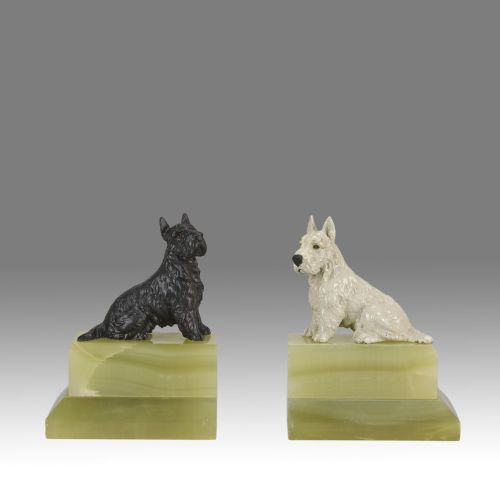
A green onyx statue typically pairs a sculpted metal figure with a dense stone base or plinth. These works frequently appear alongside related desk accessories, bookends, and larger sculptural groups.
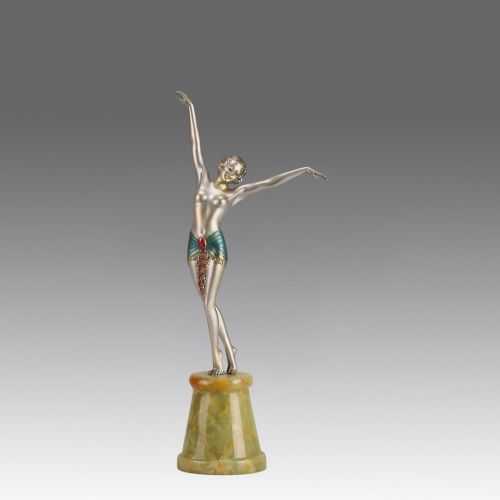
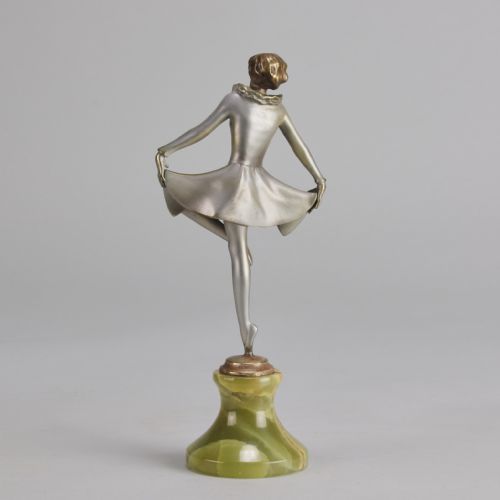
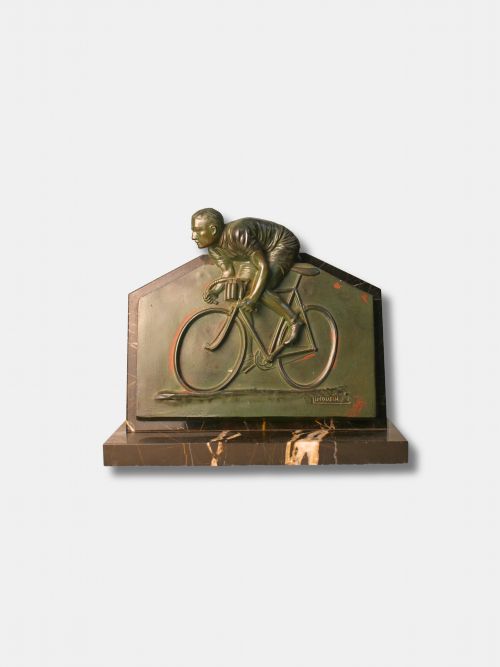
Most examples originate from the early twentieth century, spanning periods from the late nineteenth century through the Art Deco era. Common forms include female dancers, animal studies, and sporting figures mounted upon polished stone bases.
Makers utilised contrasting textures by joining cold-painted bronze or spelter figures directly to varied marble and onyx foundations. Buyers encounter French and Austrian pieces most often on this page.
How they were made
Foundry workers cast metal figures in bronze or spelter before finishing surfaces with cold-painted pigments, enamel, or gilt. Artisans shaped and polished the supporting stone plinths to complement the metallic tones of each mounted sculpture.
Moulders secured figures to their stone bases using threaded bolts or pins fitted through the plinth. Craftspeople selected dense mineral blocks to ensure the weighted foundation properly balanced the dynamic posture of the upper sculpture.
Listings feature items dated from the 1860s through the 1930s, utilising bronze, spelter, marble, and onyx materials.
What varies in quality
The finesse of the metal chiselling and the preservation of the original cold-painted surface determine the artistic merit of a piece. Finer works display crisp facial expressions and detailed drapery on the cast figures.
The selection and polish of the mounting stone also dictate overall execution, with uniform mineral banding and precise cutting separating superior examples from standard production.
Josef Lorenzl·P. Sega·Bruno Zach
The Green Onyx Statue Glossary
- Spelter
- A zinc alloy frequently used as a cost-effective alternative to bronze in decorative sculpture. It accepts patination and metallic paint finishes readily.
- Cold-painted bronze
- A technique where bronze sculptures are painted with oil or enamel paints without subsequent firing. This method yields vibrant polychrome surface details on figures.
- Garniture
- A set of ornamental objects designed for display together, typically comprising a clock flanked by matching vases or figures. These matched sets often incorporate stone bases.
- Plinth
- A heavy rectangular or stepped base supporting a statue or column. It provides both structural stability and visual elevation for the mounted work.
- Art Deco
- A design style prevalent during the 1920s and 1930s characterised by sleek geometric lines and stylised figurative representations.
Green Onyx Statue: Frequently Asked Questions
What metals were used on these bases?
Makers cast the figures in bronze, gilt bronze, or spelter, often applying cold-painted pigments or enamel to the surface.
These metallic elements were then secured directly onto polished stone plinths.
How do I identify Art Deco pieces?
Art Deco pieces typically date from the 1920s and 1930s, displaying stylised human figures and geometric dynamism.
They frequently feature dancers or athletes captured in motion on stone mounts.
Where were these sculptures made?
The evidence points primarily to French and Austrian workshops and foundries active during the late nineteenth and early twentieth centuries.
Artists working within these regions produced both individual figurines and functional items like bookends.
How should I clean the stone?
Dust the stone gently with a soft, dry cloth to prevent accumulation without abrasive contact.
Avoid liquid cleaners that might seep into joints between the metal figure and the plinth.