
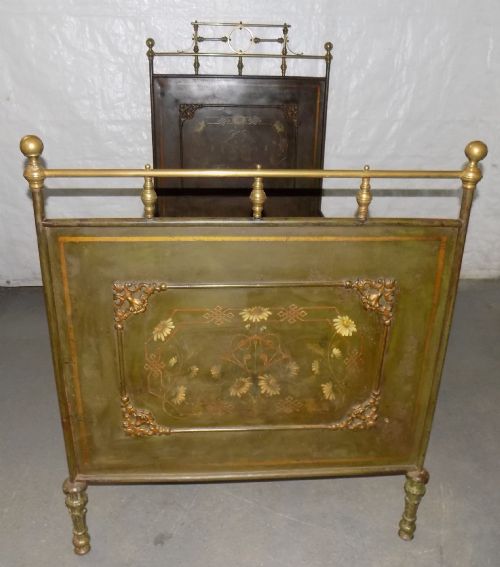


Green Metal Bed Frame
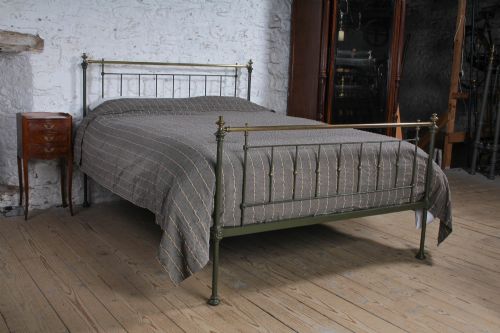
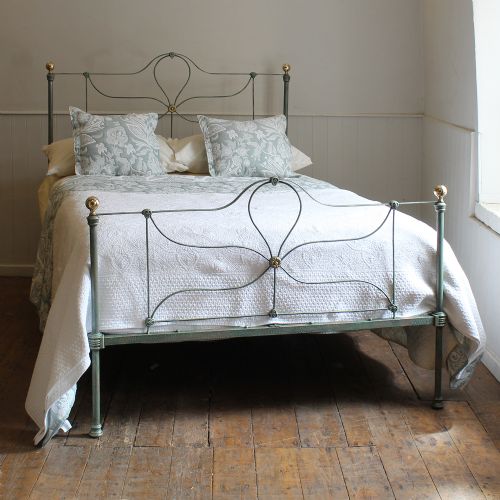
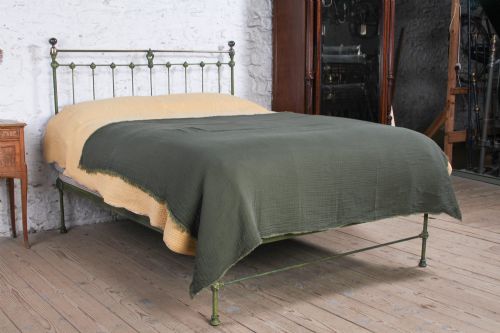
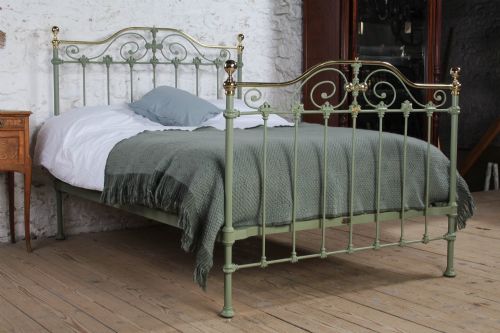
A green metal bed frame brings robust Victorian weight and colour into a bedroom, offering solid iron construction paired with decorative brass fittings.
Green Metal Bed Frame
When searching for a green metal bed frame, collectors encounter sturdy iron and brass furniture spanning the nineteenth century, including Victorian, 19th Century Austrian, and Portuguese Regional styles. These pieces range from small single platforms and single-size bedsteads to double and king-size proportions designed for daily use.
The version most commonly met on this page is the Victorian double or king-size bedstead, typically combining painted iron frameworks with polished brass details and decorative castings. Examples also appear in all-iron formats or specialised toleware, reflecting diverse regional nineteenth-century domestic tastes.
How they were made
These bed frames rely upon cast iron, wrought iron, and sheet metal to form structural foundations and decorative components. Metal elements are shaped into robust rails and distinct bedstead forms, frequently coated in paint or verdigris finishes.
Brass is incorporated alongside iron as contrasting detailed elements, providing ornamental castings and highlights. Individual makers utilised specialised foundry techniques to join metal frameworks securely while integrating decorative brass motifs.
Some iron beds are designated as having no end, offering an unobstructed view across the entire length of the bedroom.
What varies in quality
Quality in these metal beds rests upon the intricacy of the castings and the richness of the decorative detail applied to the iron and brass. Pieces featuring elaborate shaping and decorative elements stand apart from simpler utilitarian frames.
The preservation of original painted surfaces, such as green verdigris or toleware finishes, alongside the condition of polished brass elements, distinguishes superior examples from standard production.
R W Winfield
The Green Metal Bed Frame Glossary
- Cast iron
- A strong alloy poured into moulds to create rigid bed frames and decorative structural components. It forms the heavy load-bearing structure of many nineteenth-century bedsteads.
- Verdigris
- A green patina formed naturally or chemically on copper, brass, and iron surfaces. This greenish coating adds distinct visual character to antique metal furniture.
- Toleware
- Painted or enamelled sheet metal objects produced in the nineteenth century. Austrian examples utilise this technique for decorative bedstead construction.
- Castings
- Shaped metal components poured in moulds and attached to the bed frame for ornamentation. These decorative additions define the aesthetic style of Victorian iron beds.
Green Metal Bed Frame: Frequently Asked Questions
What sizes are available in these metal beds?
These beds span small single platforms and standard single sizes up to double and king-size proportions.
Larger formats frequently incorporate elaborate brass castings and twin side rails suited to modern mattresses.
How do I identify a Victorian metal bed?
Victorian examples typically combine cast iron frameworks with polished brass details, attractive castings, and painted finishes.
They date primarily from the late nineteenth century, specifically around eighteen eighty and nineteen hundred.
Are these beds suitable for daily use?
The heavy iron and brass construction provides immense structural strength capable of supporting contemporary mattress weights.
Their robust metal frames ensure long-term durability in regular domestic settings.
What finishes appear on these antique frames?
Surfaces feature original paint, green verdigris patination, sheet metal toleware, and polished brass highlights.
These finishes define the distinct visual appearance of nineteenth-century regional and Victorian pieces.