
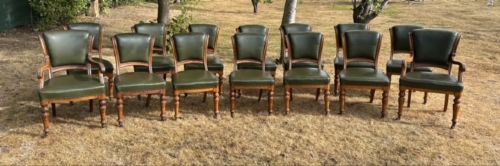
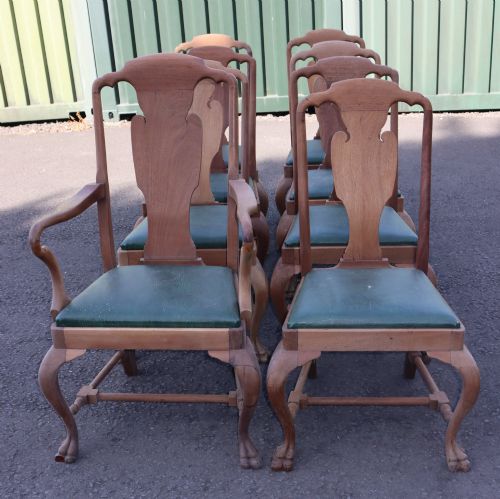


Green Leather Carver Chair
Green leather carver chair forms combine sturdy timber frames with upholstered seating, offering substantial arm support for dining rooms or studies.
Green Leather Carver Chair
A green leather carver chair provides a seating option with integrated armrests, frequently rendered in mahogany, oak, or walnut. These seating items appear across multiple periods, including the Georgian era, Victorian period, and Edwardian decades.
The versions most common on this page combine mahogany frames with hand-dyed green leather seats, drawing on revival styles such as Chippendale and Hepplewhite. Makers adapted classical proportions to suit domestic dining tables and private libraries.
Buyers encounter these seating pieces in single examples, pairs, or larger dining sets where the armchairs match standard side chairs. Structural variations span from straightforward open arm designs to high-backed Gothic and Jacobean interpretations.
Materials and construction
Makers utilised dense hardwoods such as mahogany and oak to construct the supportive frames, often employing intricate carving on the rails, splats, and knuckles. Brass studs or nails frequently secure the green leather upholstery to the wooden seat bases.
Cabinet makers shaped timber using traditional joinery techniques, combining mortise and tenon joints to ensure stability under daily use. Leather was hand-dyed and stretched over padding, while giltwood accents occasionally highlighted carved details on formal examples.
Some nineteenth-century makers incorporated hidden compartments beneath upholstered seats for storing small writing utensils or visiting cards.
Judging quality in carver chairs
The standard of a green leather carver chair depends on the crispness of the timber carving and the weight of the underlying hardwood. Superior examples display carefully selected grain patterns and balanced proportions across the arms and backrest.
Upholstery methods and the depth of the leather treatment separate robust pieces from simpler productions. Original timber surfaces and tight joinery indicate higher workshop skill during the period of manufacture.
Gillows·Cooper And Holt
The Green Leather Carver Chair Glossary
- Carver chair
- An armchair designed to sit at the head of a dining table or function as a desk seat. These pieces feature structural armrests attached to the main frame.
- Chippendale style
- A decorative manner inspired by 18th-century designs, characterised by interlaced ribbon splats and cabriole legs ending in ball and claw feet. Makers revived these patterns extensively during the Victorian and Edwardian periods.
- Giltwood
- Timber treated with a thin layer of gold leaf or gilt pigment for decorative effect. This finish appears on select revival pieces.
- Scroll arm
- An armchair armrest carved into a rolled, curving shape. This detail provides comfortable forearm support.
Green Leather Carver Chair: Frequently Asked Questions
What is a carver chair?
A carver chair is an armchair traditionally placed at the head of a dining table. It differs from standard dining chairs by including wooden armrests for added support.
These pieces also served in libraries and studies as desk seating. The form accommodates comfortable sitting during long periods of work or dining.
How do I clean green leather?
Green leather upholstery requires gentle dusting with a dry, soft cloth to remove surface particles. Avoid harsh chemical cleaners that strip natural dyes and moisture from the hide.
Applying a specialised leather conditioner periodically helps maintain flexibility and prevents cracking. Professional cleaning is advisable for antique hide with delicate finishes.
Are these chairs comfortable for daily dining?
Most carver chairs provide a stable seat with supportive armrests suited for meal times. The interior padding and supportive wooden frames offer a firm posture.
Heavier antique models are solidly built, though seat heights can vary compared to modern seating. Checking the dimensions ensures compatibility with existing dining tables.
How do I identify a revival style?
Revival furniture copies earlier aesthetic movements, such as Chippendale or Gothic, using the manufacturing methods of the 19th or 20th century. Clues include machine-sawn timber elements alongside hand-finished details.
Examination of the wood age, construction marks, and hardware helps distinguish a later revival piece from an 18th-century original.