
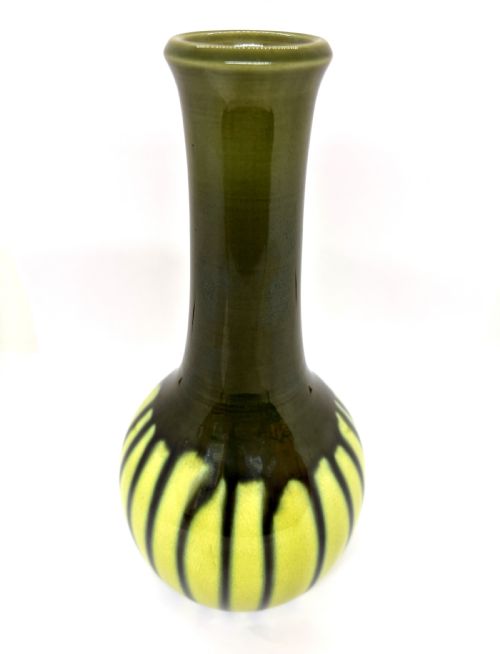
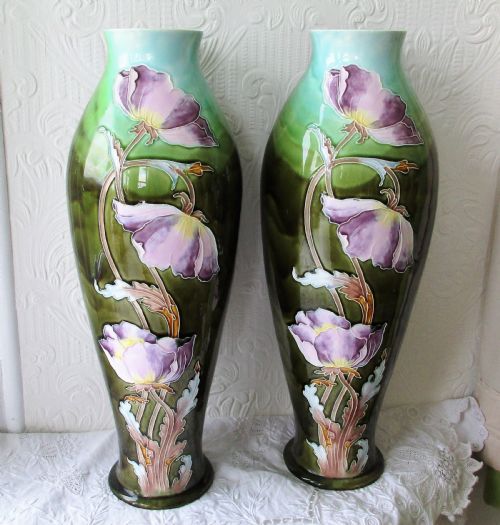
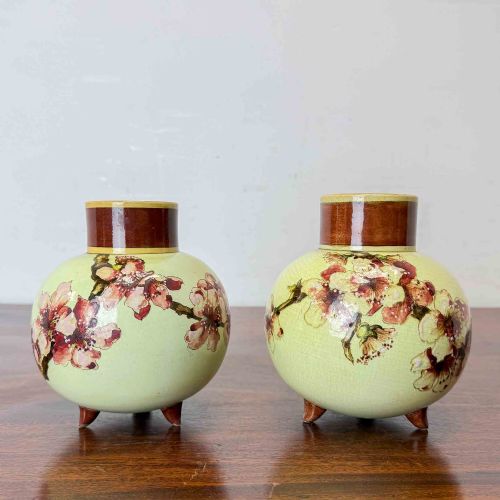
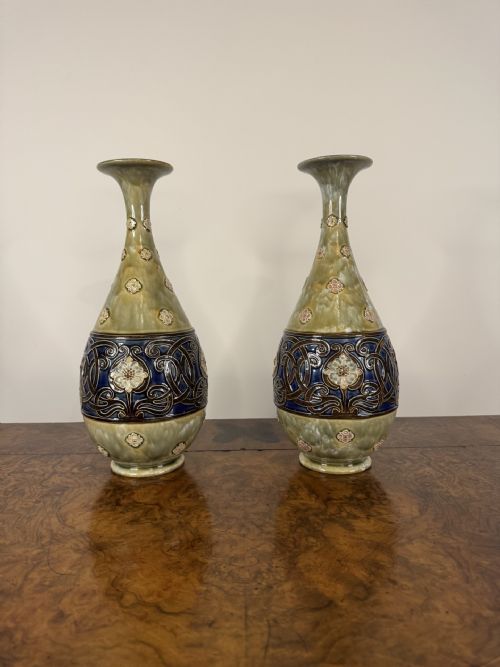




Green Glazed Pottery Urn
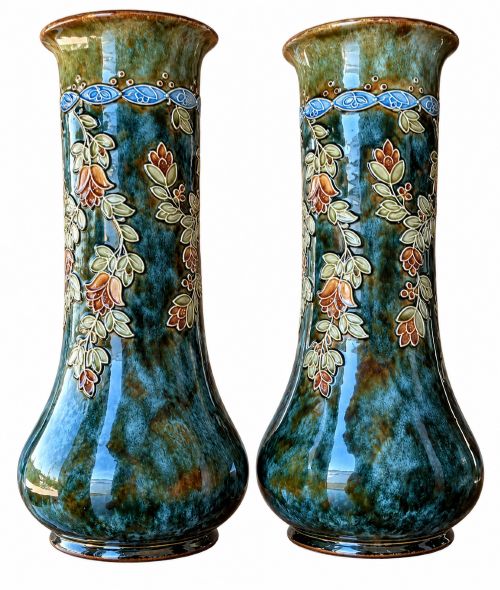
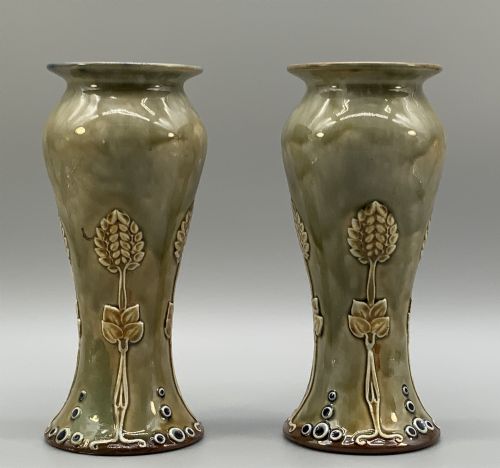
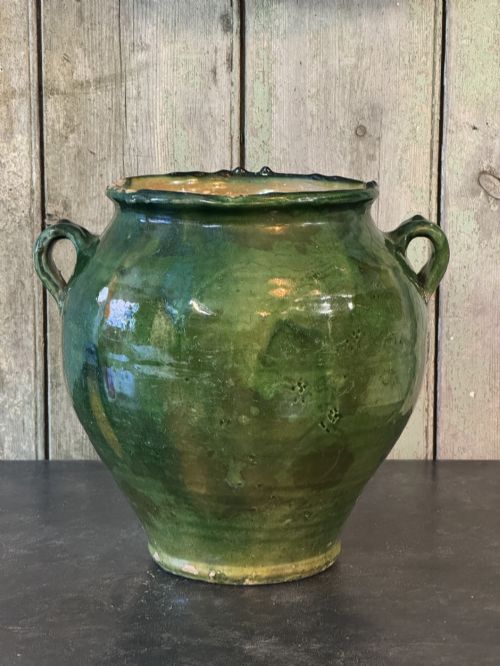
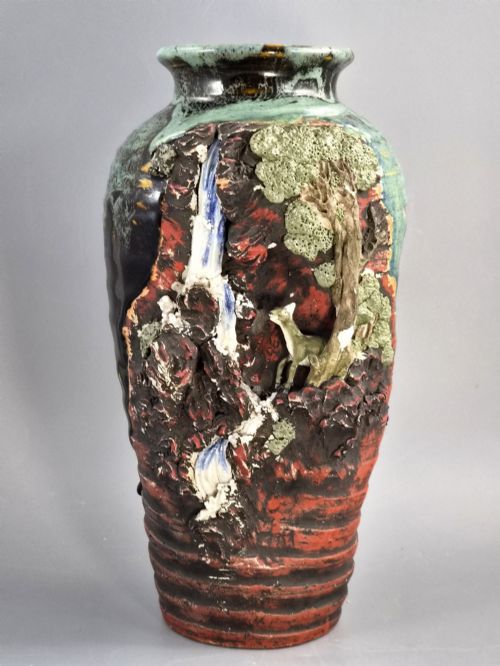
Green glazed pottery urn search results bring together substantial vessels and decorative vessels shaped by centuries of European, Asian and British traditions.
How they were made
Potters relied upon earthenware, stoneware, terracotta and ceramic bodies shaped by hand or thrown on the wheel. Artisans applied rich glaze layers, including celadon, drip glazes and Persian lustre finishes, before firing the pieces in kilns.
Faience and majolica techniques allowed makers to apply opaque and coloured tin glazes over porous earthenware bodies. Specialised studios utilised sculptural additions, incised decoration and hand-painted motifs directly into the wet clay or glaze.
What varies in quality
Quality depends upon the clarity of the glaze application, the crispness of moulded or incised details and the overall balance of the form. Superior examples display controlled runs of glaze and well-preserved painted or sculptural elements without obscuring the underlying body.
The reputation of the workshop or individual maker heavily influences the standing of a piece within its period. Signed works by recognised designers command greater attention than unmarked provincial utility vessels.
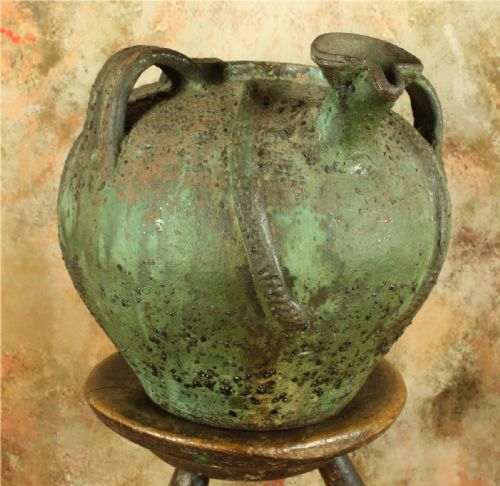
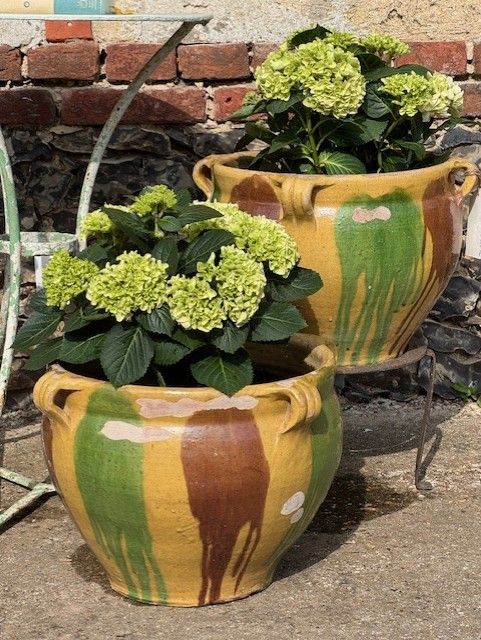
Several heavy French olive jugs retain three distinct handles so multiple people could heave the heavy earthenware jars around the kitchen floor.
Royal Doulton Lambeth·Burmantoft's Pottery·Zsolnay Pecs·Makuzu Kozan·Julius Dressler·Royal Lancastrian·Brannam Art Pottery·J R Mally & Co
The Green Glazed Pottery Urn Glossary
- Confit pot
- A traditional French earthenware jar featuring handles and a partial or full glaze, originally utilised for preserving food in provincial kitchens. These utility vessels now serve widely as decorative planters and indoor pots.
- Majolica
- A type of pottery covered with an opaque tin glaze and painted with metallic oxide colours. The technique produces vibrant hues on earthenware bodies popular throughout the nineteenth century.
- Celadon
- A term for ceramics denoting a pale green glaze resembling jade, developed extensively in Asian kilns. The subtle green tones arise from iron oxide interacting within a reduction kiln atmosphere.
- Faience
- Tin-glazed earthenware produced in Europe, often associated with decorative wares and painted designs. The porous clay body receives an opaque white or coloured glaze before ornamentation.
- Stoneware
- A dense, vitreous ceramic fired at high temperatures until non-porous. This robust material holds liquid securely without interior glazing and accepts rich salt or slip treatments.
Green Glazed Pottery Urn: Frequently Asked Questions
What were green glazed pottery urns used for?
Many of these vessels served practical functions in European and Asian households, including storing oil, preserving food, or holding water and plants.
Over time, robust utilitarian jars transitioned into purely decorative items, displayed in homes for their striking glazes and sculptural silhouettes.
How do I identify Art Nouveau pottery?
Art Nouveau ceramics typically feature organic, flowing lines, stylized floral motifs, and experimental glazes inspired by natural forms. Look for whiplash curves and asymmetrical designs characteristic of the late nineteenth and early twentieth centuries.
Makers often utilised drip glazes and Persian lustre techniques to enhance the fluid movement across the ceramic surface.
What is the difference between earthenware and stoneware?
Earthenware is fired at lower temperatures, leaving the ceramic body porous and requiring a glaze to hold liquids. It forms the base for traditional confit pots and majolica.
Stoneware fires at much higher temperatures until the clay vitrifies into a dense, waterproof material that needs no internal glaze to remain completely sealed.
How should I care for antique pottery?
Display historic ceramics away from direct sunlight and areas subject to sudden temperature fluctuations to protect the integrity of the glaze. Dust gently with a dry, soft cloth.
Avoid using water or cleaning agents on porous earthenware or cracked glazes, as moisture can penetrate the historical clay body and cause damage.