




Green Glass Box
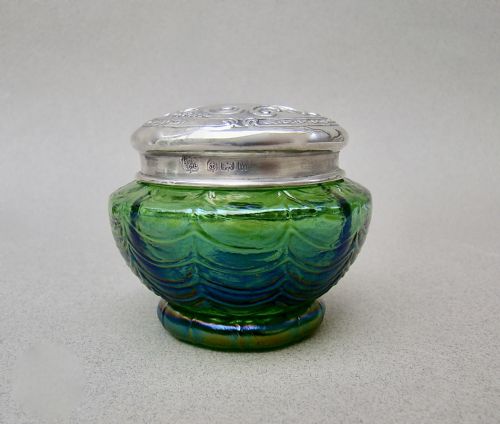
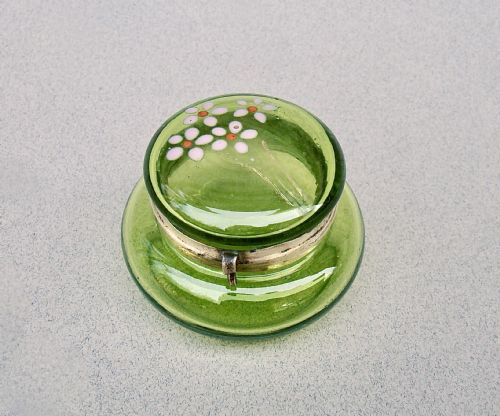
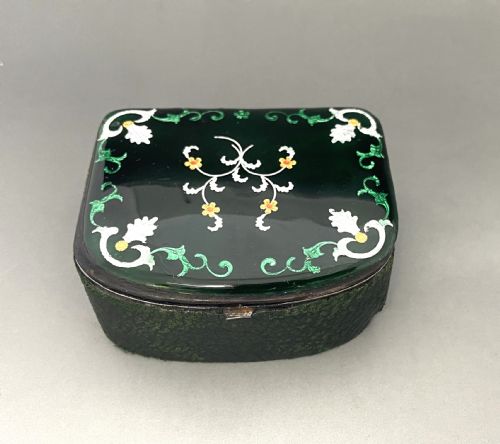
A green glass box brings intense colour and tactile weight to a dressing table, holding small trinkets or pills within lustrous metal mounts.
Green Glass Box
A green glass box is typically a small container designed for personal use, most frequently encountered as a Victorian or 19th-century trinket or pill box. These pieces combine vibrant hues of glass with metal hinges, collars, and lids, often taking the form of round, oval, or heart-shaped vessels used to store valuable keepsakes.
The selection ranges from French enameled examples featuring painted decoration to robust Bristol green containers mounted in sterling silver or brass. Makers across the nineteenth and early twentieth centuries utilised this deep pigment to create striking dressing table accessories that still catch the light today.
How they were made
Makers formed the bodies by blowing or moulding glass in rich green tones, sometimes applying surface enamelling or delicate gilt details by hand. These glass vessels were then fitted with hinged metal mounts made from brass, silver-plate, or sterling silver, secured carefully around the rims.
Craftsmen often integrated additional decorative techniques such as sandblasting or metalwork overlays, joining the glass securely to its metal frame to create a functional, hinged container.
Some Victorian glass boxes were cleverly disguised as tiny egg-shaped ornaments, ready to surprise anyone searching for hidden treasures.
What varies in quality
The standard of a green glass box rests on the crispness of the enameled decoration and the precision with which the metal mounts fit the glass body. Finer examples display hand-painted details that remain sharp and bright, alongside robust hinges that align smoothly without looseness.
Weight and clarity also distinguish the manufacturing tier, where heavier glass vessels paired with hallmarked sterling silver frames represent superior craftsmanship compared to lighter, simpler brass-mounted alternatives.
A. J. Pepper & Co·William Comyns·Levi & Salaman·Mappin & Webb·Victor Saglier·Moser
The Green Glass Box Glossary
- Bristol green
- A deep, saturated green glass traditionally produced in the Bristol area during the eighteenth and nineteenth centuries. This distinctive colour remains a defining feature of many antique trinket and pill boxes.
- Guilloché
- A decorative engine-turned pattern engraved into metal beneath a translucent layer of enamel. It appears frequently on early twentieth-century silver and glass vanity items.
- Pâte de Verre
- A form of glass casting where crushed glass is packed into a mould and fused in a kiln. This technique produces dense, textured vessels with subtle colour gradations.
- Ormolu
- Gilded bronze mounts applied to furniture and decorative objects such as glass boxes. The technique adds a warm metallic border to the rich green glass bodies.
Green Glass Box: Frequently Asked Questions
What were green glass boxes used for?
These small containers served primarily as dressing table accessories for holding rings, pins, trinkets, or medicinal pills. Their decorative nature also made them suitable for display on side tables and mantelpieces.
Over time, owners repurposed them to store various small personal items, preserving their utility as enclosed desktop or vanity storage.
How do I clean a green glass box?
Maintenance requires gentle wiping with a soft, dry cloth to remove dust from the glass and metal surfaces. Avoid submerging pieces with glued or hinged components in water to protect the mounts.
Harsh chemical cleaners should be kept away from enameled decoration and gilt surfaces to prevent permanent damage to the antique finish.
Are all green glass boxes French?
Origin varies significantly, with many surviving examples originating from French workshops alongside English manufacturers in Birmingham and London. French pieces frequently feature elaborate enamel work and gilt metal mounts.
English makers often paired the green glass liners with sterling silver frames bearing distinct domestic hallmarks that reveal the exact year of production.
How can I tell the period?
Dating relies on examining the metal mounts, hallmarks, and decorative styles associated with specific decades. Victorian and Edwardian examples often display registration marks or maker stamps on the silver collars.
Stylistic cues such as Art Nouveau floral motifs or Art Deco geometric lines provide clear indicators of whether a piece dates to the nineteenth century or the early twentieth century.