

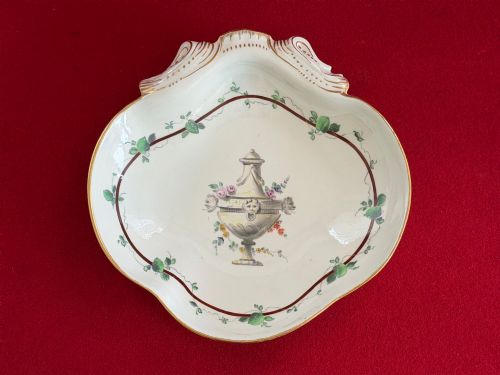
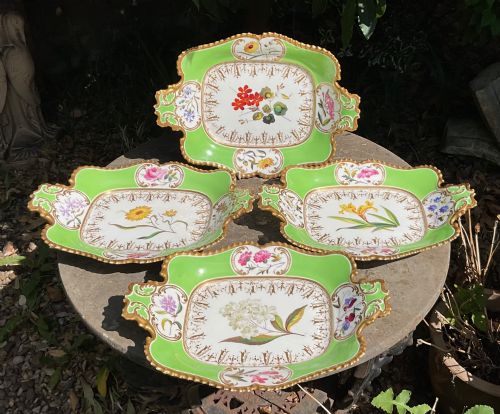
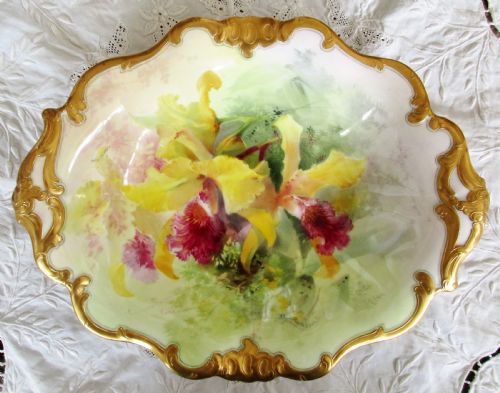
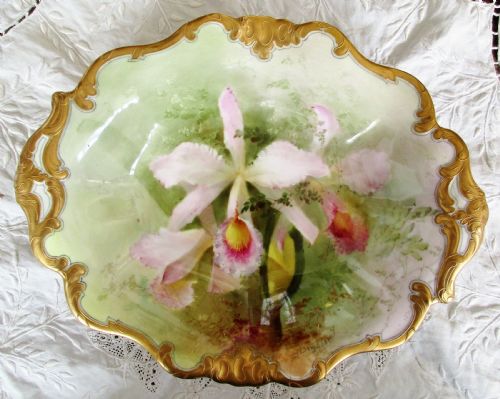


Green Gilded Porcelain Plate
A green gilded porcelain plate brings rich colour and metalwork into a room, combining painted botanical or oriental motifs with shining borders.
Green Gilded Porcelain Plate
When you search for a green gilded porcelain plate, you encounter items spanning the eighteenth century through to the early twentieth century, taking the form of cabinet dishes, dessert plates, and display pieces. These objects range from English bone china and hard-paste porcelain to French faience and Chinese export wares, reflecting diverse domestic and display uses across distinct historical eras.
You are most likely to meet nineteenth-century English porcelain plates on this page, particularly pieces originating from factories such as Chamberlains Worcester, Bloor Derby, and Rockingham. Many of these items feature apple green grounds paired with botanical subjects or hand-painted compartments, reflecting the prevailing taste of the Regency and Victorian periods.
What varies in quality
The precision and hand-painting of the central motifs separate standard production from finer work, as seen in detailed botanical studies or intricate oriental dragon compartments. Superior examples display careful brushwork and finely registered enamel colours that sit harmoniously within the gilded borders.
The application and preservation of the gold leaf or gilding also dictate the calibre of a piece, with thicker, hand-tooled gold borders showing greater depth than thin, flat washes. Furthermore, the crispness of the porcelain moulding and the translucency of the body reflect the skill of the original factory.
Green Gilded Porcelain Plate Retail Price Guide 2026
Typical asking prices for green gilded porcelain plate among the pieces listed under this phrase on Sellingantiques today, from the lower quarter to the upper quarter. They describe what is for sale here now, not the wider market.
Recorded styles range from Georgian and Regency Chinoiserie through to Victorian, Edwardian, and Rococo Revival.
Chamberlains Worcester·Royal Doulton·Minton·Flight Barr And Barr·Veuve Perrin·Coalport Porcelain·Rockingham·Bloor Derby·Royal Crown Derby
The Green Gilded Porcelain Plate Glossary
- Hard-paste porcelain
- A dense, vitrified ceramic material composed of kaolin and petuntse, fired at high temperatures. It produces a ringing tone when struck and resists scratching.
- Overglaze enamel
- Coloured glass powders painted onto the fired glaze surface and fused in a muffle kiln. This technique allows for a broad palette of bright decorative hues.
- Cabinet plate
- A decorative dish intended for display in a cabinet or on a wall rather than for practical dining use. Such pieces often carry elaborate hand-painted scenes.
- Gilding
- The application of gold leaf or powdered gold to the surface of ceramics. It provides metallic contrast against the green ground and white porcelain bodies.
- Faience
- Tin-glazed earthenware produced in continental Europe, particularly in France. It offers an opaque white background for hand-painted pigment.
Green Gilded Porcelain Plate: Frequently Asked Questions
Were these plates used for dining?
Many examples on this page, such as dessert plates and service dishes, were originally produced for dining and dessert courses in wealthy households.
Over time, many survived precisely because they were transitioned to display functions, becoming cabinet pieces shown on walls or within glass-fronted furniture.
How do I identify a Regency plate?
Regency pieces often display bold apple green borders combined with botanical illustrations, intricate gilding, and specific factory patterns.
Consulting historical factory marks and understanding the prevailing styles of the early nineteenth century helps confirm the era of manufacture.
What is the difference between porcelain and faience?
Porcelain is a vitrified, high-fired ceramic that is typically white and translucent, whereas faience is an earthenware body covered with an opaque tin glaze.
This fundamental difference in composition affects the weight, ring, and surface texture of the finished plate.
How should I display these plates?
These dishes suit plate hangers designed for wall mounting or sturdy stands that support the base securely within a cabinet.
Keep them away from direct, harsh sunlight and areas of heavy household vibration to protect the enamel and gilding over time.