



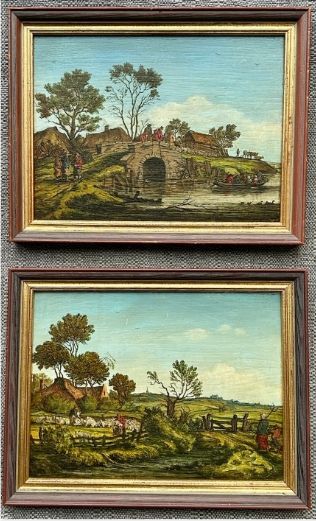
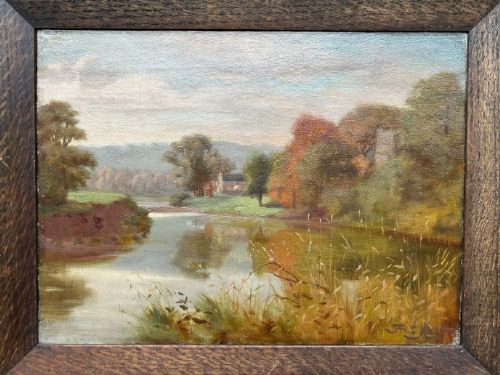
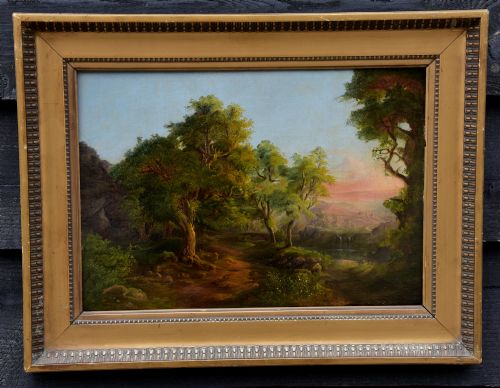
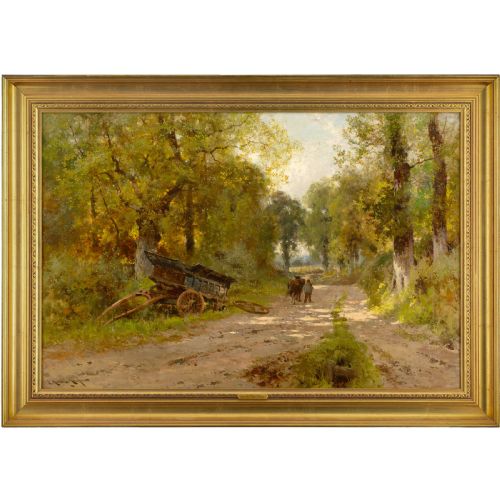
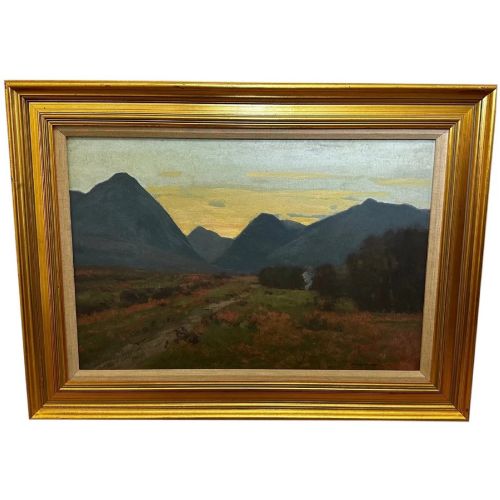
Green Framed Landscape Art
Green framed landscape art brings together pastoral scenes and natural settings housed in timber and gilt mounts from the nineteenth and early twentieth centuries.
Green Framed Landscape Art
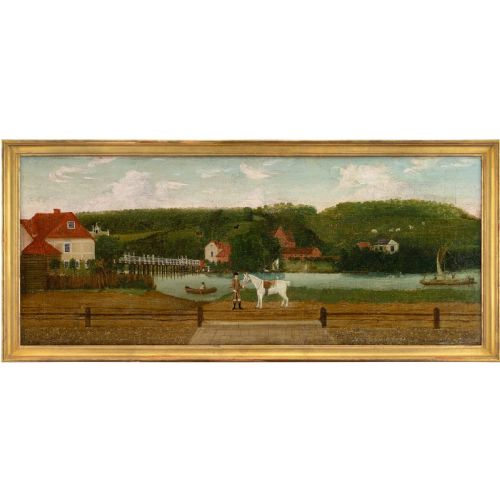
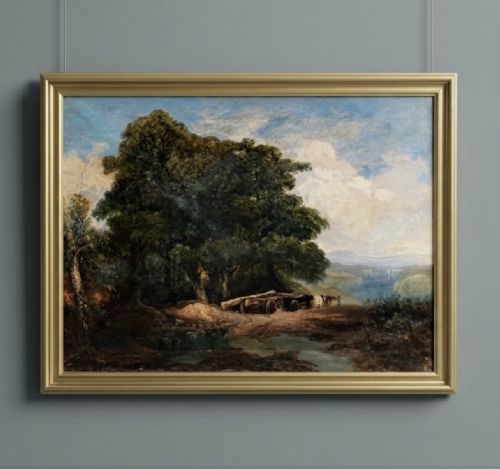
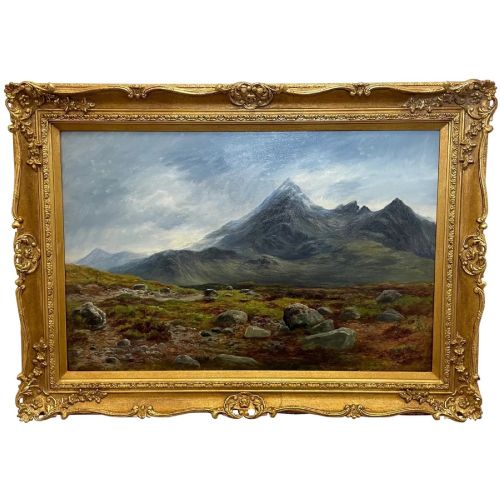
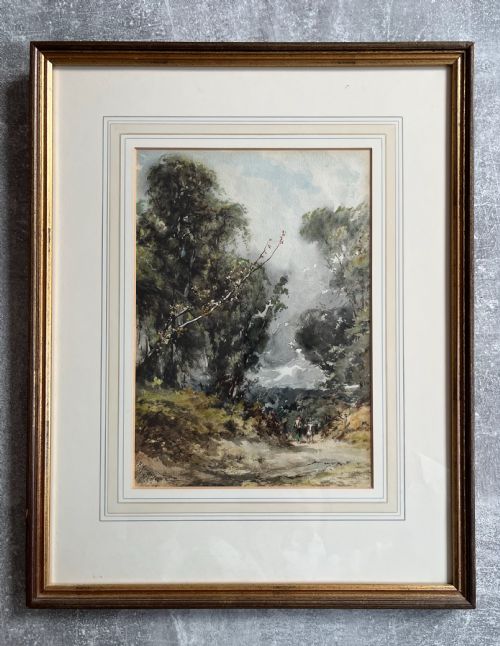
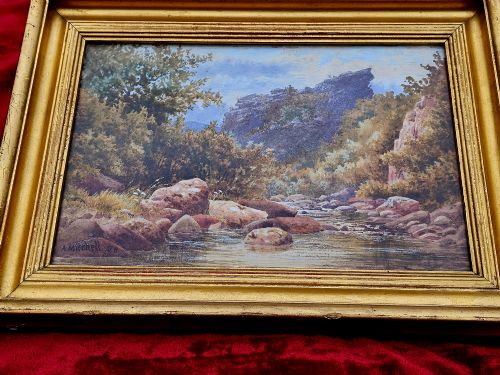
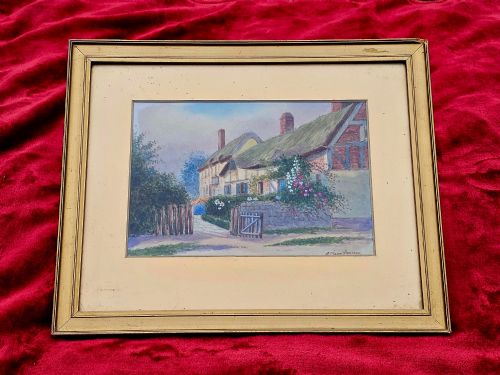
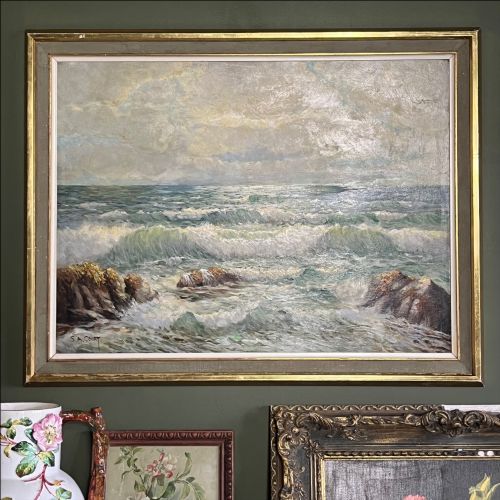
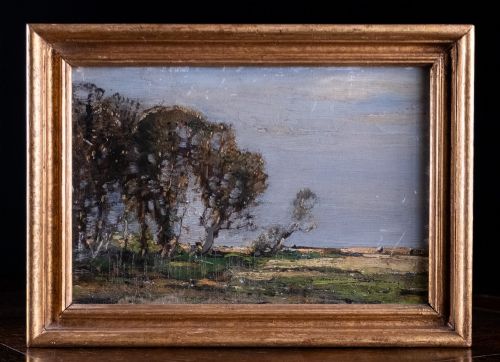
Green framed landscape art spans oil paintings, watercolours and pastels depicting countryside views, coastal inlets and woodland paths. The works originate predominantly from the nineteenth century, the Edwardian era and the early decades of the twentieth century, created by British and European artists.
Buyers encounter oil paintings on canvas and wood panels alongside delicate watercolours on paper. Many works capture specific regional settings, ranging from Scottish highlands and Welsh rivers to Cornish coasts and quiet farmyards.
The enclosing frames complete these pieces, providing a defined boundary to pastoral vistas through wood, glass and gilt finishes. These items function as wall art and fine art paintings suited to traditional interior settings.
How they were made
Artists painted primarily with oil paint on canvas, wood boards and card, or applied watercolour pigments to paper surfaces. These mediums allowed for layered brushwork and detailed observation of natural light in subjects such as woodlands and rivers.
Enclosing structures utilise wood and giltwood, combining carved mouldings to house the painted scenes securely behind glass or exposed to the room. The physical construction relies on traditional joinery methods appropriate to the Victorian and Edwardian periods.
Several artists painted sheep and cows so faithfully that even the grass beneath their hooves received careful botanical attention.
What varies in quality
Quality rests upon the artist's handling of perspective, light and natural detail within the landscape composition. Works by recognised painters holding institutional memberships or academy affiliations display superior draftsmanship and command greater visual presence.
The integrity of the physical materials also determines the standard of the piece, from the stability of the wood panel or canvas to the preservation of the pigment. Original framing that complements the period of the artwork adds to the overall cohesion of the object.
Eugène Verboeckhoven·Richard Sebastian Bond·William Beattie-Brown·George Fotherly Hargitt·William H Myers·George Graham·W Klombeck·Frederick Marriott·John Horace Hooper·A Mitchell·A Marie Parsons·Sidney A Court·Kershaw Schofield·George Houston·Robert Morson Hughes·Thomas W Lascelles·Robert A Nottingham·William Joseph Boyes·Gabriel Mathieu·David Bates·Benjamin Barker Of Bath·Charles Houben·Walter Heath Williams·Antonio DeVity·Lucy Pratt
The Green Framed Landscape Art Glossary
- Oil on canvas
- Pigments bound in drying oil applied to a woven fabric stretched across a wooden frame. This method permits rich colour blending and textured brushstrokes.
- Watercolour
- A painting method where fine pigment is suspended in a water-soluble binder on paper. It produces translucent washes of colour.
- Giltwood
- Timber coated with a thin layer of gold leaf or gilt paint. It provides a reflective decorative border for traditional artworks.
- Wood panel
- A flat solid piece of timber used as a rigid painting support. Artists utilised these surfaces before stretched canvas became dominant.
- En plein air
- Painting outdoors to capture direct observations of natural light and atmosphere. This practice became prominent among nineteenth-century landscape artists.
Green Framed Landscape Art: Frequently Asked Questions
What periods do these landscapes cover?
The works originate largely from the nineteenth century, including Victorian and Edwardian periods, extending into the early twentieth century. Painters of these eras focused on natural topography and pastoral scenes.
Specific dates within the titles point to active decades between eighteen hundred and nineteen sixty, reflecting evolving styles from romanticism to post-impressionism.
How should I hang these framed works?
Secure wall fixings suited to the weight of wood and glass are necessary to support these traditional frames safely. Positioning them away from direct sunlight protects the pigments from fading.
Allowing adequate wall space around each piece lets the frame and the landscape composition remain the visual focal point of the room.
Are these paintings signed by the artists?
Many examples feature artist signatures or dates inscribed directly onto the canvas, board or paper surface. These markings help attribute the work to specific painters active in Britain and Europe.
Unsigned pieces are frequently attributed to regional schools based on technique, subject matter and materials characteristic of the period.
What subjects appear in these paintings?
Common subjects include woodland paths, riverbanks, coastal views, country cottages and agricultural scenes with figures or livestock. Artists sought out picturesque rural topography across Britain and continental Europe.
Scenes range from tranquil pastoral moments to dramatic mountainous landscapes and garden views.