


Green Figurative Painting
Green figurative painting brings together human subjects and verdant palettes across portraits, genre scenes and landscapes spanning the Victorian era through the mid-twentieth century.
Green Figurative Painting
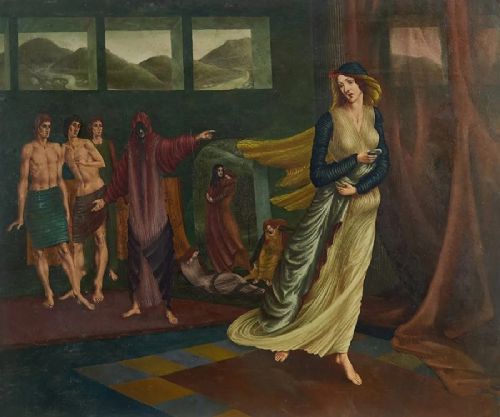
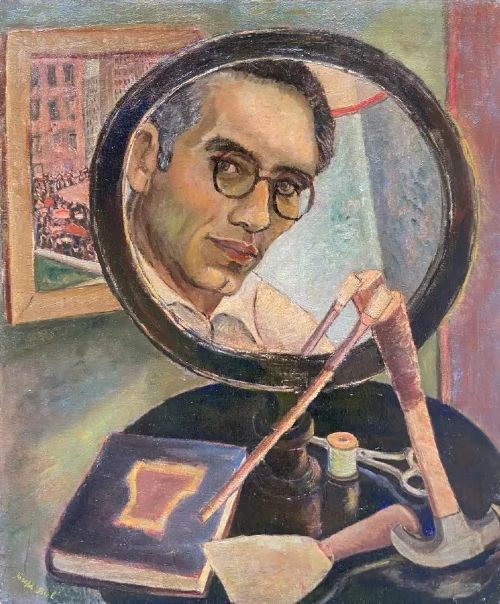
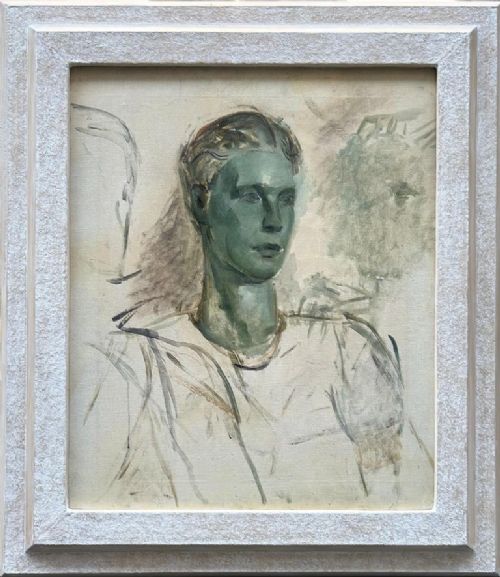
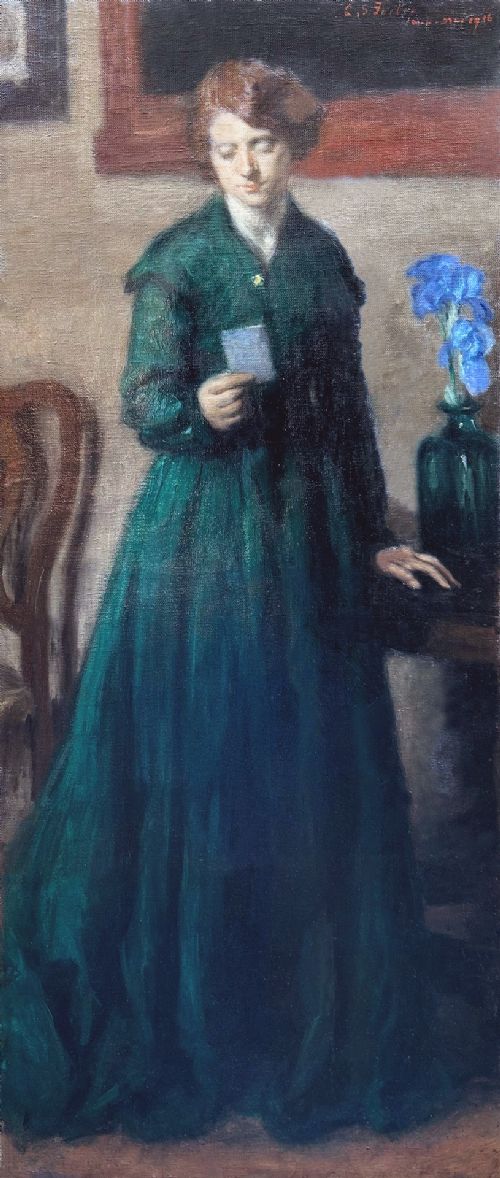
A green figurative painting presents people within natural settings or interior scenes where verdant tones dominate the composition. These works span the Victorian, Edwardian, and mid-century periods, capturing subjects ranging from solitary readers to intimate courting couples.
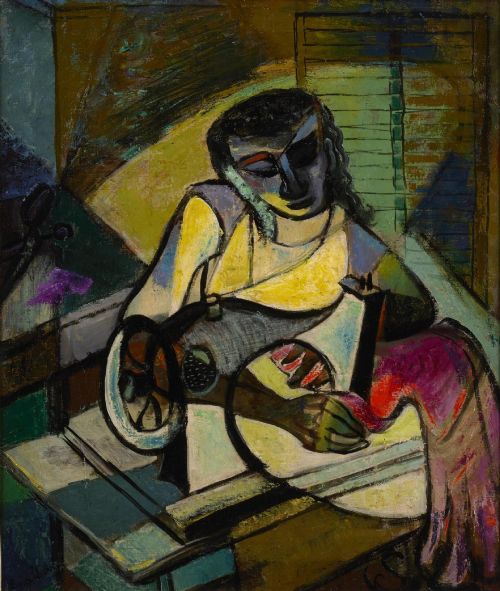
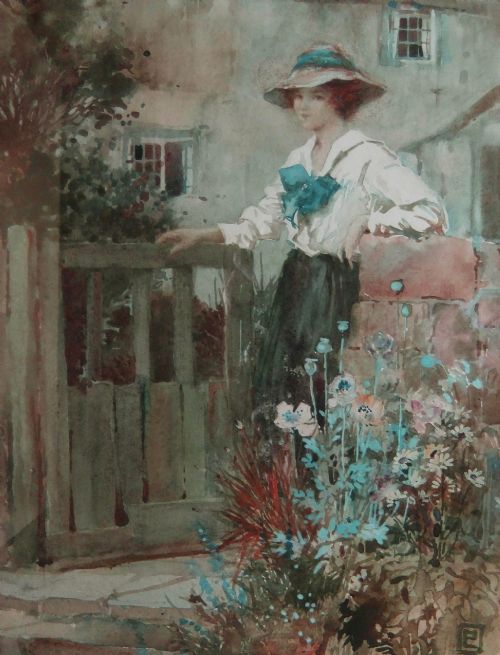
The selection on this page leans heavily towards oil on canvas and framed watercolour works produced between eighteen ninety and nineteen sixty. Buyers encounter everything from traditional genre paintings to post-impressionist interpretations and modernist figurative studies.
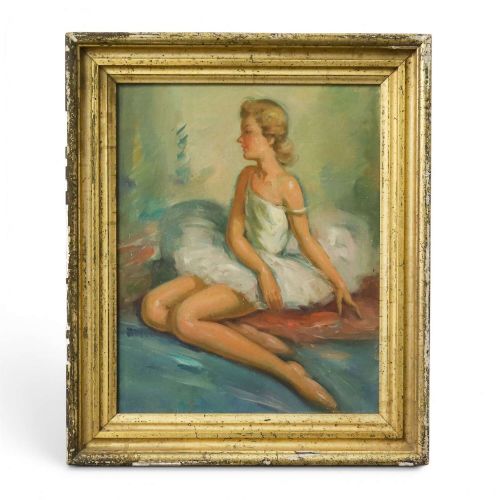
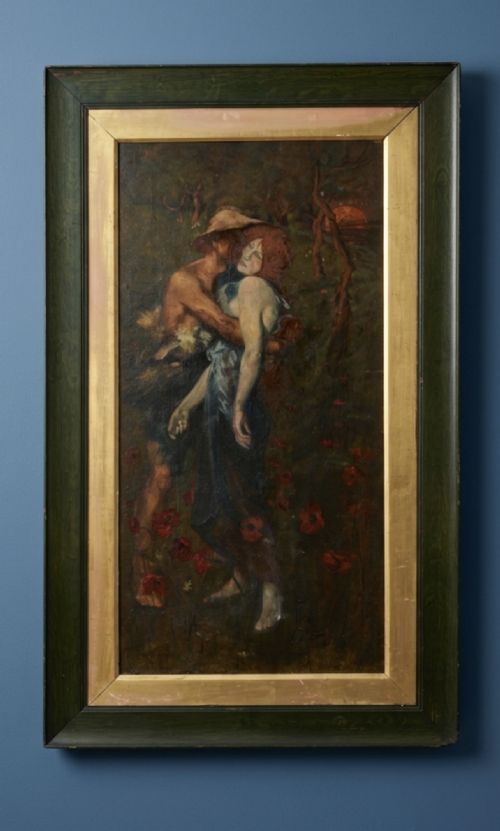
Common formats include portraits of dancers, children, and shepherds alongside narrative compositions depicting rural life, mythology, and leisure. Each piece uses the human form as its central focus while deploying green pigments to establish atmosphere and depth.
How they were made
Artists working within this category relied primarily on oil paint or watercolour pigment applied to canvas, wood panels, or paper supports. Oil applications allowed for rich, layered colour mixing, whereas watercolours on paper achieved lighter, more transparent tonal shifts.
Framing played an integral role in the presentation, with many canvases housed in period gilt frames that complemented the painted imagery. Supports were typically prepared by stretching woven fabric over wooden frames or mounting heavy paper for pigment absorption.
Among the children, dancers, and shepherds, one canvas captures a child goofing around in fancy dress.
What varies in quality
Technical proficiency in handling anatomy and spatial depth marks the difference between standard studio output and superior works. Master hands command proportion, light fall across figures, and the integration of green tones without muddying the palette.
The handling of the painted surface itself sets finer pieces apart, visible in confident brushwork, pigment retention, and the harmonious balance between subject and background. Condition of the underlying canvas or paper and the integrity of the original frame also influence the standing of an individual piece.
Francis Plummer·Joseph Biel·Philip Richard Morris·Margaret Maitland Howard·William Arthur Breakspeare·Harry Freckleton·Antoine Calbet·Gabriel Dauchot·John Sanderson Wells·Arthur Hopkins·Kershaw Schofield·Ralph Hedley·Thomas James Lloyd·Albert Guillaume·Yo Mayer·David Woodlock·Franz Bergman·Igor Talwinski·Ebenezer Wake Cook·Christian Caillard
The Green Figurative Painting Glossary
- Canvas
- A heavy woven fabric used as a support surface for oil paintings. It is typically stretched tightly across a wooden frame before application.
- Watercolour
- A painting method where water-soluble pigments are suspended in a water-based solution. Applied to paper, it creates translucent washes of colour.
- Genre painting
- An artwork depicting scenes from everyday life involving ordinary people. These works often capture domestic interiors, market squares, or rural labour.
- Gilt frame
- A wooden picture border coated with gold leaf or metallic paint. It was commonly utilised to enhance and protect nineteenth-century and early twentieth-century fine art.
- Post-Impressionism
- An art movement following impressionism that rejected its focus on spontaneous naturalism. Practitioners emphasised symbolic content, heavier outlines, and expressive use of colour.
Green Figurative Painting: Frequently Asked Questions
What periods do these paintings cover?
The available works span from the late nineteenth century through the mid-twentieth century, encompassing Victorian, Edwardian, and mid-century aesthetic movements.
Buyers will find pieces dated across several decades, reflecting changing artistic approaches to figurative subjects and colour palettes over time.
How are these artworks typically framed?
Many paintings are housed in period frames, including worn gilt wood surrounds that match the age of the canvas. These original or period-appropriate housings contribute to the overall presentation of the artwork.
Framing styles vary from ornate Victorian mouldings to simpler mid-century wooden profiles depending on the date of execution.
What subjects appear in these scenes?
Subjects range from intimate portraits of dancers and children to narrative depictions of courting couples and rural workers. Mythological figures and everyday domestic moments also feature prominently across the selection.
The common thread across all pieces is the inclusion of human figures set against or within verdant, green-toned environments.
Which materials were used by the artists?
Artists utilised oil paint on canvas or wood, as well as watercolour pigment on paper. Canvas supports dominate the oil paintings, often paired with wooden stretcher bars.
Works on paper are typically mounted and framed behind glass to protect the delicate watercolour pigment from environmental moisture and light damage.