


Avant Garde Art
These avant garde art pieces span early experimental movements through mid-century abstraction, offering bold visions on canvas, paper and board.
Avant Garde Art
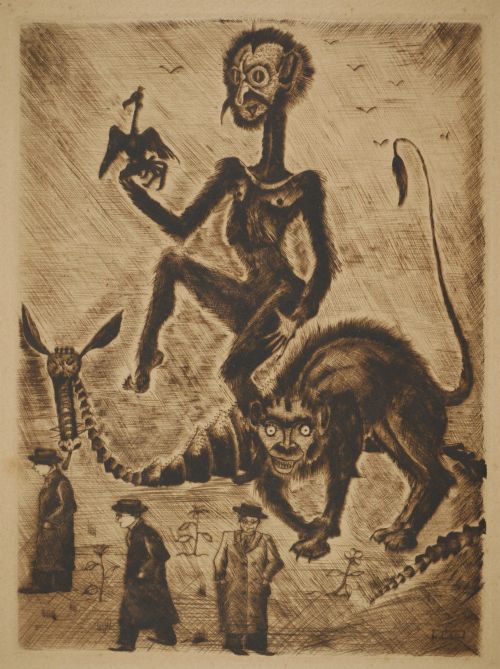
Avant garde art encompasses paintings, prints and drawings created across the twentieth century, particularly during the 1910s, 1920s, 1930s, 1940s and 1960s. These works capture radical departures from traditional representation through movements such as Cubism, Fauvism, Surrealism and Modernism.
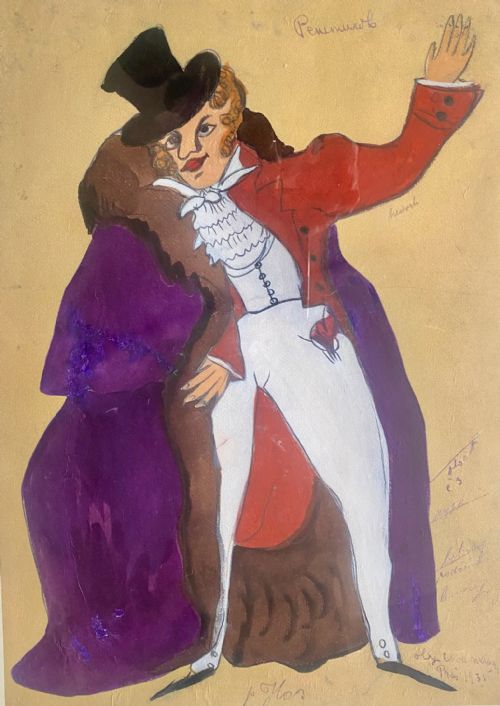
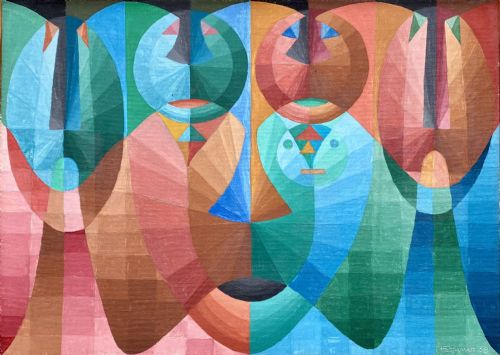
Buyers frequently encounter oil paintings on canvas alongside works executed in gouache, ink, wood and pencil. Subjects range from village scenes and theatrical interiors to abstract geometric compositions and figure studies.
Pieces originate from various European art centres, reflecting the international scope of experimental twentieth-century practice. Works connect directly to distinct artistic circles, including the Bloomsbury Group and Parisian modernist networks.
Materials and methods
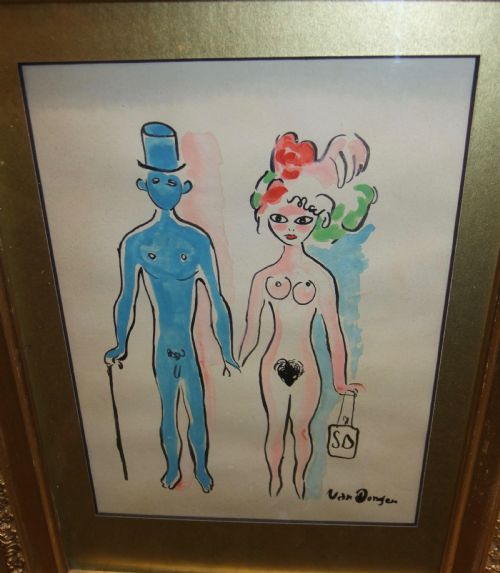
Makers applied oil paint, gouache, ink and encaustic onto supports including canvas, paper, board, jute and wood. These traditional painting and drawing materials served experimental compositions that challenged established academic conventions.
Drawings utilise pen, ink and crayon on paper to achieve dynamic line work and precise structural forms. Paintings employ expressive brushwork, thick pigment application and abstracted planes characteristic of mid-century modernist development.
Nuns, doves, trapeze artists and wandering flute players share these experimental twentieth-century canvases.
Judging the work
Quality rests upon the strength of the composition, the sureness of the line and the historical significance of the movement represented. Stronger examples display confident handling of form and colour that define their specific modernist style.
The distinction between standard works and master examples often lies in the provenance and the clarity of the artist's vision. Pieces tied directly to documented historical exhibitions or notable artistic groups hold greater art-historical weight.
Kurt Lorein Victor Peiser·Olga Choumansky·Mercedes Legrand·Demetrios Galanis·Girieud·Jean Hippolyte Marchand·Yo Mayer·Jacques Carelman·Geza Szobel
The Avant Garde Art Glossary
- Cubism
- An early twentieth-century avant-garde art movement that revolutionised European painting and sculpture. It breaks down subjects into geometric shapes and multiple simultaneous viewpoints.
- Surrealism
- A cultural movement that developed in the aftermath of World War I, best known for its visual artworks and writings. It aimed to resolve the previously contradictory conditions of dream and reality.
- Fauvism
- The style of a group of early twentieth-century modern artists whose works emphasised painterly qualities and strong colour over the representational values retained by impressionism. These artists utilised bold, non-naturalistic palettes.
- Gouache
- A water-based paint consisting of pigment and other inert material designed to be used in an opaque painting method. It provides solid, flat areas of colour well suited to modernist poster and illustration work.
- Provenance
- The chronology of the ownership, custody or location of a historical object. Documented history establishes authenticity and traces the path of an artwork through time.
Avant Garde Art: Frequently Asked Questions
What is avant garde art?
Avant garde art refers to experimental works produced by artists who pushed boundaries beyond existing cultural norms. These pieces reflect radical shifts in perspective during the first half of the twentieth century.
Such works break from traditional academic representation through abstraction, distorted perspective and non-naturalistic colour. They document the progression of modern visual culture across Europe.
How do I date these pieces?
Dating relies on stylistic markers, materials and documented periods associated with specific artistic movements. Works from the 1910s often show early cubist or linear experimentation, while 1920s and 1930s pieces frequently embrace surrealist or fauvist principles.
Signatures, inscriptions and historical provenance provide further chronological anchors. Comparing a piece to documented works by the same circle helps narrow its era.
What distinguishes cubism from surrealism?
Cubism focuses on the structural deconstruction of objects into geometric planes and multiple viewpoints. The emphasis remains on formal composition, spatial arrangement and abstract form.
Surrealism explores the subconscious mind, dreams and bizarre juxtapositions of unrelated subjects. It prioritises psychological narrative and symbolic imagery over structural analysis.