



Group Portrait Painting
Group portrait painting records multiple sitters together on canvas, paper or panel, capturing familial ties, social circles and historical scenes in oils, watercolours and mixed media.
Group Portrait Painting
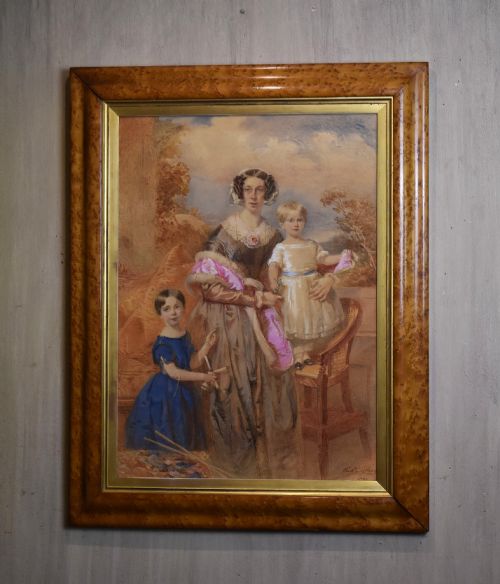
A group portrait painting brings together several figures within a single composition, ranging from formal family gatherings in English country houses to intimate Victorian watercolours of children. When searching for a group portrait painting, buyers encounter works spanning the eighteenth, nineteenth and early twentieth centuries, executed across diverse formats.
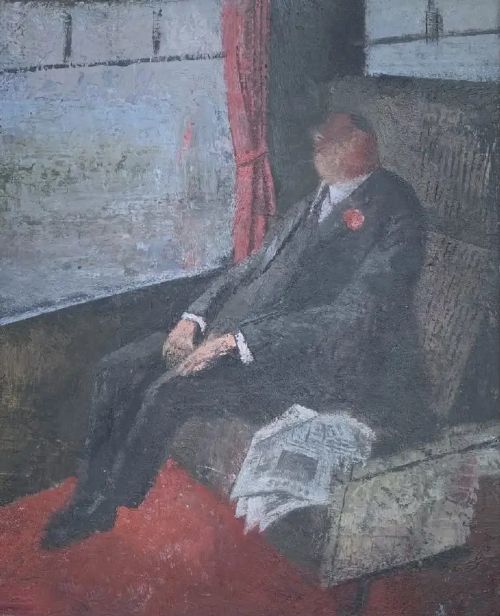
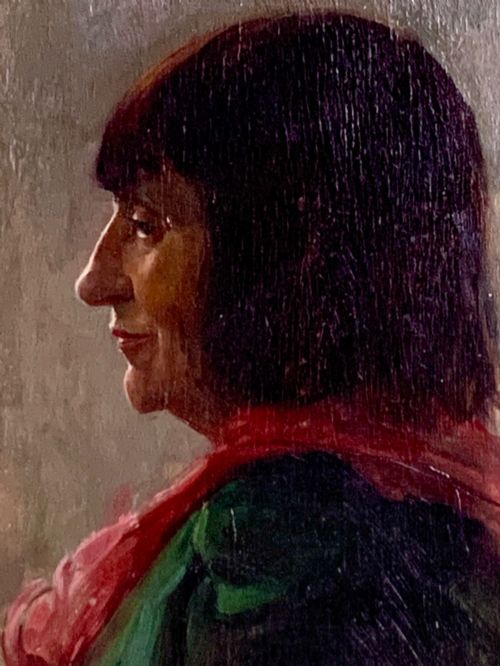
The selection on this page includes traditional oil on canvas works alongside delicate watercolours, silhouette portraits, mixed media garden scenes and portrait miniatures. Examples stretch from academic British school compositions and Qing dynasty ancestral works to avant-garde Bloomsbury Group interpretations.
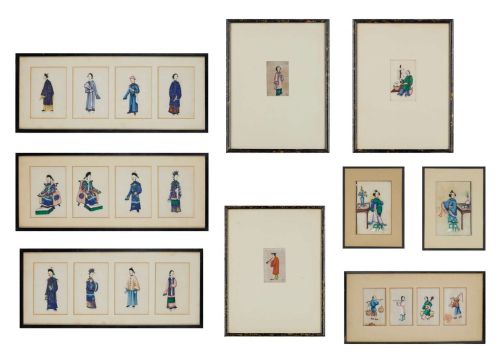
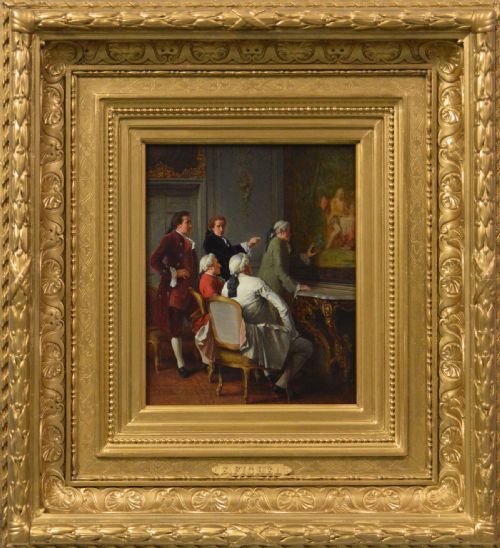
Domestic family groups predominate alongside historical genre scenes of gentlemen admiring art, theatrical groupings and Chinese pith paintings. Each piece documents interpersonal relationships and social standing through the specific dress, posture and setting chosen by the artist.
Materials and Technique
Painters relied primarily on oil on canvas for substantial works, layering pigments to achieve depth in drapery and flesh tones, while watercolours on paper suited smaller domestic commissions. Giltwood frames frequently enclose these pieces, providing a decorative boundary that enhances the visual weight of the canvas or paper.
Alternative techniques recorded in the inventory include ink on pith paper, mixed media garden settings and silhouette cutting. Artisans balanced draughtsmanship with colour harmony to render multiple likenesses cohesively within a single frame.
Subjects encompass domestic family gatherings, Chinese ancestor groups, children playing, nuns with doves and Persian kittens at a tea party.
Assessing Quality and Execution
Quality rests upon the artist's ability to render individual psychological character while maintaining compositional balance across multiple faces. Weaker works stiffly align sitters like wooden dolls, whereas superior examples integrate the figures naturally into domestic or garden backgrounds.
The handling of hands, textiles and facial expressions distinguishes accomplished practitioners from provincial copyists. Furthermore, the preservation of the original medium - whether oil, watercolour or mixed media - without excessive overpainting determines the historical integrity of the piece.
Frederick Tatham·Sir Thomas Lawrence·Benjamin Eugene Fichel·Charles Hayter·Carl Adolf Mende·William Egley·Alfred Darbyshire·Jean Hippolyte Marchand·Yo Mayer·Agnes Augusta Tallboys·Charles Philips·Moses Vanderbank
The Group Portrait Painting Glossary
- Portrait Miniature
- A small, highly detailed painting executed on ivory, vellum or paper, intended for intimate viewing or personal carriage. These delicate works often capture single sitters or small family groups with meticulous brushwork.
- Pith Painting
- An artwork created on a spongy, delicate paper-like material sliced from the stem of the Tetrapanax papyrifer plant. Chinese export artists utilised this medium extensively during the nineteenth century for vibrant figural subjects.
- Silhouette
- A portrait profile cut from black paper or painted in solid dark pigments against a pale background. This minimalist technique gained immense popularity during the Georgian and Victorian eras for capturing likenesses swiftly.
- Provenance
- The documented history of ownership, exhibition and publication associated with an artwork. A clear provenance establishes the authenticity and historical context of a multi-figure canvas.
- British School
- A term applied by historians and dealers to works produced by artists trained or working within Britain. It encompasses a wide spectrum of styles, from academic portraiture to experimental modernist movements.
Group Portrait Painting: Frequently Asked Questions
How do I date a group portrait painting?
Dating relies primarily on the sitters' clothing, hairstyles and furniture styles, which shift predictably across decades. Examining the framing, canvas weave and stretcher construction provides additional physical clues.
Signatures, inscriptions on the reverse and recorded exhibition histories help narrow the timeline further. Comparing the handling of paint with documented works by the same school or artist secures a reliable date range.
Where should I hang a large oil painting?
Substantial canvases require a wall with adequate structural support and proportions to carry their visual weight without overwhelming the room. Placing them in principal reception rooms echoes their original domestic function.
Avoid positioning valuable oils in direct sunlight or above active fireplaces where fluctuating temperatures and soot can damage the canvas and pigment. Stable indoor humidity protects both the stretcher frame and the painted surface.
What is a portrait miniature?
A portrait miniature is a small-scale painting designed for private contemplation rather than grand public display. They were frequently commissioned to commemorate family members, marriages or departures.
Artists employed fine brushes and magnifying glasses to achieve remarkable detail on small surfaces of vellum, card or ivory. Collectors often display them in dedicated cabinets away from bright light to preserve fugitive watercolours.
How do I care for antique watercolours?
Watercolours on paper are highly sensitive to ultraviolet light, which causes pigments to fade permanently. Framing them with UV-filtering glass and hanging them away from direct sunlight is essential for their preservation.
Maintain stable humidity levels in the room to prevent paper foxing, mould growth and warping. Professional mounting using acid-free materials ensures the paper remains undamaged over decades of display.
What distinguishes provincial art from academy work?
Academy-trained artists demonstrated sophisticated mastery of human anatomy, perspective and psychological nuance derived from formal institutional study. Their compositions manage complex lighting and multi-figure arrangements with seamless technical authority.
Provincial works often display charming naivety, stiffer poses and simpler handling of perspective and textiles. While lacking academic polish, these pieces offer direct, unpretentious records of local life and regional dress.