
Green Emerald Jewellery
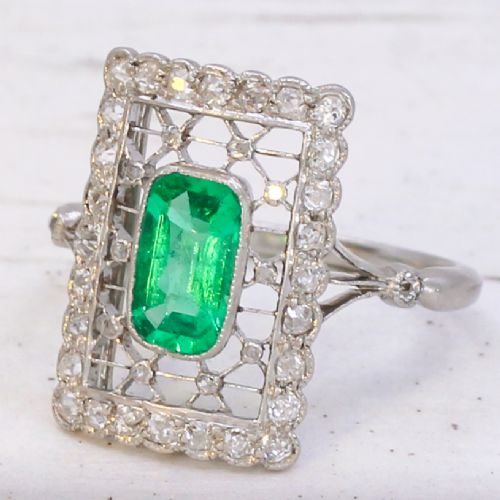
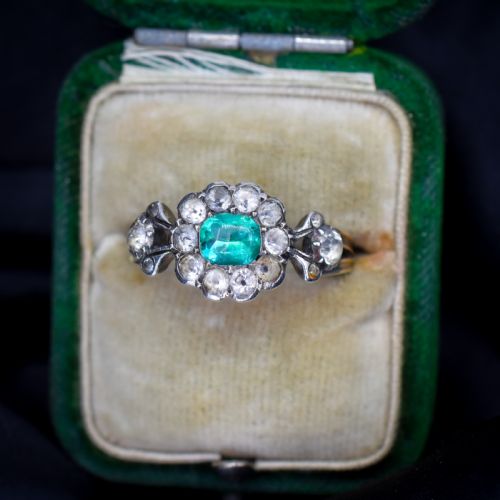
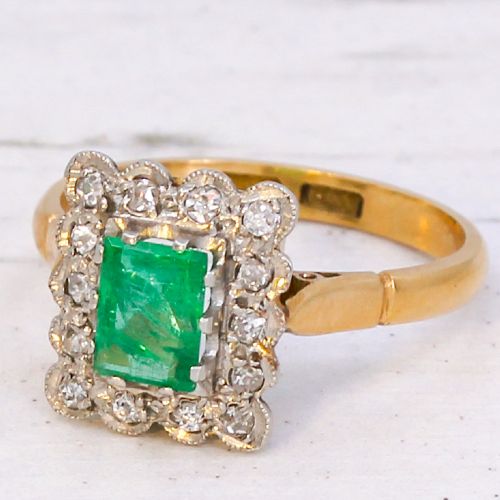
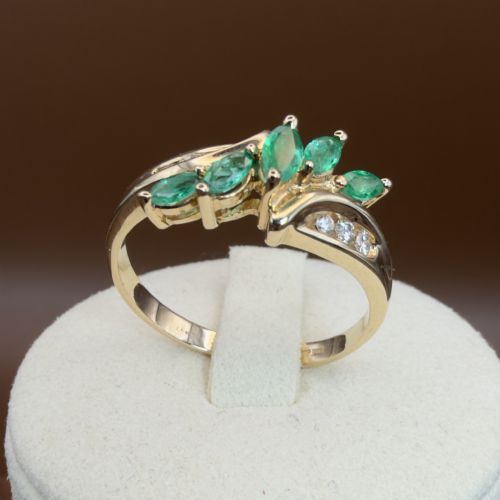
Green emerald jewellery gathers rings, brooches and pendants shaped across the Victorian, Edwardian and Art Deco periods.
Green Emerald Jewellery
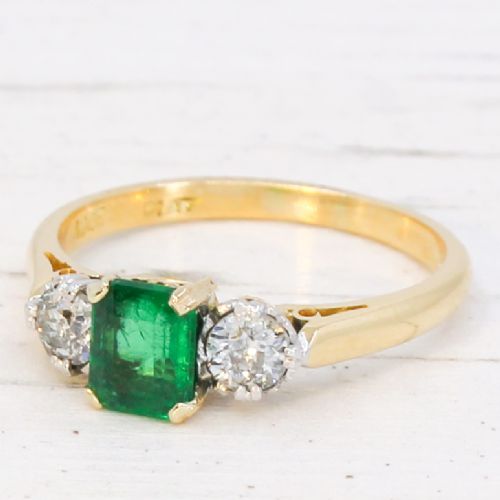
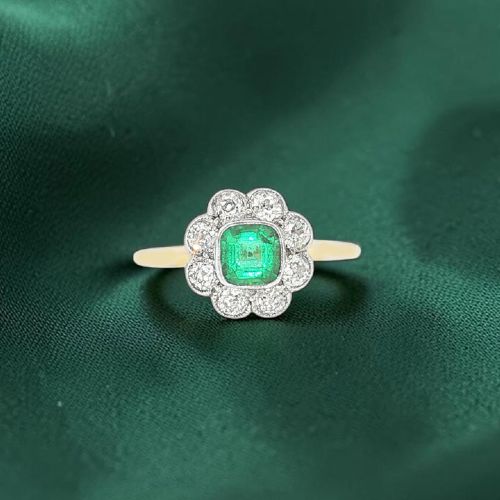
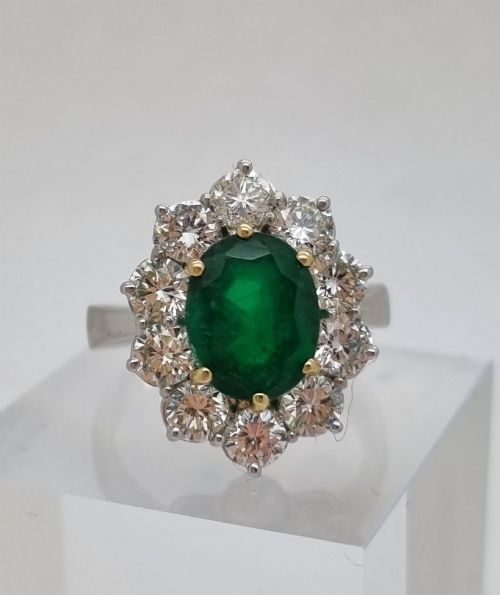
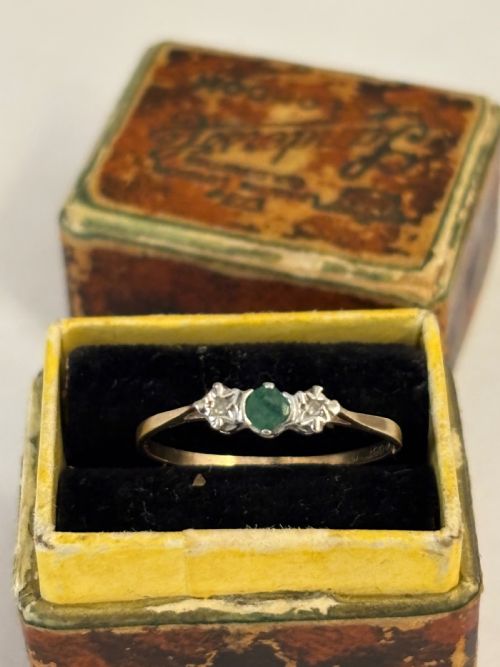
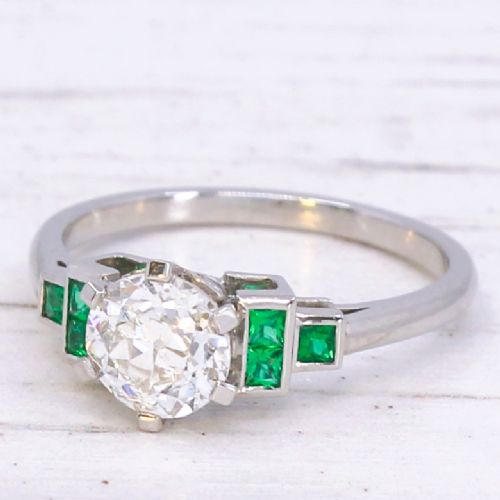
Green emerald jewellery encompasses finger rings, cluster brooches, drop earrings and pendant necklaces spanning the Georgian era to the mid-twentieth century. Buyers searching this phrase meet clusters, three-stone rings and solitaire settings mounted in platinum or gold.
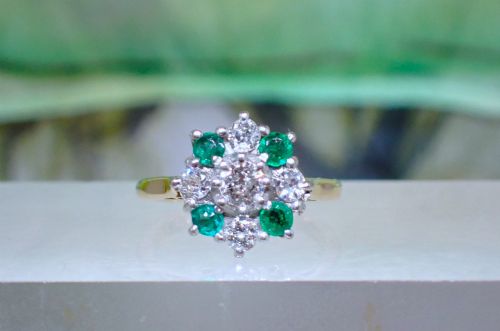
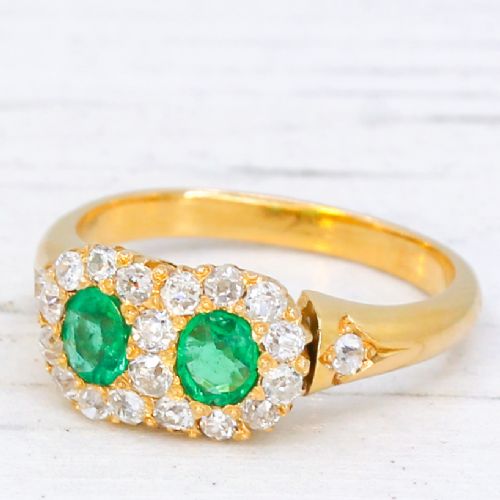
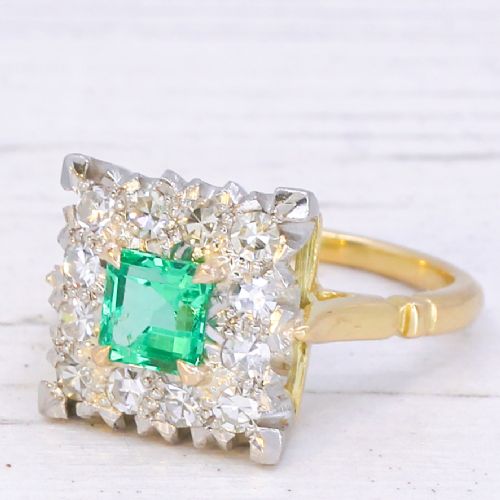
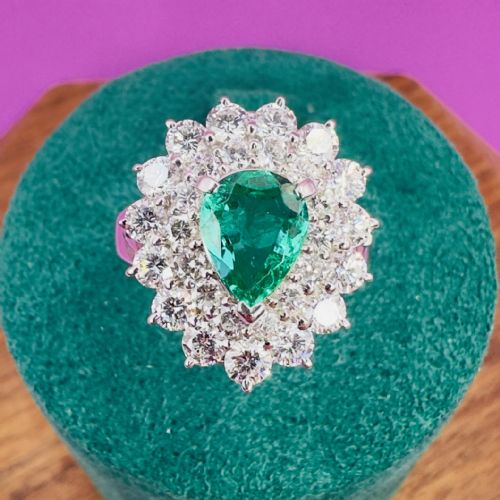
The selections include antique Georgian paste pieces alongside Edwardian Colombian emerald rings and Art Deco cocktail creations. Cluster rings pairing emeralds with old-cut diamonds form the core of the items seen on this page.
Materials and Construction
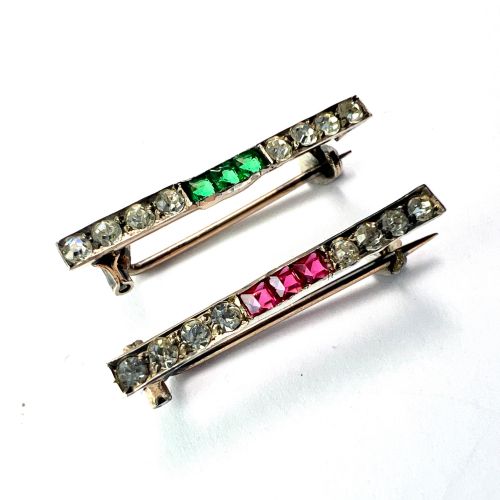
Goldsmiths set stones in platinum, yellow gold, white gold and silver, often combining silver-topped gold in early pieces. Metals support structural mountings such as bar brooches, sunburst lockets and multi-stone clusters.
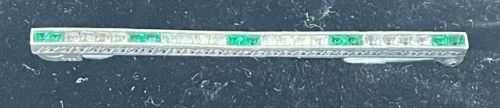
Gemstones utilise cuts ranging from marquise and oval to pear and princess, accompanied by old-cut diamonds and occasionally green paste. French workshops and general makers incorporated clasps, pin stems and adjustable shanks into the finished items.
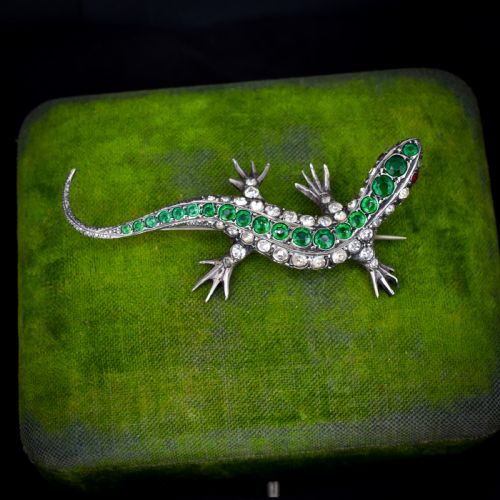
A silver lizard brooch watches over the emerald selection, frozen mid-crawl with green paste eyes.
Distinctions in Standard
Quality rests upon stone origins and oil treatments, with minor oil and negligible oil Colombian emeralds commanding attention alongside untreated specimens. The integration of substantial diamond carat weights beside central emeralds alters the balance of a piece.
Execution shows in the precision of cluster geometries, the weight of precious metals such as heavy platinum mounts, and the preservation of antique French hallmarks or original settings.
The Green Emerald Jewellery Glossary
- Cluster ring
- A central gemstone surrounded by smaller accent stones, typically diamonds forming a border. This arrangement maximises visual impact on the hand.
- Colombian emerald
- An emerald sourced from mines in Colombia, historically recognised for distinctive saturation and clarity characteristics. These stones appear frequently in certified antique settings.
- Paste
- Hand-cut glass utilised as a gemstone substitute in historical jewellery. Green paste imitates emerald within Georgian and Victorian brooches.
- Old-cut diamond
- A diamond cut by hand before the standardisation of modern brilliant facets, featuring a smaller table and a higher crown. These stones define Edwardian and late Victorian rings.
- Negligible oil
- An emerald enhancement descriptor indicating minimal fracture filling with oil or resin. It denotes superior natural stone clarity.
Green Emerald Jewellery: Frequently Asked Questions
How do I care for antique emerald rings?
Emeralds are softer than diamonds and require gentle cleaning with warm soapy water without harsh ultrasonic machines. Store them separately to prevent scratching from harder gems.
Avoid exposing treated emeralds to sudden temperature shifts or chemicals that might affect clarity enhancements.
What periods do these pieces come from?
The selection includes Georgian, Victorian, Edwardian, Art Deco and mid-century modern eras spanning the nineteenth and twentieth centuries.
Each period brings distinct mount styles, from silver-topped gold clusters to platinum geometric cocktail rings.
Are paste pieces considered authentic antiques?
Historical paste jewellery from the Georgian and Victorian periods represents genuine antique craftsmanship utilising lead glass. These items were valued decorative objects in their own right.
They offer collectors period design and hand-cut details without utilising mined gemstones.
How can I tell a Colombian emerald?
Distinguishing origin relies on gemmological laboratory certificates detailing trace element signatures and specific inclusion characteristics. Natural Colombian stones exhibit distinct internal patterns noted by specialists.
Dealer listings frequently reference laboratory reports confirming the geographic source and oil treatment level.