


1930s Emerald Jewellery
These 1930s emerald jewellery pieces capture the geometric precision and bold gemstone styling of the interwar period, offering collectors striking platinum and gold designs.
1930s Emerald Jewellery
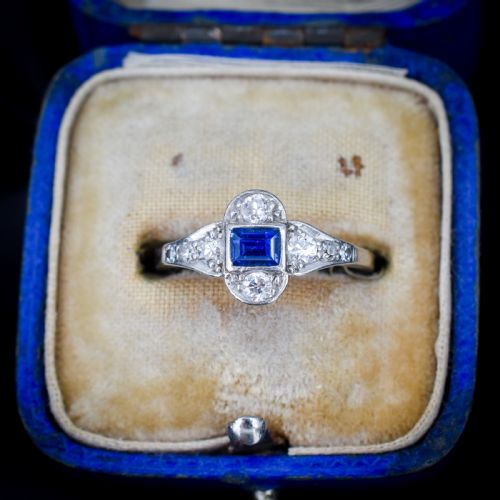
When you search for 1930s emerald jewellery, you encounter rings, bracelets, earrings, and pendants that embody the geometric discipline of the Art Deco era. The selection centres heavily on cocktail rings, dress rings, and cluster designs featuring vibrant green beryl alongside sparkling diamond accents.
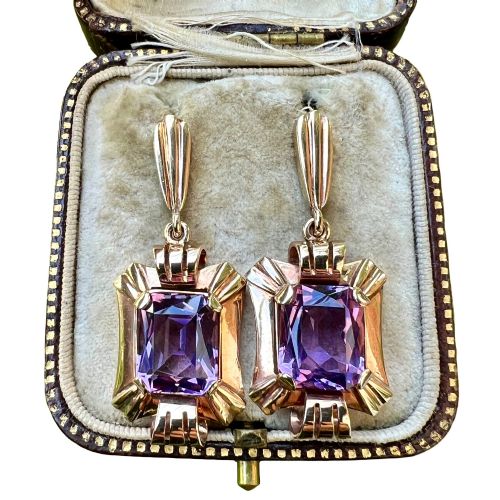
The material palette spans platinum and white gold settings, occasionally extending to yellow gold and rose gold mountings. Alongside genuine Colombian and Zambian emeralds, pieces incorporate companion stones like aquamarine, sapphire, ruby, and amethyst.
Origin points range across Britain, France, Austria, and Portugal, reflecting a pan-European design vocabulary. While rings dominate the selection, substantial diamond and emerald bracelets alongside drop earrings appear frequently.
Materials and construction
Platinum serves as the primary metal for high-value settings, allowing jewellers to construct intricate, lightweight frameworks that securely hold multi-carat stones without heavy metal bulk. White gold and yellow gold also appear, particularly in continental European workshops.
Stone integration relies on precise claw settings and flush mountings designed to showcase the deep green hue of the emeralds. Diamond pavé and cluster arrangements frame the central emeralds to maximise light reflection across the geometric surfaces.
One enterprising maker bypassed precious stones entirely by mounting green glass into chrome.
Assessing the work
The distinction between standard commercial items and exceptional pieces rests on the origin and clarity treatment of the emeralds, with Colombian stones and minor oil enhancements commanding particular regard. The weight and quality of the supporting diamonds further dictate the hierarchy of the piece.
Structural integrity of the metalwork, especially the crispness of the platinum millgraining and the security of the claw settings, separates superior craftsmanship from ordinary production. Originality of the mount and the overall compositional balance complete the assessment.
The 1930s Emerald Jewellery Glossary
- Art Deco
- A design style spanning the 1920s and 1930s characterised by symmetry, geometric motifs, and stylised lines. This aesthetic governs the structural layout of mountings and stone cuts.
- Platinum
- A dense, durable white metal favoured during the period for fine jewellery settings. Its strength permits delicate wirework and secure prong arrangements.
- Minor oil
- A professional descriptor indicating a low level of resin clarity enhancement in natural emeralds. This classification is preferable for preservation and value.
- Cluster ring
- A ring design featuring a central gemstone encircled by a perimeter of smaller stones, typically diamonds. This layout maximises visual impact on the hand.
- Trilogy ring
- A ring set with three primary gemstones, often symbolising past, present, and future. In this period, emerald centres with diamond shoulders are typical.
1930s Emerald Jewellery: Frequently Asked Questions
How do I identify a 1930s piece?
Authentic pieces from this decade typically exhibit geometric symmetry, linear motifs, and the prominent use of platinum or white gold settings. Gemstones are frequently cut in step-cut, emerald, or old European styles suited to the prevailing aesthetic.
Examination of the reverse construction and hallmark stamps often reveals continental European or British assay marks consistent with the interwar period.
Are these emeralds treated?
Many natural emeralds undergo traditional clarity enhancement using colourless oil or resin to fill microscopic surface-fissures. Certificates from gemmological laboratories specifically note the presence and volume of these treatments.
Stones designated with minor oil enhancements retain higher market standing than those requiring significant treatment to stabilise their appearance.
How should I wear these rings?
Because emeralds possess a moderate hardness rating on the Mohs scale, rings benefit from mindful wear during daily activities. Removing them before heavy manual tasks prevents unnecessary impact on the central stone and surrounding platinum.
Storing each piece separately in a lined box protects the softer beryl from scratching against harder diamond jewellery.
What metals were used?
Platinum dominated luxury manufacturing during this decade due to its tensile strength and bright white finish. This metal allowed artisans to create ultra-fine wirework and secure prong settings.
Yellow gold and white gold also appear regularly, particularly in pieces originating from Austrian, French, and Portuguese workshops.