






Antique Platinum Wristlet
An antique platinum wristlet offers the sleek, articulated elegance of early twentieth-century design, crafted to catch the light with every turn of the hand.
Antique Platinum Wristlet
When you search for an antique platinum wristlet, you are looking at fine jewellery bracelets spanning periods from the Edwardian era through the Art Deco years and into mid-century design. These pieces sit fluidly against the wrist, often taking the form of geometric links or delicate strap work.
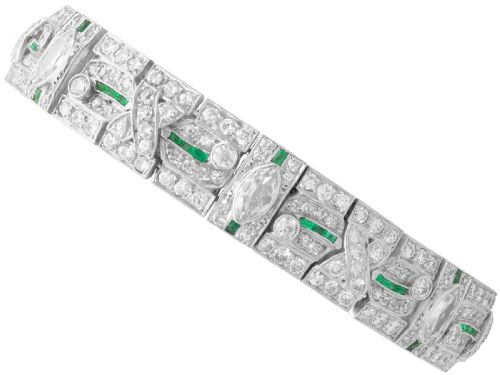
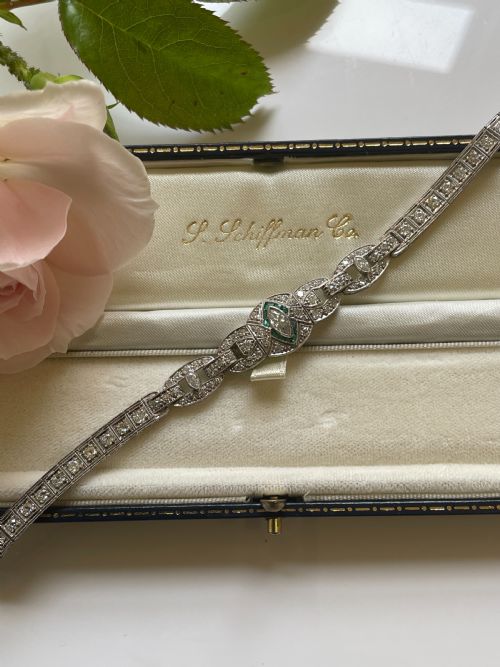
The version you are most likely to meet on this page is a platinum bracelet set with diamonds, frequently accompanied by emeralds, sapphires, or pearls. These items merge precious metal with intricate stone settings characteristic of early twentieth-century ateliers.
The materials recorded in these listings combine platinum and white gold with yellow gold accents, while the styles range from flowing Art Nouveau lines to structured Art Deco geometry.
How they were made
The construction of these pieces relies heavily on platinum, a metal chosen for its strength and ability to hold stones securely with minimal visible metal. This allowed jewellers to create delicate, lace-like frameworks without sacrificing durability.
Stones such as diamonds, emeralds, and sapphires are integrated using period techniques, including collet settings and intricate pavé arrangements that maximise the brilliance of each gem.
Some heavy Art Nouveau pieces carry enough solid platinum weight to remind you that Edwardian wrists must have possessed surprising muscle.
What varies in quality
The distinction between standard and exceptional pieces lies in the precision of the metalwork and the uniformity of the set stones. Finer examples display seamless articulation between links and meticulous hand-finishing that remains crisp across the reverse of the piece.
Quality also rests on the balance and proportion of the design, where the weight of the platinum and the selection of accent gems such as emeralds or pearls complement rather than crowd the primary diamonds.
The Antique Platinum Wristlet Glossary
- Platinum
- A dense, durable white metal prized in jewellery for its strength, allowing for delicate settings that securely hold precious stones without bulk.
- Art Deco
- A design style spanning the 1920s and 1930s characterised by sleek geometric shapes, stylised motifs, and symmetrical patterns.
- Edwardian
- A period of fine jewellery design known for its light, garland-style motifs, often utilising platinum and pearls to create lacy, delicate effects.
- Collet setting
- A method of securing a gemstone where a metal collar wraps entirely around the girdle of the stone, holding it firmly in place.
- Art Nouveau
- A turn-of-the-century style inspired by natural forms, featuring flowing, asymmetrical lines and organic curves.
Antique Platinum Wristlet: Frequently Asked Questions
How do I wear a platinum wristlet daily?
These pieces are designed to articulate smoothly around the wrist, making them comfortable for regular wear when handled with reasonable care. Pairing them simply lets the metalwork and stones remain the focal point.
Avoid wearing them during rigorous physical activities to protect the fine platinum links and delicate stone settings from unnecessary impact.
How can I tell an Edwardian piece from Art Deco?
Edwardian designs tend to feature lacy, organic garland motifs with soft curves, often combining pearls and diamonds in light platinum settings. They evoke a softer, more romantic aesthetic.
Art Deco pieces shift towards rigid geometry, sharp lines, and strong symmetry, frequently incorporating contrasting gemstones like emeralds alongside diamonds.
What is collet setting?
Collet setting involves a band of metal that encircles the edge of a gemstone to hold it securely within the jewellery piece. This traditional technique creates a clean, defined border around the stone.
It is commonly observed in pieces designed to keep stones safe while presenting a smooth profile against the skin.
Are these bracelets marked for metal purity?
Many period pieces carry stamps or hallmarks denoting the metal content, though older hand-worked items may show faint markings due to wear over time. These marks typically indicate platinum or gold fineness.
Inspecting the piece closely often reveals small workshop stamps or purity indicators hidden within the clasp or links.