


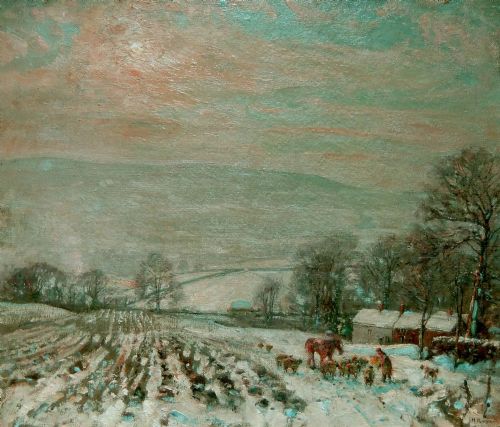
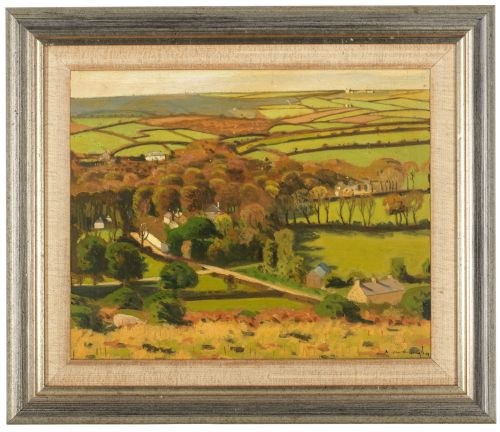
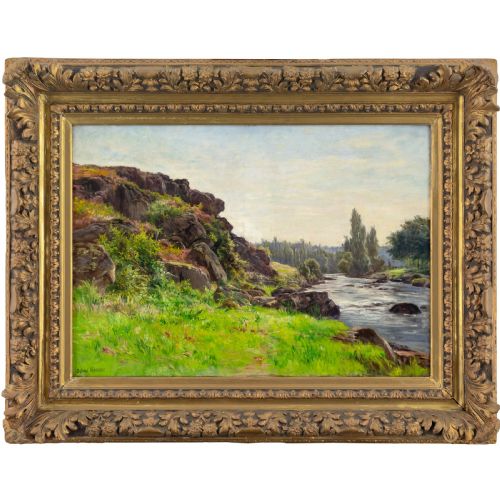

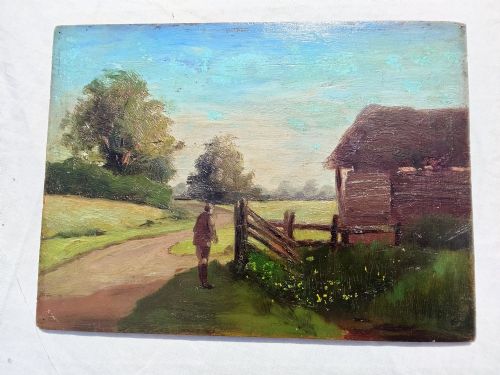
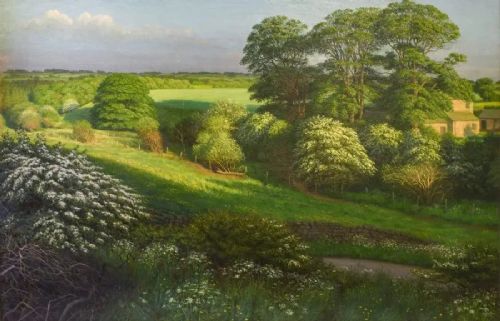
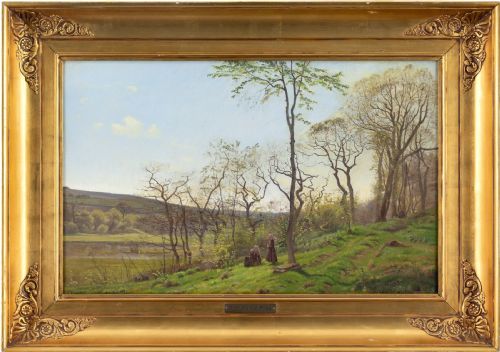
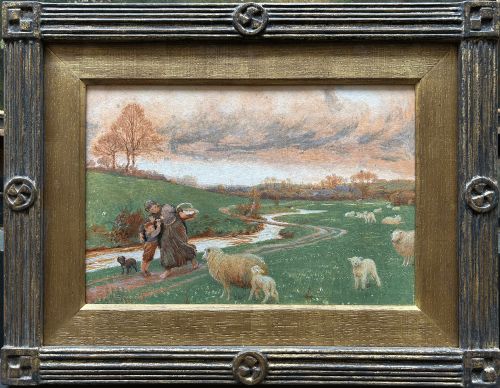
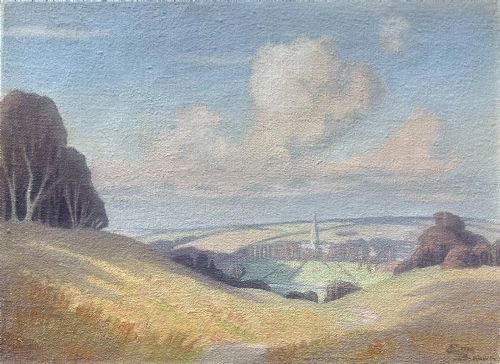
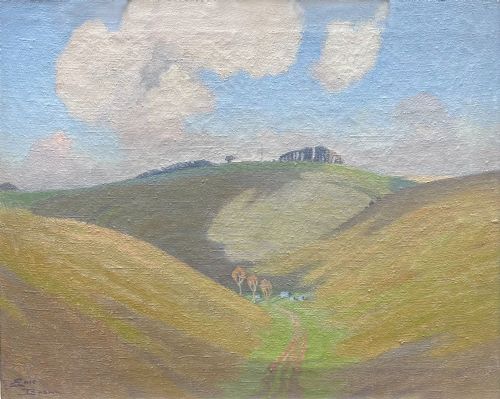
Green Countryside Oil Painting
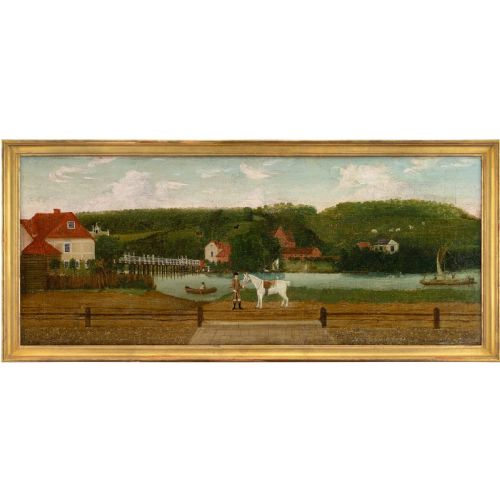
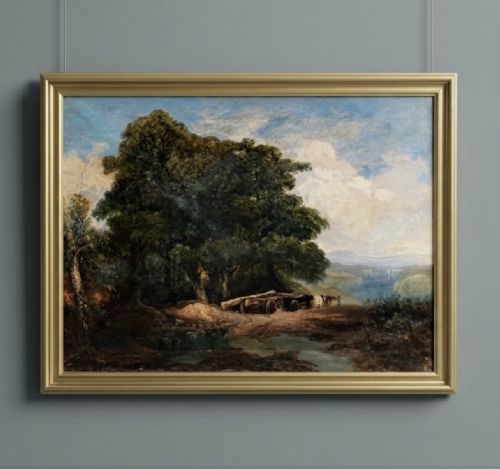
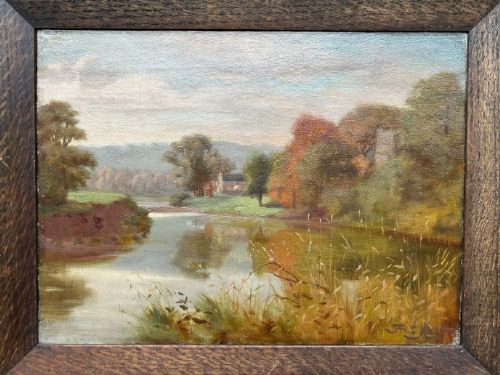
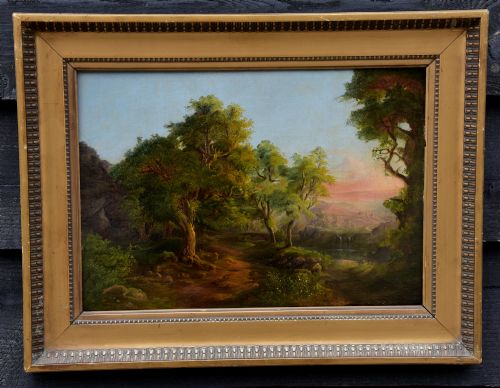
A green countryside oil painting brings pastoral light and nineteenth-century valleys directly onto the wall.
Green Countryside Oil Painting
A green countryside oil painting captures rural vistas, woodland rivers, and pastoral valleys through nineteenth and twentieth-century British and European traditions. Buyers seeking these works encounter framed canvases and wooden boards depicting cattle, haystacks, and riverbanks under varied seasonal light.
The selection ranges from Victorian pastoral scenes to British Impressionism and Modern British landscapes. Works span periods from the eighteen-fifties through the mid-twentieth century, recording agricultural fields, country lanes, and distant hills.
Most examples originate from named artists working within English, Welsh, and continental schools. Common compositions feature figures, farm animals, and cottages integrated into verdant rural settings.
Materials and construction
Artists painted primarily with oil paint applied to stretched woven canvas or rigid wooden boards. Pigments were brushed or laid with impasto technique to build texture in foliage, water, and fields.
Surviving works are typically housed in period wooden frames, occasionally accented with gilt mouldings. Support panels utilise timber suitable for flat painting surfaces, whilst canvas requires tension across wooden stretchers.
Several cows and a stray dog wander across these fields, faithfully guarding riverbanks against unexpected onlookers for over a century.
Distinctions in quality
Quality rests upon the artist's handling of atmospheric light, depth, and spatial perspective within the rural scene. Superior examples demonstrate confident brushwork and precise tonal balance, particularly in skies and shadows.
The condition of the paint layer and original support determines the integrity of the piece. Works retaining stable pigment without excessive craquelure or later overpaint preserve the artist's original touch.
Richard Sebastian Bond·William H Myers·George Graham·Frederick Marriott·Herbert Royle·Robert Morson Hughes·Gabriel Mathieu·David Bates·Raymond Booth·Harald Foss·Frederick Walker·Eric Brown·Henri Ottmann·Richard Redgrave·Ernest Higgins Rigg·Peter Newcombe·Rene Levrel·Alexander Wellwood Rattray·John Horace Hooper·Hubert Wellington·Joseph Edward Hennah·Helen Layfield Bradley·William Henry Mander·Mario Pinetti·John Sanderson Wells
The Green Countryside Oil Painting Glossary
- Canvas
- A heavy woven fabric stretched across a wooden frame to serve as a painting support. It provides a flexible yet resilient surface for oil pigments.
- Impasto
- Paint applied thickly to a canvas or board so that it stands proud of the surface. This technique creates a tangible texture that catches ambient room light.
- Gilt
- A thin layer of gold leaf or metallic paint applied to wooden picture frames. It adds reflective warmth and decorative framing to the artwork.
- Board
- A rigid wooden panel used as a substrate for oil paintings instead of woven fabric. Panels offer a stable, unyielding surface favoured for smaller outdoor sketches.
- Provenance
- The documented history of ownership associated with an artwork. Clear provenance assists in confirming the authenticity and attribution of historical paintings.
Green Countryside Oil Painting: Frequently Asked Questions
Where should I hang a landscape painting?
Paintings require placement away from direct sunlight and excessive humidity sources such as radiators or damp walls. Stable indoor temperatures prevent warping in wooden panels and canvas stretchers.
Wall placement at eye level ensures optimal viewing of the brushwork and tonal details within the countryside composition.
How do I identify the date of a canvas?
Dating relies on stylistic clues, artist signatures, framing methods, and stretcher construction. Nineteenth and twentieth-century works often carry exhibition labels or inscriptions on the reverse.
Comparative analysis with documented works by the same artist helps narrow the decade of creation.
What is the difference between canvas and board?
Canvas consists of woven fabric stretched taut over a wooden frame, offering slight give under the brush. Wooden boards provide a completely rigid, unyielding surface for direct application.
Artists frequently used boards for smaller plein-air studies painted outdoors in the countryside.