




Green Ceramic Birds
Green ceramic birds bring lively avian form and rich colourful glaze to a room, ranging from small Staffordshire figures to grand German porcelain pairs.
Green Ceramic Birds
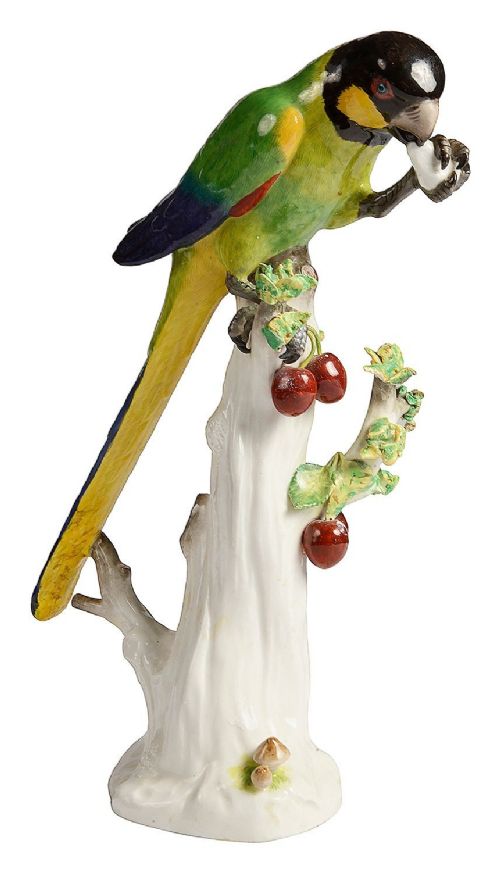
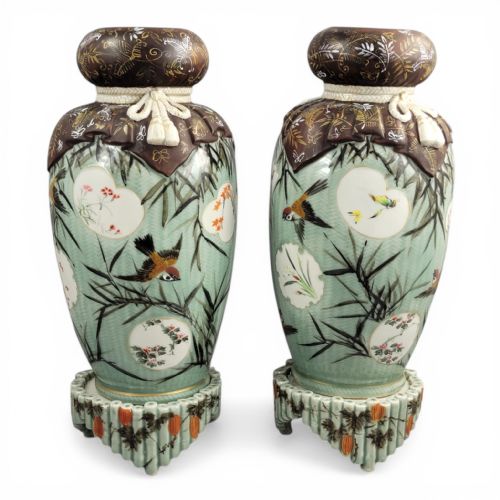
Green ceramic birds encompass an eclectic mix of figures, vases, and decorative objects spanning the eighteenth to the twentieth centuries. You encounter Victorian earthenware parrots, early porcelain examples from German manufactories, and Chinese glazed vessels featuring avian motifs.
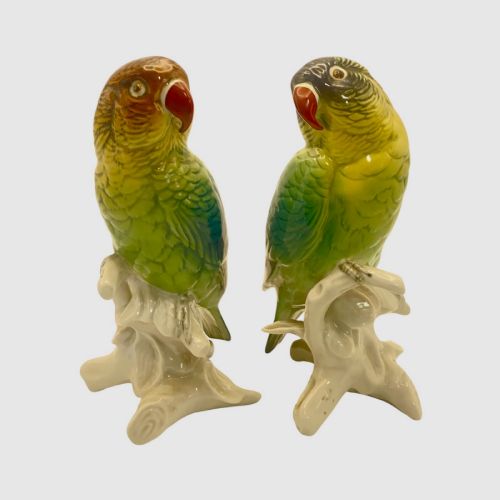
The selection on this page leans heavily toward figural representations of parrots, ducks, and water birds modelled in porcelain and earthenware. These pieces draw on styles from Georgian and Victorian periods as well as Qing dynasty traditions and the Meiji period.
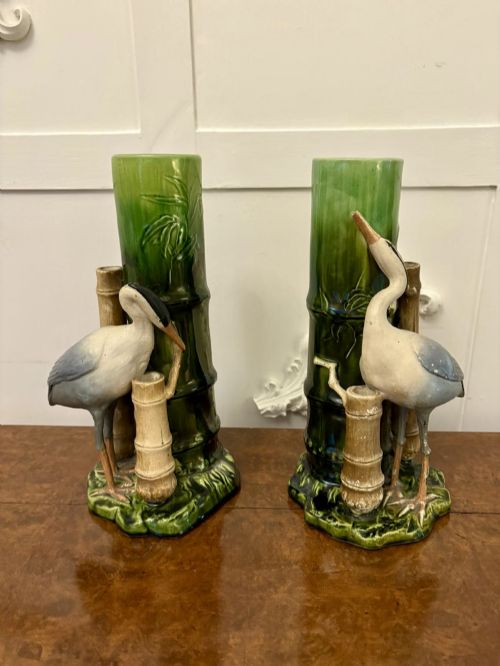
Makers and potteries from Staffordshire, Worcester, and European porcelain houses dominate the figural works, while other forms include scent bottles, stick stands, and monumental vases. Buyers seeking green ceramic birds find both naturalistic studies and stylised interpretations across these varied eras.
Materials and production methods
Potters shaped these birds from porcelain, earthenware, and ceramic bodies, often applying intricate glazes such as sancai, famille verte, or deep enamel finishes to achieve the characteristic green coloration. Many pieces involve hand-modelling and moulding combined with detailed overglaze or underglaze painting.
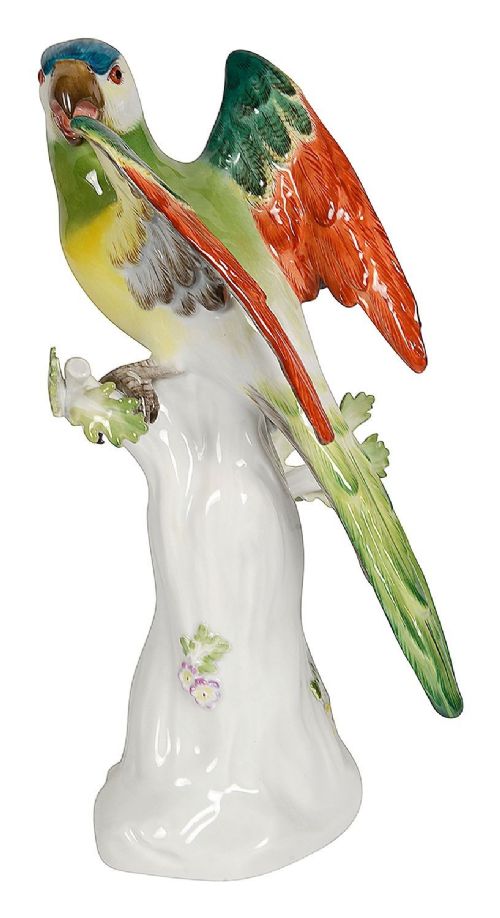
The firing process required careful temperature control in kilns to fix delicate pigments like gold leaf accents or multi-hued glazes onto the ceramic surface. Meissen and German art porcelain works demonstrate precision casting and hand-finished plumage details.
Green Ceramic Birds Retail Price Guide 2026
Typical asking prices for green ceramic birds among the pieces listed under this phrase on Sellingantiques today, from the lower quarter to the upper quarter. They describe what is for sale here now, not the wider market.
Listings on this site span the eighteenth century to the 1930s, featuring porcelain, earthenware, and jade forms.
Factors of quality and execution
Quality rests upon the crispness of the modelled plumage, the naturalism of the posture, and the depth of the glaze application. Superior examples display subtle tonal variation in the green pigments rather than flat, uniform coverage.
The reputation of the manufactory and the skill of the individual modeller dictate the tier of a piece. Fine hand-painted detail on porcelain figures commands greater interest than mass-produced earthenware items.
Karl Ens·Meissen·Kato Sanhei·Le Manceau·Royal Worcester·Bretby
The Green Ceramic Birds Glossary
- Famille verte
- A palette of green enamels used predominantly in Chinese porcelain decoration. It is complemented by other colours like yellow, blue, and iron red.
- Sancai
- A three-colour glaze tradition used on Chinese pottery, typically comprising green, amber, and cream white. These lead-glazed earthenwares date across several dynasties.
- Overglaze
- Enamel decoration applied on top of a previously fired and glazed ceramic surface. A subsequent low-temperature firing fuses the design to the glaze.
- Biscuit
- Unglazed ceramic ware that has undergone its initial kiln firing. Figures are often biscuit porcelain before receiving glaze and colour.
Green Ceramic Birds: Frequently Asked Questions
How do I care for antique ceramic birds?
Keep delicate porcelain and earthenware figures away from direct sunlight and areas subject to sudden temperature shifts. Dust them gently with a soft, dry brush rather than liquid cleaners.
Avoid handling pieces by fragile appendages such as beaks, tails, or perched branches, as these areas are vulnerable to old stress fractures.
Were these figures meant for display?
Most ceramic birds served as decorative chimney ornaments, mantelpiece garnitures, or centrepieces in period homes. Some specific forms, like scent bottles or candle snuffers, combined decorative avian designs with functional household use.
Collectors in the nineteenth and twentieth centuries prized them for bringing natural motifs into domestic interiors.
How can I tell Victorian pieces from earlier ones?
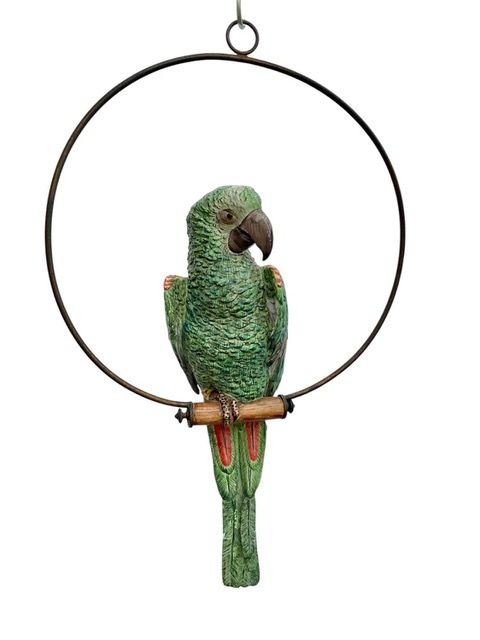
Victorian earthenware often displays heavier potting, brighter speckled glazes, and distinct moulded forms like parrots on hoops or rustic bases. Eighteenth-century pieces tend to feature finer porcelain bodies and hand-painted enamel details characteristic of Georgian or Kangxi traditions.
Examining the base for factory marks, crazing patterns, and wear provides additional clues to the era of manufacture.
What is the significance of the green glaze?
Green glazes on these ceramic works range from vibrant emerald overglaze enamels to earthy sancai washes and celadon tones. The choice of pigment often reflects the aesthetic movement of the period or specific regional traditions in European and Asian ceramics.
Different kiln temperatures and mineral oxides determined whether the resulting finish was glossy, speckled, or translucent.