


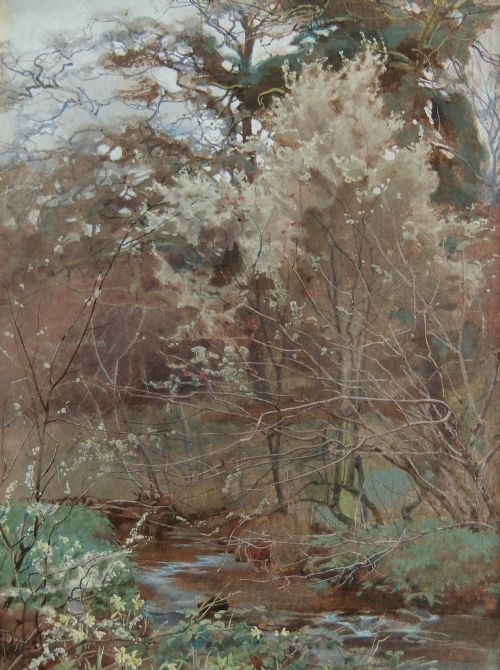


Green Botanical Watercolour Painting
A green botanical watercolour painting brings the quiet structure of a garden or hedgerow directly onto the wall.
Green Botanical Watercolour Painting
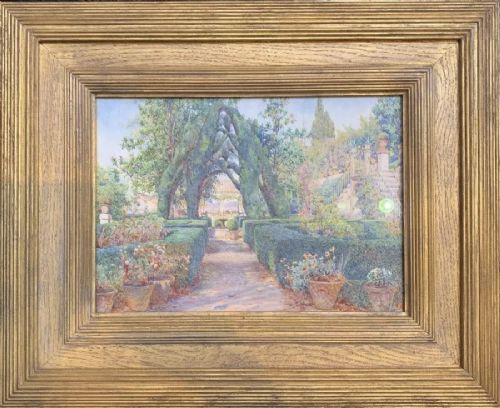
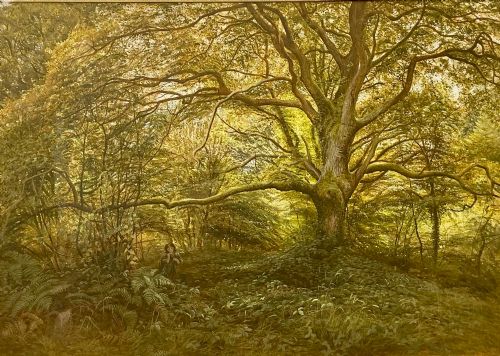
When you search for a green botanical watercolour painting, you encounter delicate studies of flora, foliage, and garden scenes executed on paper. These works range from precise natural history illustrations to loose depictions of country house gardens and woodland floors.
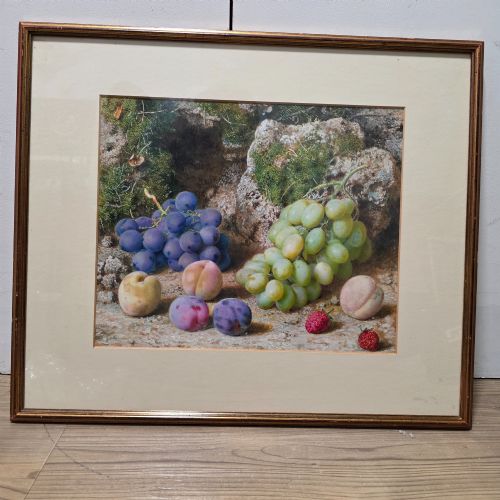
The pieces on this page span from the eighteenth century through the Victorian and Edwardian eras into the mid-twentieth century. You will frequently find works from the nineteenth and early twentieth centuries featuring garden landscapes, floral still lifes, and detailed studies of blossoms and leaves.
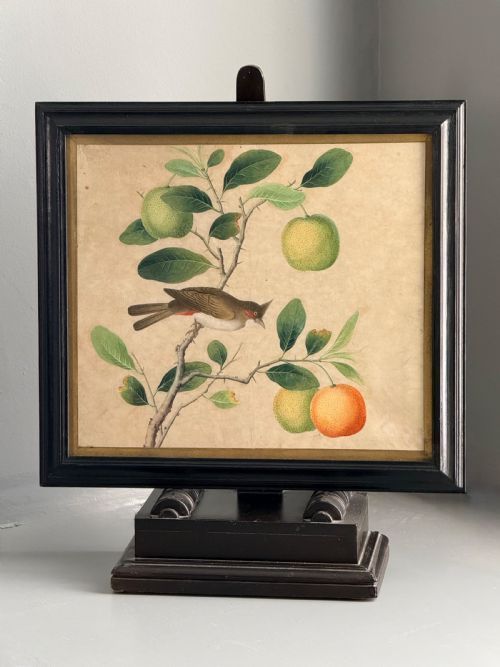
Origins include English regional schools, Chinese export pieces on pith paper, and works by named British artists. The predominant forms are framed watercolours, gouache combinations, and sets of botanical studies.
Materials and technique
These works rely primarily on watercolour paint, gouache, and pencil applied to paper or pith paper. Artists built up their botanical studies through transparent washes and opaque highlights to capture the varied textures of petals, stems, and leaves.
Support materials include traditional paper as well as delicate pith paper, often preserved beneath glass within wooden frames. The integration of watercolour with gouache and pencil allows for both broad washes of green foliage and fine botanical precision.
The listings on this page include watercolours executed on delicate pith paper alongside traditional works on paper.
Assessing quality and execution
Quality in these watercolours rests upon the precision of the draughtsmanship and the handling of pigment. Superior examples demonstrate a confident control of line, particularly where pencil underdrawing supports delicate washes of colour.
The depth of composition and the vitality of the botanical subject separate accomplished works from routine examples. Skilled artists capture the translucent quality of leaves and the subtle tonal shifts within green foliage without muddying the paper.
Ernest Arthur Rowe·John Sherrin·James Tower·Harry Wanless·Henrietta Creswell·Lilian Stannard·William Hough·Alfred W. Parsons·Owen Bowen·Beatrice Parsons·George Frederick Nicholls·Minnie Smythe·Helen Cordelia Angell·William Stephen Coleman
The Green Botanical Watercolour Painting Glossary
- Gouache
- An opaque water-based paint often used alongside watercolour to create solid highlights and dense areas of foliage.
- Pith paper
- A fragile material prepared from the pith of the Tetrapanax papyrifer plant, commonly used for Chinese export painting.
- Natural history illustration
- A rigorous visual record of plants or animals intended for scientific study as well as aesthetic appreciation.
- Watercolour
- A painting method in which fine pigments are suspended in a water-based, transparent solution applied to paper.
Green Botanical Watercolour Painting: Frequently Asked Questions
How should I frame a delicate watercolour?
Watercolours require protection behind glass to prevent atmospheric damage to the paper and pigments. Ensure the framing uses acid-free mounts so the paper does not discolour over time.
Keep the framed work away from direct sunlight to preserve the subtlety of the green tones and botanical pigments. Professional framing maintains a small gap between the glass and the painted surface.
What is the difference between watercolour and gouache?
Water watercolour paint is transparent, allowing the reflective quality of the white paper to illuminate the pigment from beneath. This creates luminous washes ideal for petals and light-filled skies.
Gouache contains added chalk or white pigment, making the paint opaque. Artists combine watercolour and gouache to add solid, dense highlights to leaves and stems.
How do I identify Victorian botanical works?
Victorian botanical paintings often exhibit a strong interest in natural history, horticulture, and garden design. They frequently feature meticulous attention to detail in depicting flowers, mossy banks, and walled gardens.
Signatures, framing styles, and paper types from the period offer further clues. Many works from this era are accompanied by period wooden frames and historic inscriptions.
Where were pith paper paintings made?
Pith paper paintings associated with botanical subjects often originate from nineteenth-century Chinese export workshops. Artisans created these delicate works specifically for Western markets.
The material itself is exceptionally fragile and possesses a velvety texture that absorbs watercolour and gouache differently than standard European paper.