
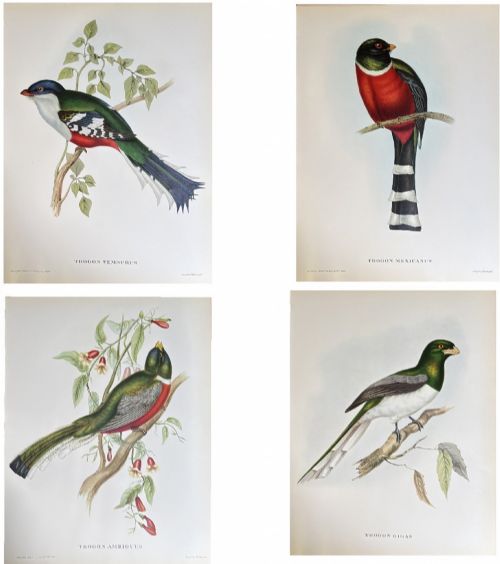
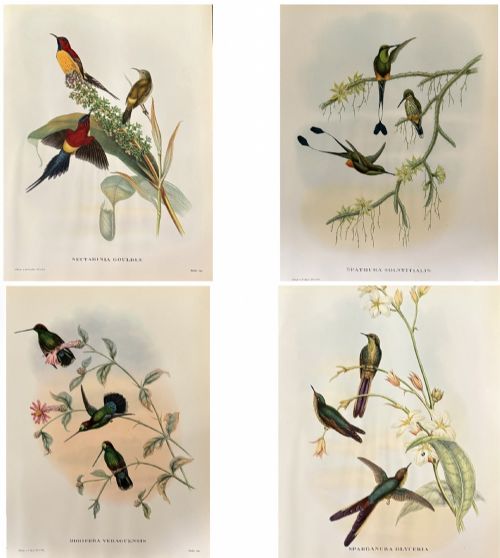


Green Botanical Illustration
Green botanical illustration brings the structured study of plants and birds into your rooms through historic prints and watercolours.
Green Botanical Illustration
A green botanical illustration captures the natural world through detailed watercolours, hand-coloured engravings and lithographs spanning several centuries. These works range from early eighteenth-century plate engravings to mid-century bird prints and nineteenth-century floral studies.
Buyers encounter individual watercolours alongside series of prints, often framed in wood and glass. The subjects encompass botanical studies with insects, bird illustrations and floral still lifes executed by regional and named artists.
Materials and techniques
The works utilise paper as a base, combined with ink, watercolour, gouache and pencil to build fine details of foliage and plumage. Engravings and lithographs frequently received additional pigment by hand after printing.
Framed pieces incorporate wood moulding and glass protection to preserve the delicate paper and water-soluble paints from moisture and light damage over time.
Materials across these listings span paper, ink, glass, watercolour, wood, gouache, gilt and watercolour paint.
Distinctions in quality
Quality rests upon the precision of the draughtsmanship and the clarity of the printed line beneath any added pigment. Skilled hands achieved botanical accuracy and lifelike feather textures that lesser works miss.
The preservation of the paper and the vibrancy of the ink or watercolour pigment determine the visual strength of the piece. Clean margins and sharp plate marks elevate the standing of antique prints.
M Simpson·Henrietta Creswell·William Hough·John Curtis·Georg Wolfgang Knorr·William Swainson·John Sherrin·Minnie Smythe·George Dionysius Ehret
The Green Botanical Illustration Glossary
- Engraving
- A method of cutting a design into a metal plate to hold ink for printing. This technique produces fine, crisp lines suited to scientific recording.
- Lithograph
- A planographic printing process using stone or metal. It allows artists to render softer tonal gradations and subtle colour washes.
- Gouache
- An opaque water-based paint. It provides solid areas of colour and dense highlights in mixed media studies.
- Plate mark
- The indentation left on paper by the edge of a printing plate under pressure. Its presence confirms the traditional intaglio printing method.
Green Botanical Illustration: Frequently Asked Questions
How should I frame historic botanical prints?
Protect the paper using acid-free mounts and UV-filtering glass to prevent fading and deterioration from sunlight. Wooden frames suit the traditional aesthetic of these works.
Keep the pieces away from direct heat sources and damp environments to ensure the paper and pigments remain stable for years to come.
Are these works original watercolours or prints?
The selection includes both unique hand-painted watercolours on paper and printed engravings or lithographs. Many prints feature hand-applied watercolour or gouache added after the initial impression.
Checking the surface under magnification reveals whether the lines are printed or drawn directly by hand with a pen or pencil.
How do I identify eighteenth-century botanical plates?
Look for visible plate marks around the image area and examine the paper stock for chain lines and watermarks typical of earlier mills. The typography and Latin binomial nomenclature often reflect the publication period.
Author names and plate numbers printed in the margins further point to the specific volume or scientific work of origin.
Can I hang these illustrations in a brightly lit room?
Direct sunlight causes watercolour pigments and tinted papers to fade permanently over time. Position them on walls that receive indirect ambient light rather than harsh exposure.
Using museum-grade conservation glass offers an extra layer of defence against ultraviolet rays if bright placement is unavoidable.