

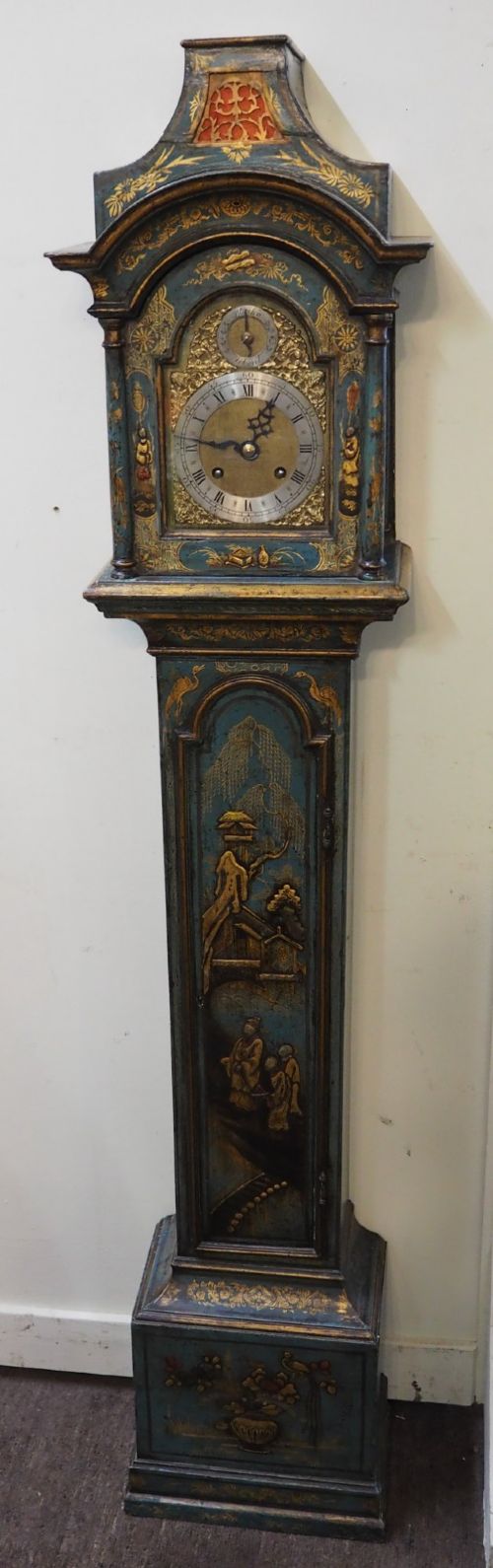
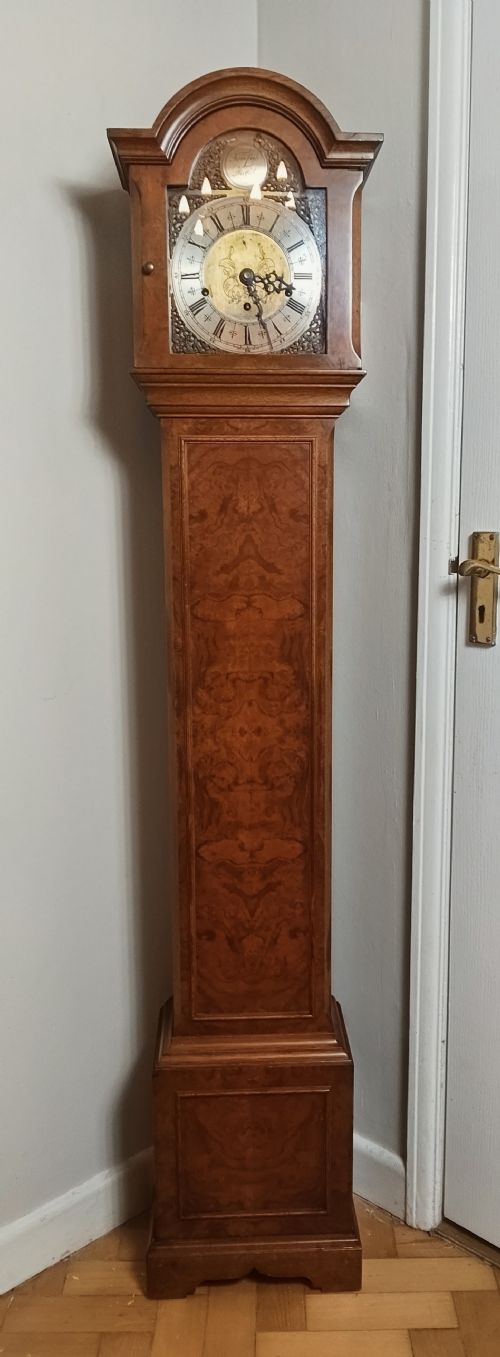
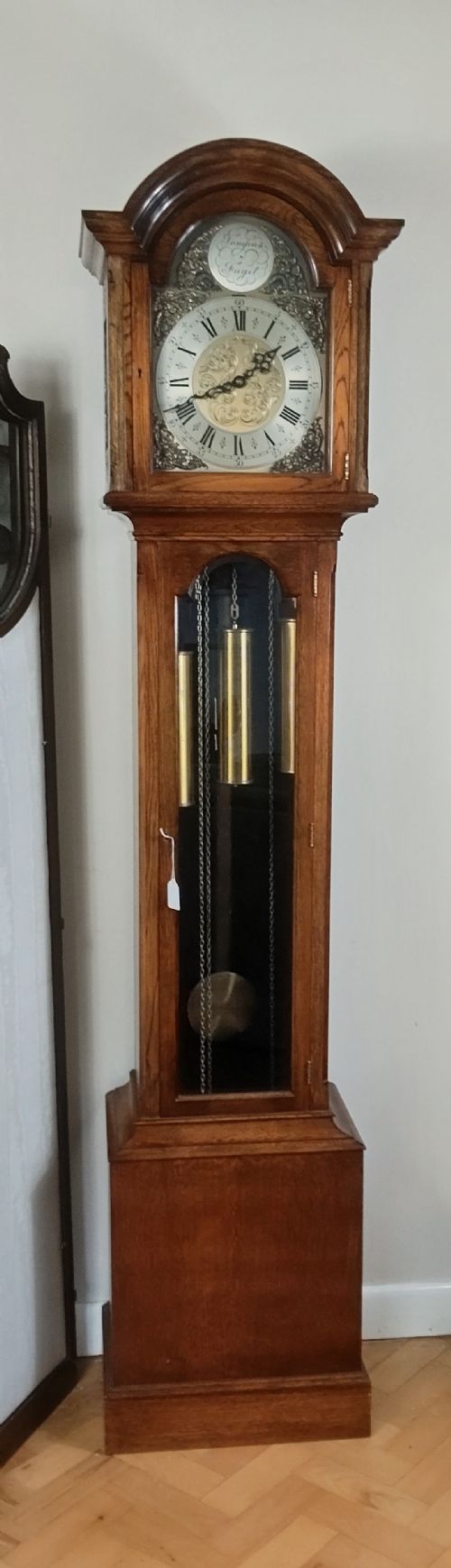
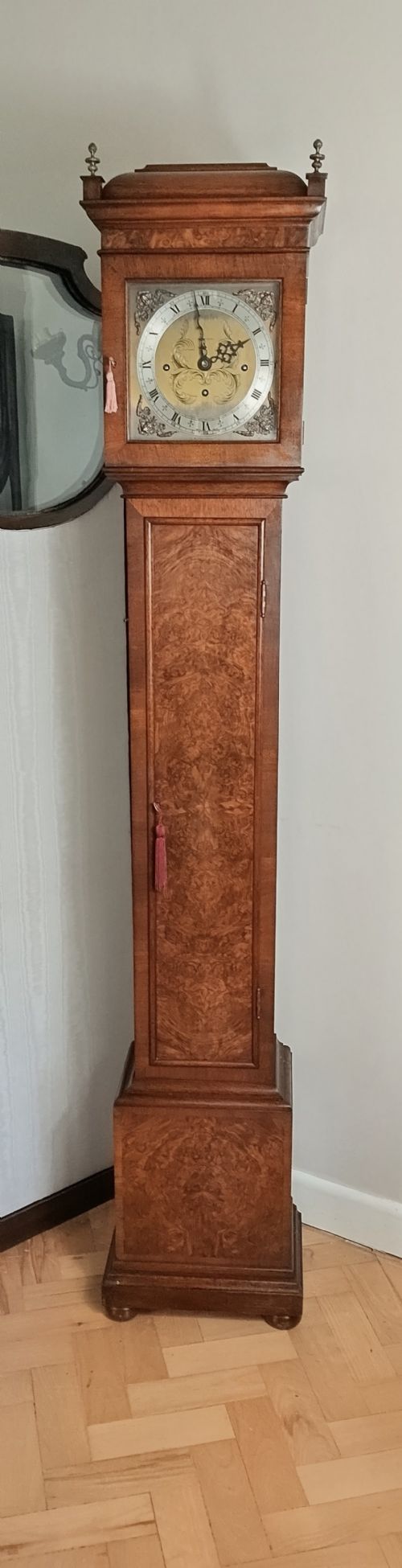
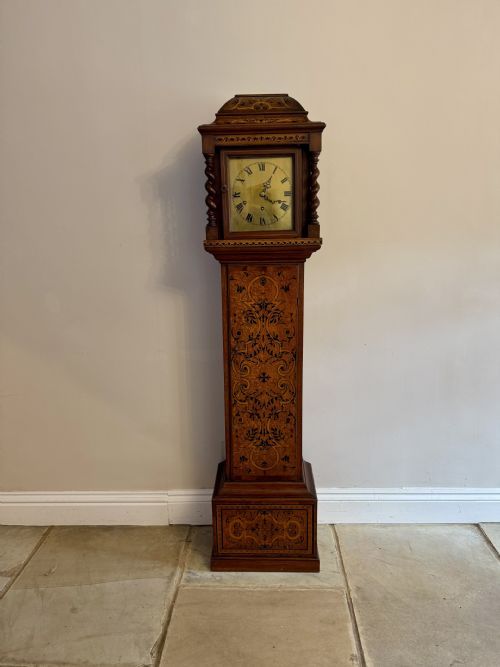


Grandmother Longcase Clock
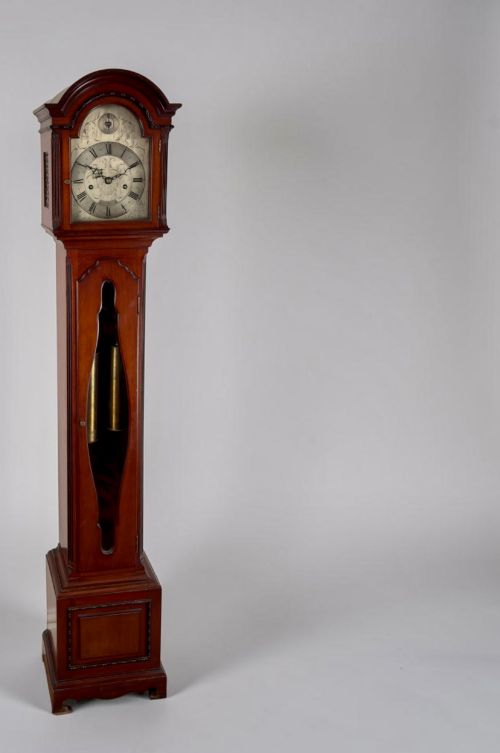
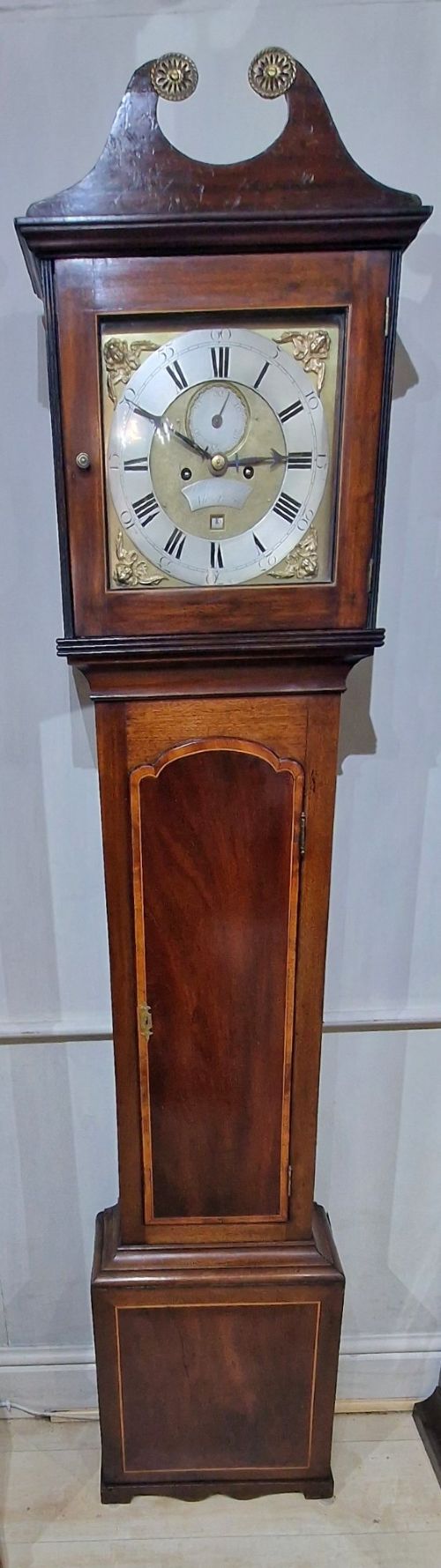
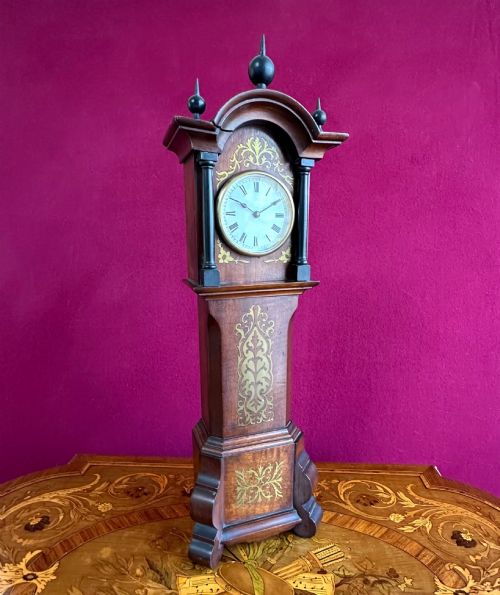
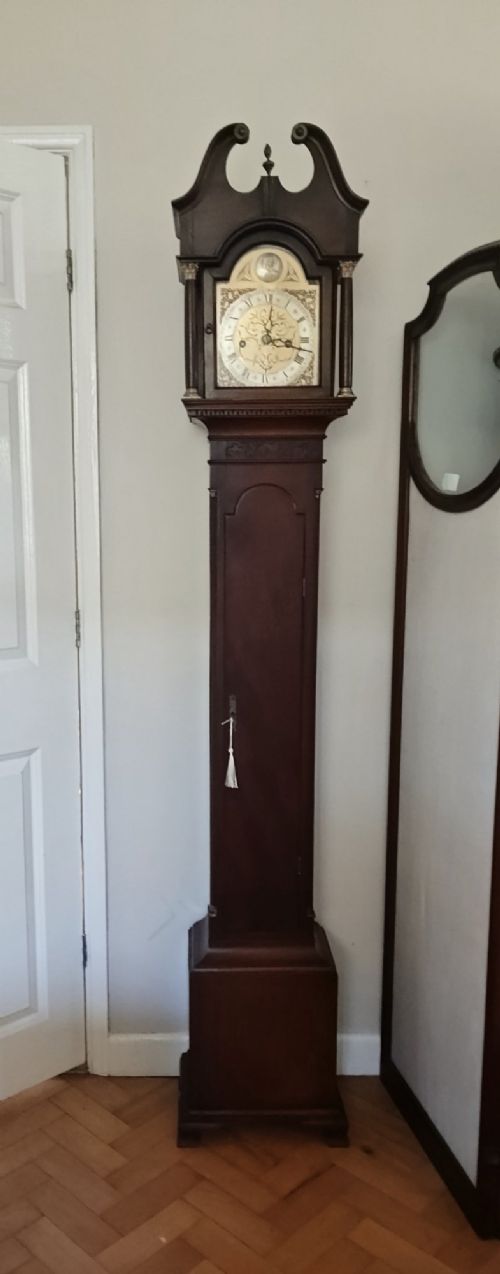
A grandmother longcase clock offers the stately presence of a traditional floor clock in a reduced, domestic scale.
Grandmother Longcase Clock
A grandmother longcase clock is a smaller version of the traditional grandfather clock, designed to fit rooms with lower ceilings while retaining the classic floor-standing proportions. These pieces generally measure between sixty and seventy-five inches in height, sharing the slender trunk, dial hood, and weighted or spring-driven movement of their larger counterparts.
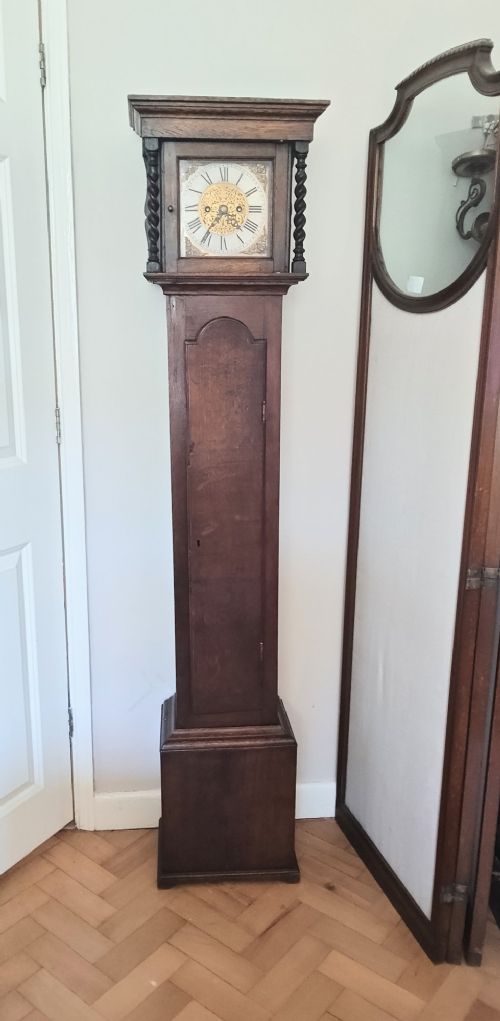
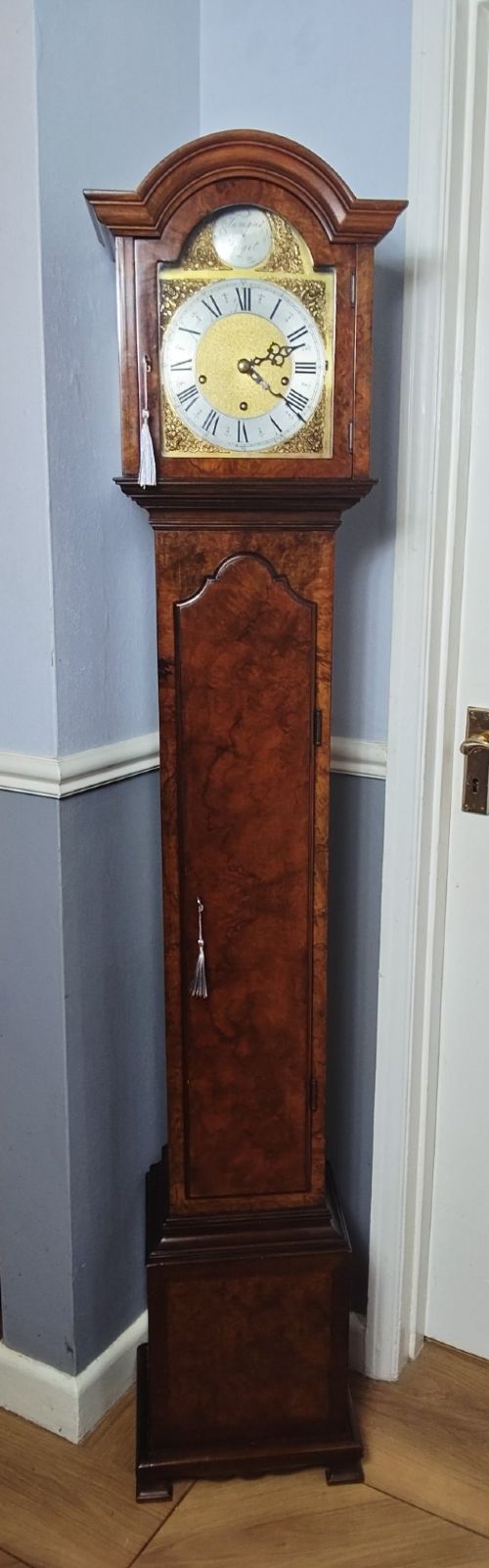
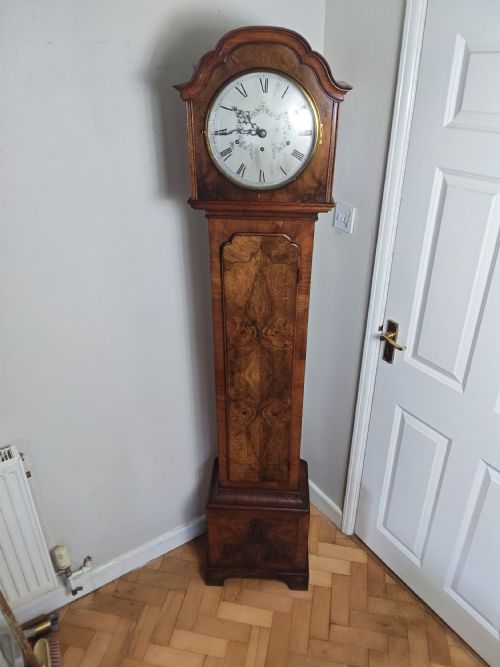
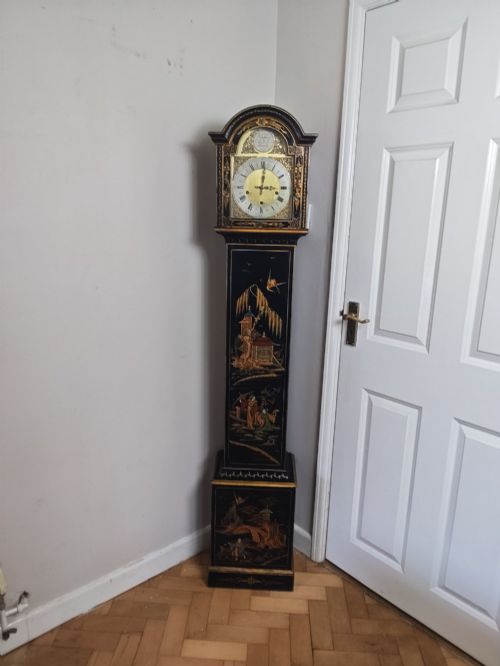
The pieces on this page span several centuries and stylistic revivals, with particular density in Edwardian and 1920s examples. Buyers encounter vernacular oak models alongside polished mahogany, rich burr walnut, and decorative lacquered finishes featuring Chinoiserie motifs.
Makers and retailers such as Gillett & Johnston, Elliott, Dent, and Harrods appear across the records, alongside unbranded English and continental workshop pieces. Many examples incorporate quarter-chiming mechanisms, playing Westminster or multi-tune musical movements.
How They Were Made
Cases were constructed from native and imported timbers, utilising solid oak, mahogany, and walnut, often enhanced with burr walnut veneers, decorative marquetry, or brass dial appointments. Woodworkers built slender trunks, sometimes featuring glass doors and turned columns, to house the weights or springs and descending pendulums.
Clockmakers fitted brass or silvered dials with mechanical movements ranging from simple eight-day timepieces to complex quarter-chiming and triple-tune musical systems driven by weights or springs. Enamelled, engraved, and brass-spandrelled faces indicate the technical collaboration between specialist dial makers and movement assemblers.
Recorded periods span the Georgian era, the nineteenth century, Edwardian decades, and mid-twentieth-century decades.
What Varies in Quality
The grade of a grandmother longcase clock rests on the harmony between case carpentry and movement complexity. Higher-tier examples feature figured timber veneers, substantial brass dial work, and multi-train movements capable of quarter-chiming or playing multiple musical tunes.
Construction details such as solid timber secondary woods, well-fitted glass trunk doors, and refined acoustic gongs separate standard production models from workshop pieces bearing retail signatures like Harrods, Dent, or Gillett & Johnston.
Gillett And Johnston·Elliott·Dent Of London·Maple And London·Waring And Gillow·Hancock Of Yeovil·Bravingtons
The Grandmother Longcase Clock Glossary
- Grandmother clock
- A slender floor-standing clock smaller than a traditional grandfather clock. These pieces generally stand under seventy-five inches tall.
- Quarter chiming
- A movement capability that sounds the quarters of the hour on bells or gongs. This system usually precedes the full hour strike.
- Burr walnut
- A prized timber veneer showing swirling growth patterns. Cabinetmakers used this material on high-status case doors and dial surrounds.
- Chinoiserie
- European decorative painting imitating Chinese artistic styles. Artisans applied these lacquer designs in colours like blue or cream.
- Fusee
- A conical pulley mechanism that equalises the pull of the mainspring. This device maintains steady power as the spring winds down.
- Astragal glazed
- A glass door divided by narrow wooden strips into panes. This framing allows a view of the swinging pendulum inside.
Grandmother Longcase Clock: Frequently Asked Questions
How tall is a grandmother clock?
These pieces generally measure between sixty-five and seventy-five inches in height. This reduced scale distinguishes them from taller grandfather clocks.
The proportions allow them to fit standard domestic ceilings while maintaining a traditional longcase silhouette.
Do grandmother clocks have musical movements?
Many examples feature chime mechanisms that play Westminster or multiple tunes on bells or gongs. These movements use two, three, or more weights.
Simpler models operate as standard timepieces or hour strikers without extra musical gear.
What woods were used for the cases?
Cabinetmakers utilised oak, mahogany, and walnut for the structural cases. Burr walnut veneers and lacquered Chinoiserie finishes appear on decorative pieces.
Secondary woods like pine or oak frequently form the internal framing of the trunk.
How do I wind an eight-day movement?
Weights inside the trunk are hoisted using a key or crank inserted into winding holes on the dial face. Care must be taken not to over-wind the mechanism.
Spring-driven variants utilise a similar key aperture directly on the dial.