


Grandmother Clock Case
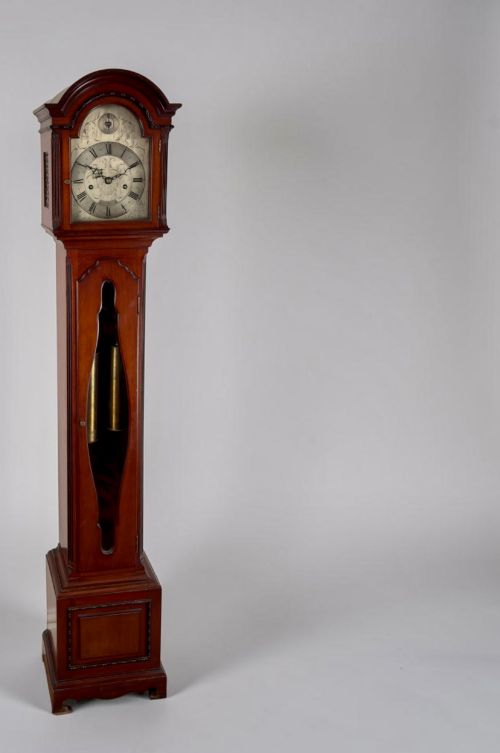
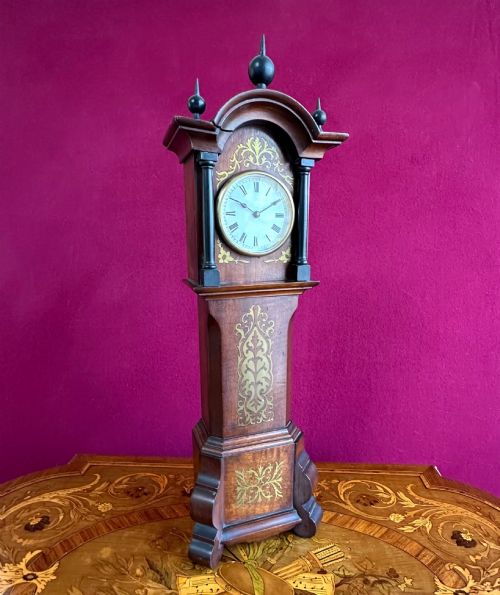
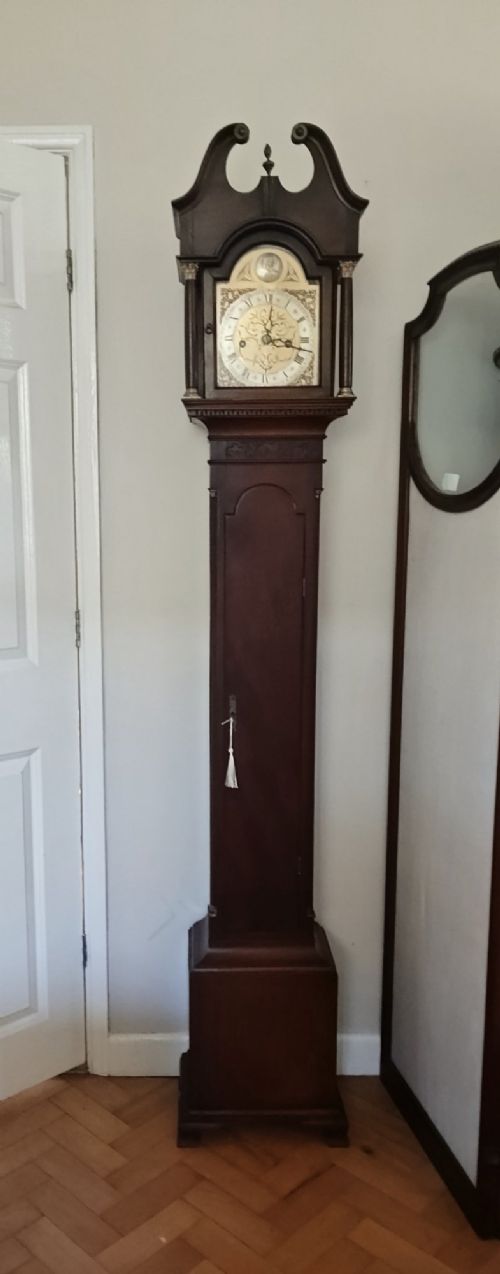
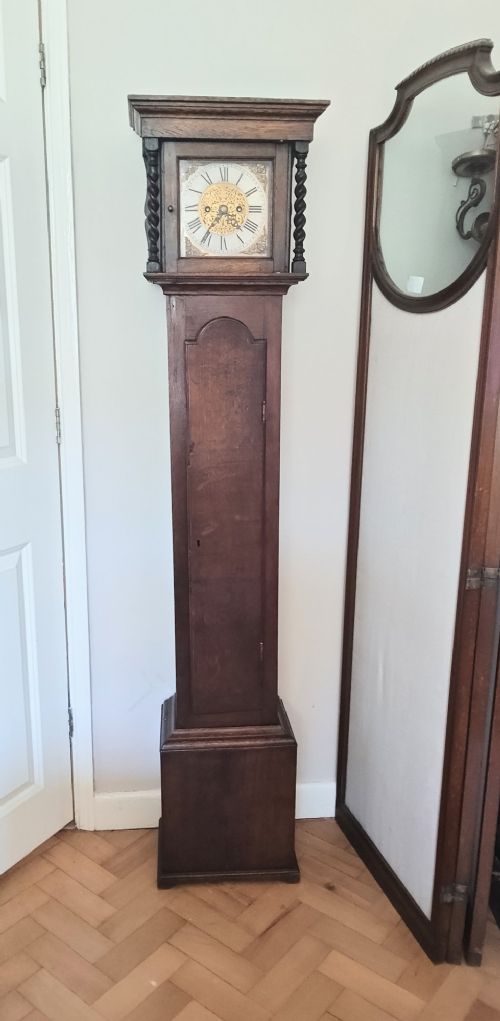
A grandmother clock case houses a reduced-scale longcase timekeeper that delivers traditional height elegance within compact domestic spaces.
Grandmother Clock Case
A grandmother clock case presents the slender vertical proportions of a traditional longcase timekeeper scaled down for domestic placement. These housings accommodate smaller movements while maintaining the architectural dignity of full-sized tall clocks.
The pieces seen here span the late nineteenth century through to the mid twentieth century, encompassing Edwardian examples alongside later designs from the nineteen twenties and nineteen thirties. Oak and mahogany dominate the offerings, complemented by walnut, burr walnut, and decorative lacquer finishes.
Forms follow both regional vernacular traditions and revivals of earlier aesthetics, including Queen Anne, Chippendale, and Georgian styles. Buyers encounter both spare architectural housings and more ornate examples featuring musical chiming capabilities.
How They Were Made
Cabinetmakers constructed these housings primarily from solid timbers and veneers of oak, mahogany, and walnut, selecting dense woods that could support the tension of suspended weights and pendulum mechanisms. Skilled joiners utilised precision framing for the trunk doors and hood assemblies to protect the internal brass movements from dust and atmospheric changes.
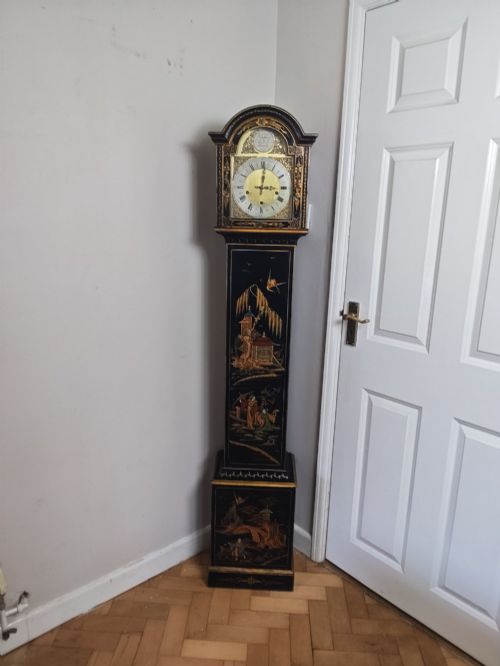
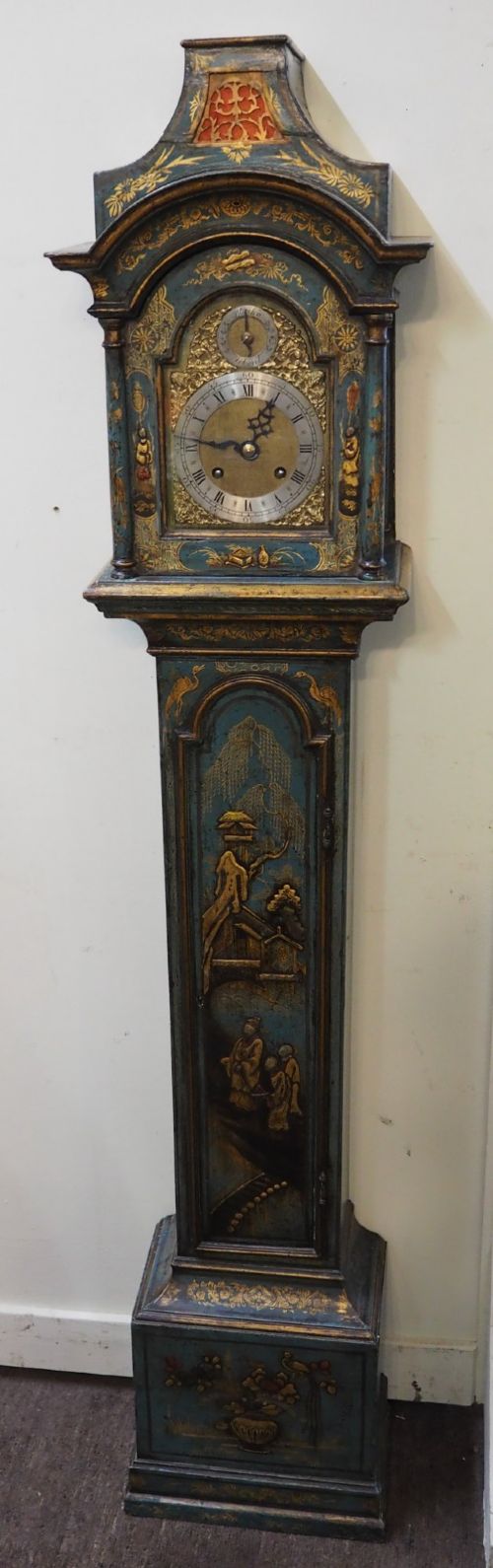
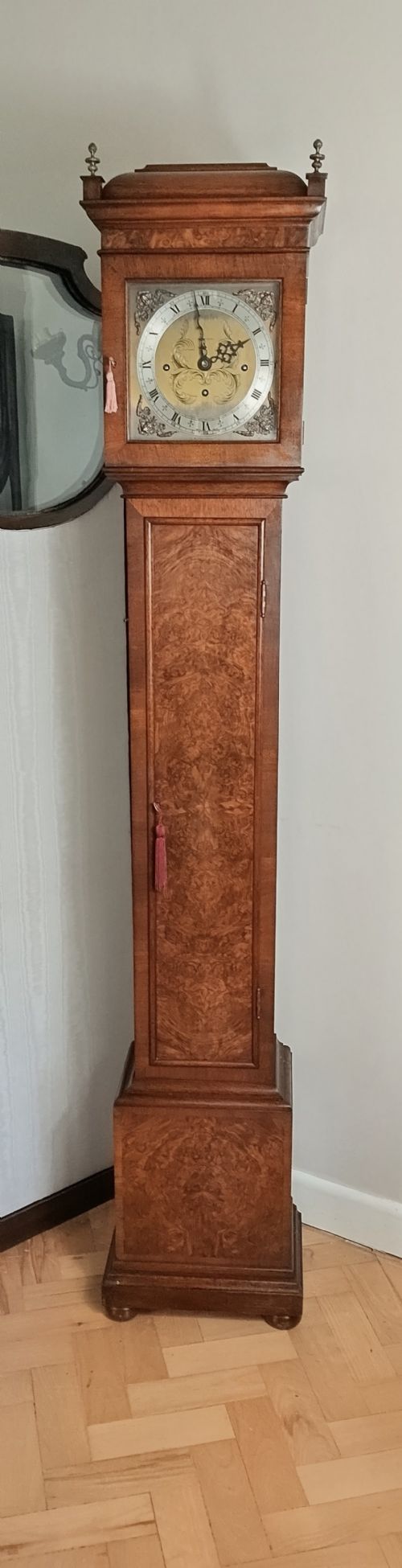
Surface decoration required specialist knowledge, particularly for lacquered finishes which involved multiple layers of paint and varnish applied to mimic imported oriental screens. Burr walnut veneers were matched symmetrically across trunk doors to create striking grain patterns that highlighted the natural figure of the wood.
Listings feature oak, mahogany, and walnut housings spanning the nineteenth and twentieth centuries, incorporating revival styles alongside Edwardian and art deco designs.
What Varies In Quality
Excellence in these housings rests upon the crispness of architectural mouldings, the selection of figured wood veneers, and the harmonious integration of the hood with the trunk. Superior examples demonstrate meticulous timber selection where grain patterns align across the door and surrounding frame.
The joinery reveals the standard of craftsmanship, with tightly fitted joints and substantial brass hinges that support heavy glazed doors without sagging. Finer pieces incorporate refined glazing bars, such as astragal designs, and well-proportioned hood columns that reflect scholarly adherence to historic architectural orders.
Gillett & Johnston·Dent Of London·John Gilkes·Maple Of London·Waring & Gillow Ltd
The Grandmother Clock Case Glossary
- Astragal glazed
- A door fitted with slender wooden mouldings that divide the glass into smaller geometric panes. This technique lightens the visual weight of the trunk door while allowing a view of the swinging pendulum.
- Chinoiserie
- A decorative style employing simulated oriental motifs, typically rendered in raised gold lacquer against a coloured background. This finish transforms a standard wooden housing into an exotic focal point.
- Quarter chiming
- A mechanical capability allowing the clock to play a melodic sequence every fifteen minutes. This function requires additional internal levers and weight channels within the narrow trunk.
Grandmother Clock Case: Frequently Asked Questions
How do grandmother clock cases differ from grandfather clocks?
A grandmother clock case is built to smaller proportions, typically standing between six and seven feet tall with a narrower trunk. This reduced scale was designed to fit modern architectural room heights without dominating the floor space.
Despite their diminutive stature, these housings retain the traditional architectural components of full-sized tall clocks, including a hood, trunk, and base.
What woods were used for these cases?
Cabinetmakers primarily utilised native and imported hardwoods such as oak, mahogany, and walnut to construct these slender housings. Figured veneers like burr walnut were frequently applied to flat surfaces to create decorative visual appeal.
More unusual examples feature painted or lacquered finishes in colours such as blue, echoing historic decorative traditions.
How do I identify the period of the case?
Dating relies upon stylistic clues within the woodwork, such as the presence of Edwardian inlaid motifs or the clean lines typical of the nineteen twenties and thirties. Revivals of Georgian or Chippendale styles frequently incorporate architectural details specific to those periods.
Examining the construction methods inside the trunk and the type of hinges used also helps establish when the cabinetmaker assembled the piece.
Where should I place a grandmother clock case?
These pieces suit hallways, landings, or principal reception rooms where their vertical orientation adds architectural interest to an empty corner. Because they have a smaller footprint than standard longcase clocks, they fit comfortably in more confined domestic layouts.
Protection from direct sunlight and steady ambient temperatures will preserve the timber and veneer over time.