
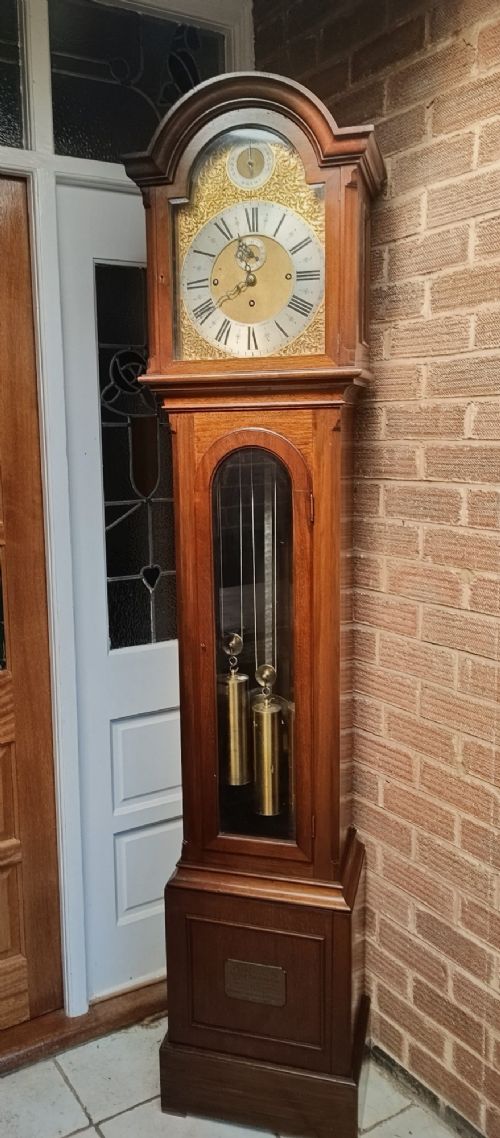
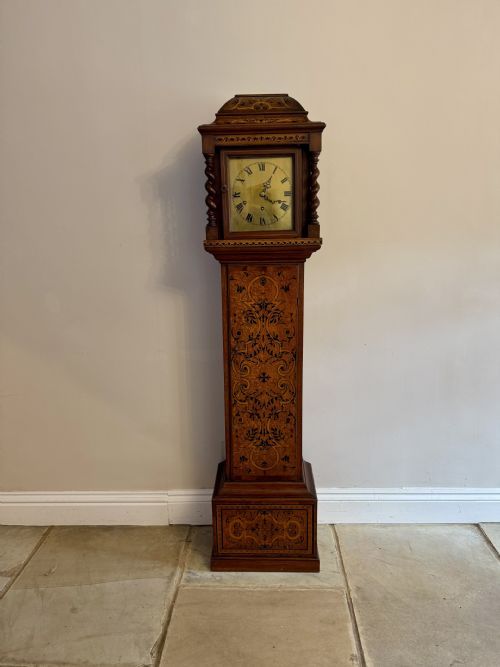


Vintage Musical Longcase Clock
These vintage musical longcase clocks bring remarkable chime movements and grand presence to a room, offering both traditional timekeeping and mechanical melody.
Vintage Musical Longcase Clock
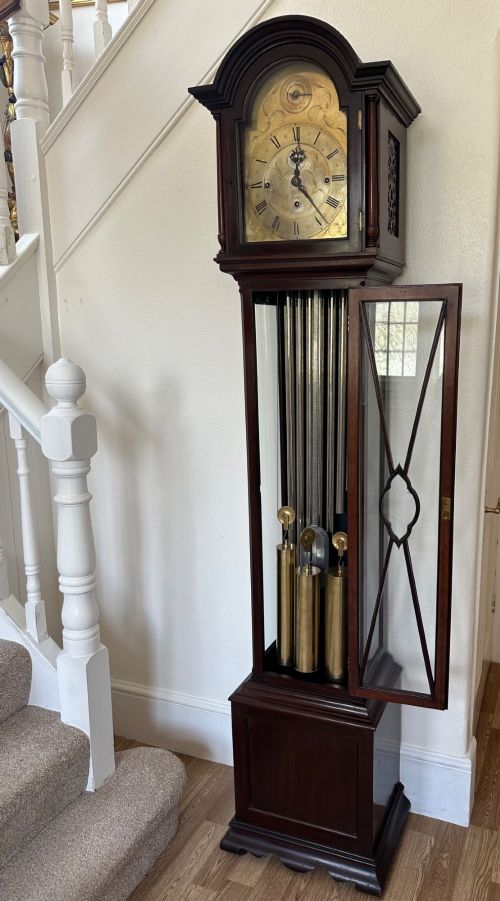
A vintage musical longcase clock combines traditional pendulum timekeeping with sophisticated chime or bell mechanisms, standing tall in fitted wooden cabinetry. Buyers seeking a vintage musical longcase clock encounter tall floor-standing models spanning the Victorian era through the early decades of the twentieth century.
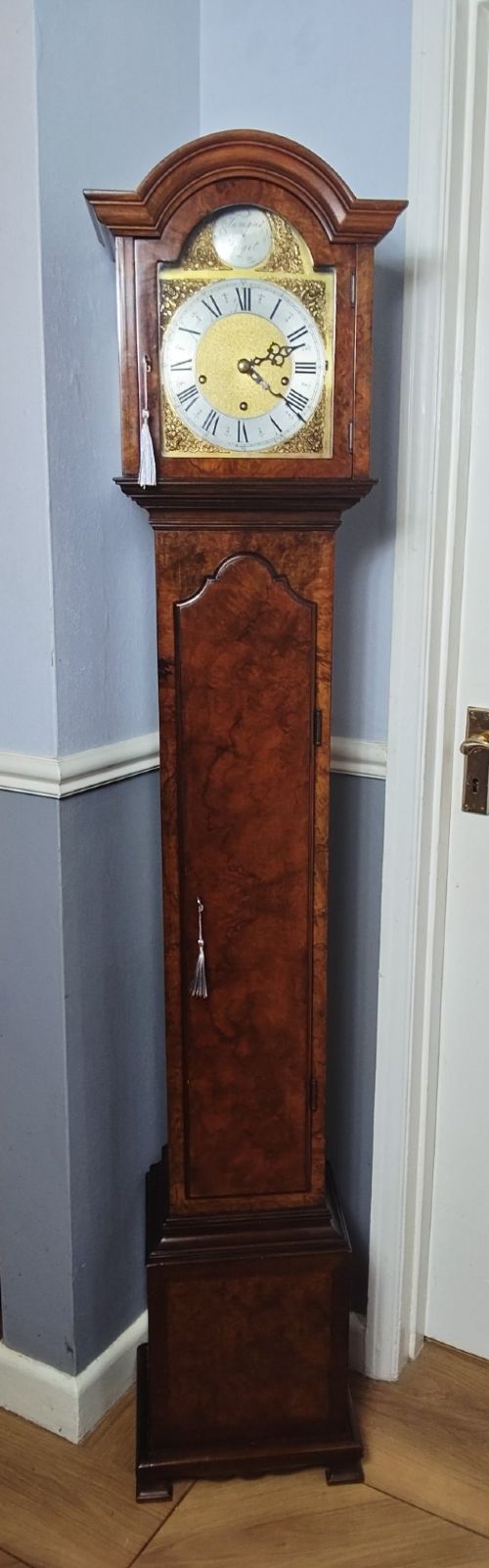
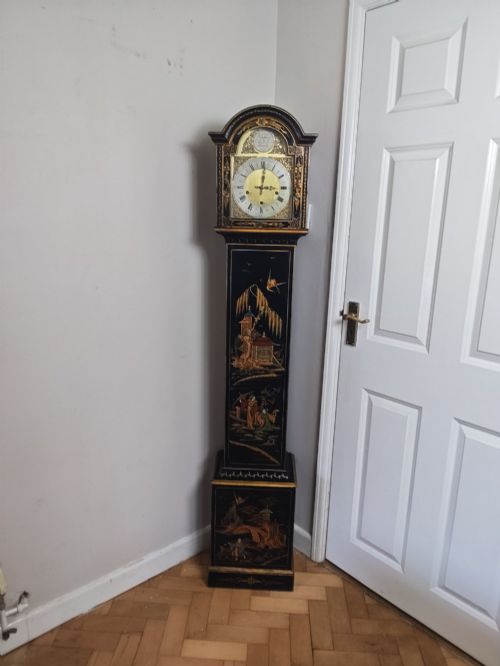
The selection here includes substantial grandfather clocks alongside more compact grandmother clocks, often fitted with multi-tube or multiple bell systems. These tall clocks span Edwardian and revival styles, reflecting Victorian tastes as well as later 1920s and 1930s cabinet designs.
Wood choices lean heavily towards mahogany, oak, and walnut, frequently accented with marquetry, inlay, or figured grain. The movements range from simple quarter-chiming setups to triple-tune mechanisms capable of playing distinct melodies.
Materials and construction
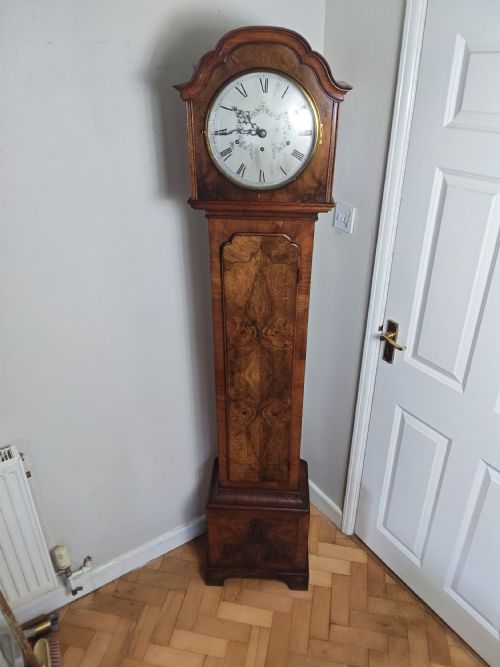
Cabinets rely on timber framing using mahogany, oak, walnut, and burr walnut veneers, often shaped with glass viewing panels and brass dial fittings. Woodworkers employed intricate marquetry and satinwood inlay to decorate the tall cases.
Interior engineering centres on heavy brass movements, complex gear trains, weights, and tubular bells or gongs designed to drive intricate musical repertoires.
Judging the range
Quality separates standard striking clocks from those featuring elaborate multi-tune movements and intricate marquetry cabinets. The sophistication of the chime mechanism, whether employing multiple bells or tubular systems, dictates the mechanical standard of the piece.
Cabinet execution marks the other major division, where figured walnut veneers, careful carving, and crisp satinwood inlay elevate the visual presence of the clock.
Elliott·Bravingtons·Lister and Sons
The Vintage Musical Longcase Clock Glossary
- Grandmother clock
- A smaller, more slender version of the traditional longcase clock, typically produced during the early twentieth century. These scaled-down clocks fit lower ceilings while retaining weight-driven movements.
- Quarter chiming
- A movement mechanism that sounds a sequence of notes every fifteen minutes. This system builds up to a full melody on the hour.
- Marquetry
- The art of applying small pieces of veneer to a structure to form decorative patterns. Craftsmen utilised different wood tones to create elaborate floral or geometric imagery on the case door.
- Tubular bell
- Metal tubes suspended inside the clock case that are struck by hammers to produce resonant chime tones. They replaced traditional cast bronze bells in many Edwardian and later musical clocks.
- Regulator
- A precision-oriented clock designed for high accuracy, often featuring a simplified dial layout and careful weight calibration. These movements prioritise exact timekeeping over decorative complexity.
Vintage Musical Longcase Clock: Frequently Asked Questions
How do I wind a musical longcase clock?
Winding involves using a key or raising the heavy iron weights suspended inside the trunk by their cords, depending on the specific mechanism. Care must be taken not to over-wind the springs or pull the weight lines too rapidly.
For weight-driven models, steady and even pressure ensures the gear train engages properly without disturbing the delicate pendulum or chime synchronization.
What is the difference between a grandfather and grandmother clock?
The primary distinction lies in overall height and proportion, with grandmother clocks built noticeably shorter and slimmer for smaller domestic spaces. Both styles utilise similar longcase mechanisms and weight-driven setups.
Grandfather clocks generally dominate a hallway or high-ceilinged room, whereas grandmother versions accommodate more modest room dimensions from the Edwardian period onward.
How do the musical chime mechanisms work?
Musical movements rely on a pinned brass cylinder or a series of rotating discs that trip levers connected to hammers. These hammers strike tuned brass bells, gongs, or metal tubes in a set sequence.
Depending on the design, the clock can shift between different tunes or play quarter-hour melodies before sounding the full hour count.
Where should I place a longcase clock in my home?
A longcase clock requires a stable, vibration-free interior wall where it can stand perfectly plumb and upright. Keeping the tall case away from direct sunlight and damp exterior walls protects the wood veneers and internal brasswork.
Sufficient clearance around the pendulum and weights is essential so that nothing rubs against the interior trunk during operation.