



Slim Floor Clock
A slim floor clock brings architectural height and mechanical movement into a room without dominating the floor space.
Slim Floor Clock
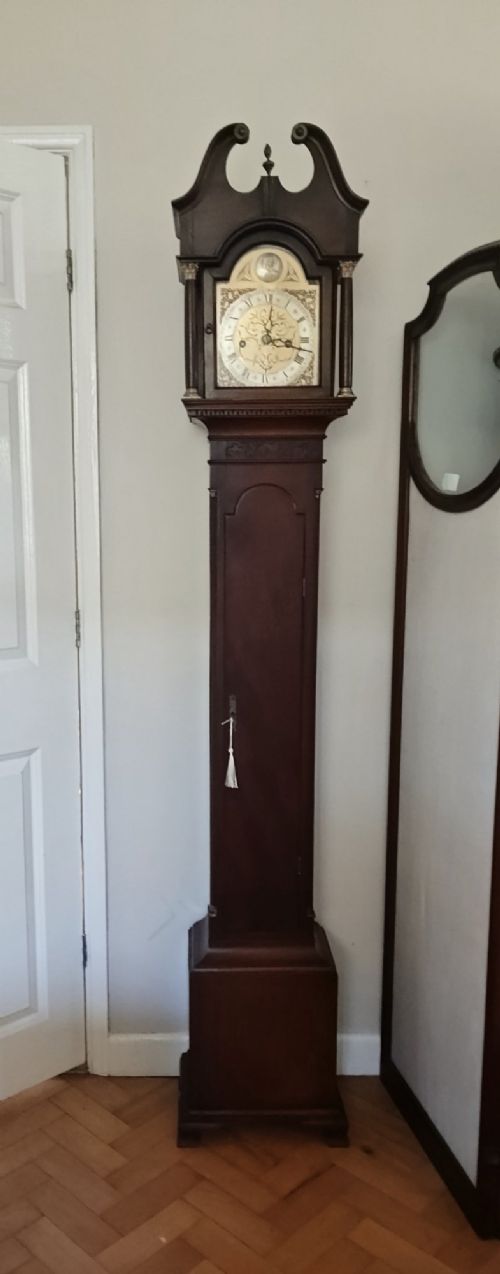
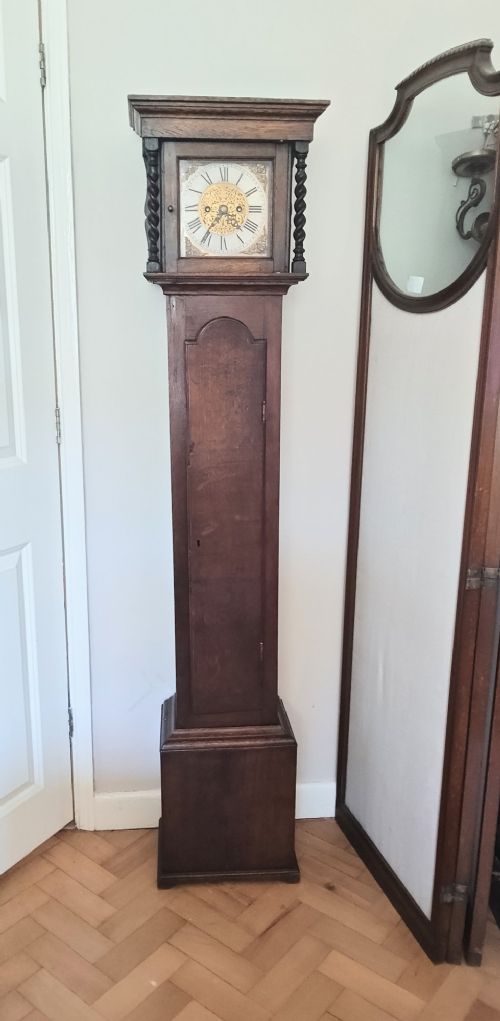
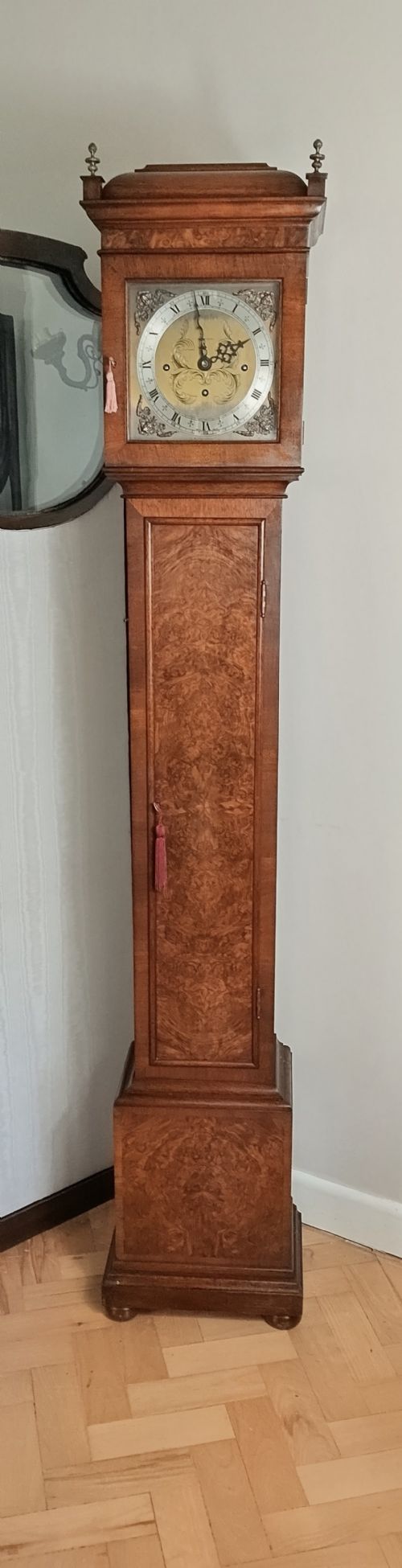
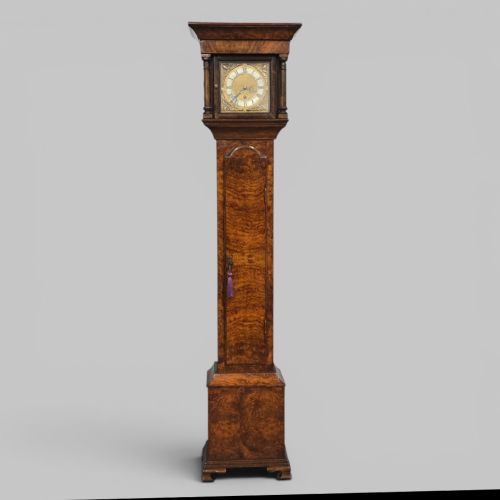
A slim floor clock stands tall and narrow, offering the presence of a traditional timepiece while fitting into more compact spaces. These pieces are frequently encountered as grandmother or grandfather clocks dating from the Georgian period through to the mid-twentieth century.
The form encompasses various stylistic revivals, including Queen Anne and Georgian styles, alongside Edwardian and later twentieth-century interpretations. Proportions remain slender, often housing smaller dial faces and refined trunk construction.
Origins span British cabinet-making traditions, with examples utilising domestic and imported hardwoods shaped into floor-standing longcase formats. The emphasis rests on vertical lines and compact footprints rather than broad proportions.
How they were made
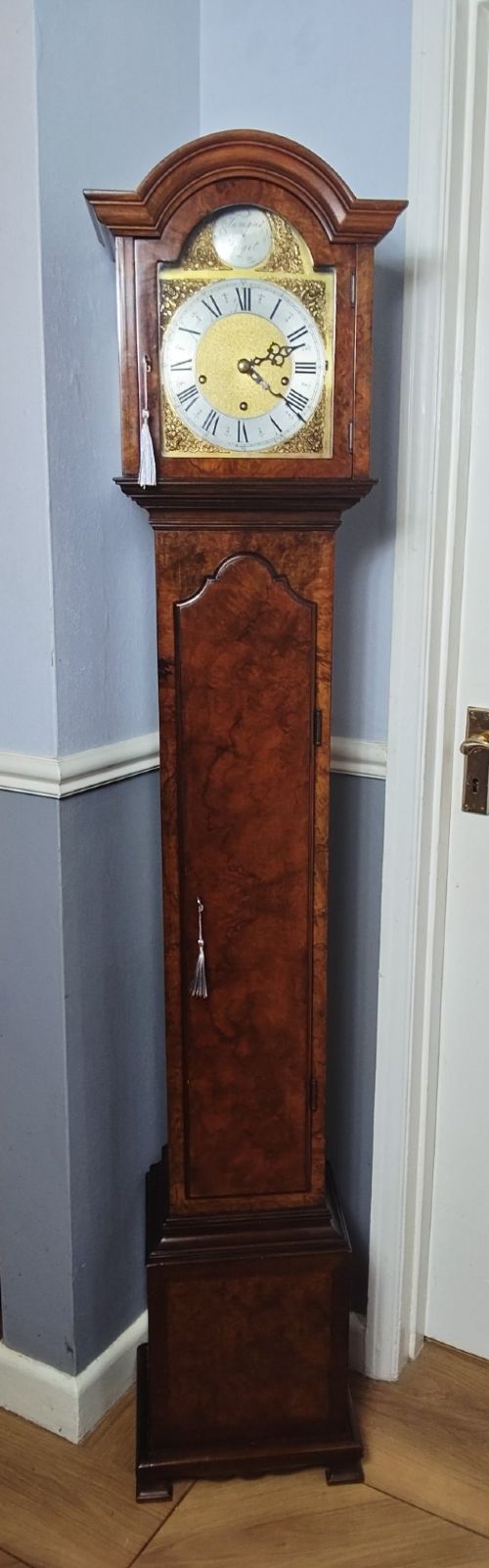
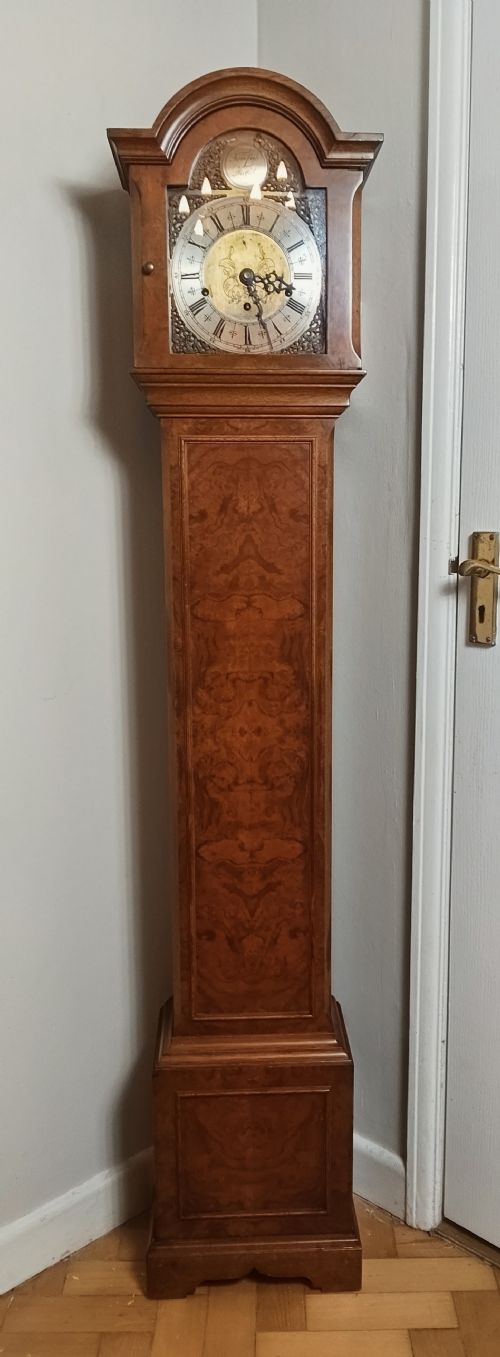
Construction relies on solid timbers and applied veneers, with mahogany, oak, and walnut forming the structural and visual core. Craftsmen selected figured grains, such as burr walnut and flame mahogany veneer, to create decorative surface patterns on the narrow trunk doors.
Dials incorporate engraved brass and metallic details, paired with glass panels fitted into the hood doors to protect the movement. Mechanical interiors range from simple timepieces to quarter chiming and musical configurations operated by weights or springs.
Listings feature oak, mahogany, and walnut timbers alongside movements capable of Westminster quarter chiming.
What varies in quality
The refinement of the cabinetwork distinguishes different grades of execution, visible in the handling of veneers, mouldings, and proportions. Superior examples display carefully matched quarter-veneered panels and crisp architectural details that reflect the prevailing style of their period.
Internal complexity also divides the standard production from more elaborate examples, particularly where quarter chiming or musical movements by notable makers are integrated. The integration of the movement within the slender case dictates the overall cohesion of the piece.
Elliott·Gillett & Johnston
The Slim Floor Clock Glossary
- Longcase clock
- A tall, floor-standing pendulum clock enclosed in a wooden case consisting of a hood, trunk, and base. These pieces are also known as grandfather or grandmother clocks depending on their overall height.
- Grandmother clock
- A smaller, more slender version of the traditional longcase clock, typically produced during the nineteenth and twentieth centuries. The reduced scale suits modern domestic interiors while retaining mechanical timekeeping functions.
- Quarter veneered
- A technique where four matching slices of veneer, cut consecutively from the same log, are arranged symmetrically to create a patterned surface. This method highlights the natural figuring of woods like walnut.
- Brass dial
- The face of the clock constructed from brass, often featuring engraved spandrels, chapter rings, and maker signatures. These metal faces provide a durable and decorative surface for reading the time.
- Chiming movement
- A mechanical system within the clock that sounds the quarter hours and full hours using bells, gongs, or tubes. Systems such as Westminster chimes add an auditory element to the visual presence of the clock.
Slim Floor Clock: Frequently Asked Questions
What is a slim floor clock?
A slim floor clock is a tall, narrow timekeeper designed to stand on the floor while occupying minimal horizontal space. These pieces include grandmother and small grandfather clocks.
They combine cabinet-making with mechanical clockwork, offering the vertical presence of a full-sized longcase clock within more compact room dimensions.
Where should I place a slim floor clock?
These clocks suit hallways, landings, or narrower wall spaces where a wide piece of furniture would obstruct movement. Their slender proportions allow them to fit into corners or between doorways.
Positioning requires a stable, level floor to ensure the pendulum swings freely and the mechanical movement runs accurately.
What maintenance does a slim floor clock need?
Regular care involves winding the movement according to its eight-day or other mechanical specification and keeping the case out of direct sunlight. Environmental stability prevents timber movement in the wooden trunk.
Professional servicing of the gear train and escapement ensures the chimes and timekeeping continue to function correctly over time.