




Grandfather Clock Moon Dial
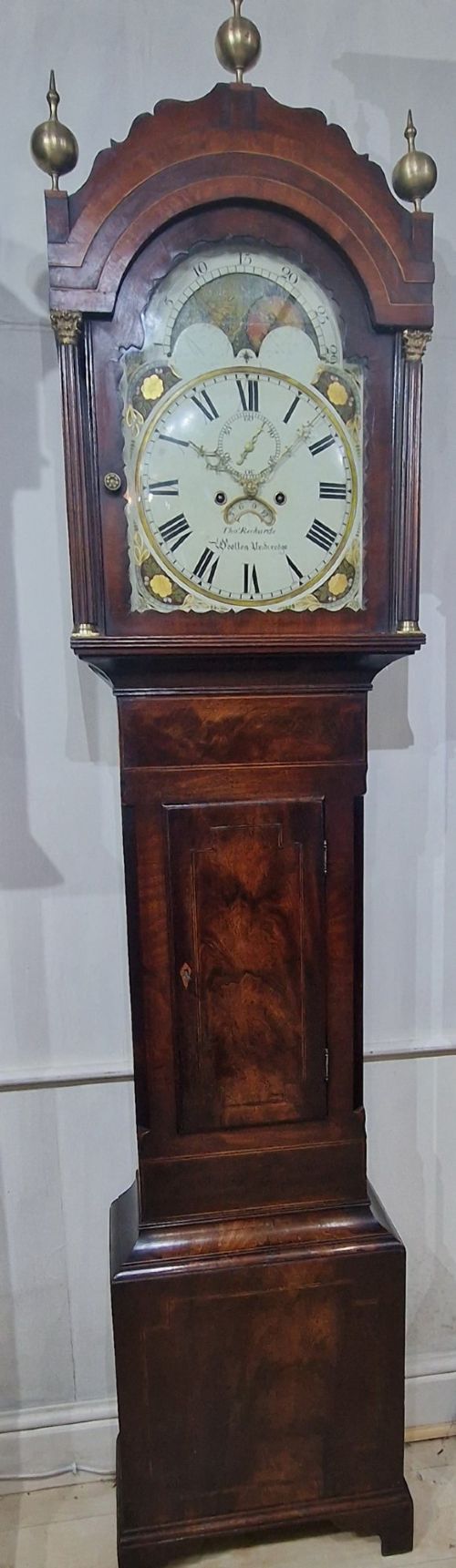
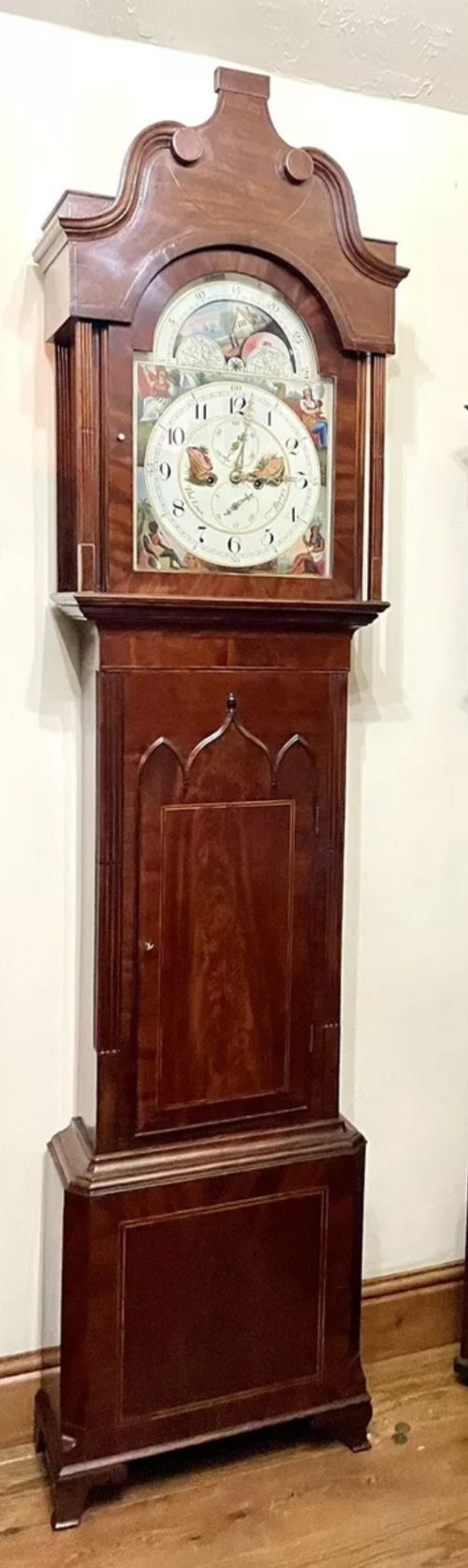
When you examine a grandfather clock moon dial, you find a tall mechanical timekeeper displaying the lunar cycle alongside the hour.
Grandfather Clock Moon Dial
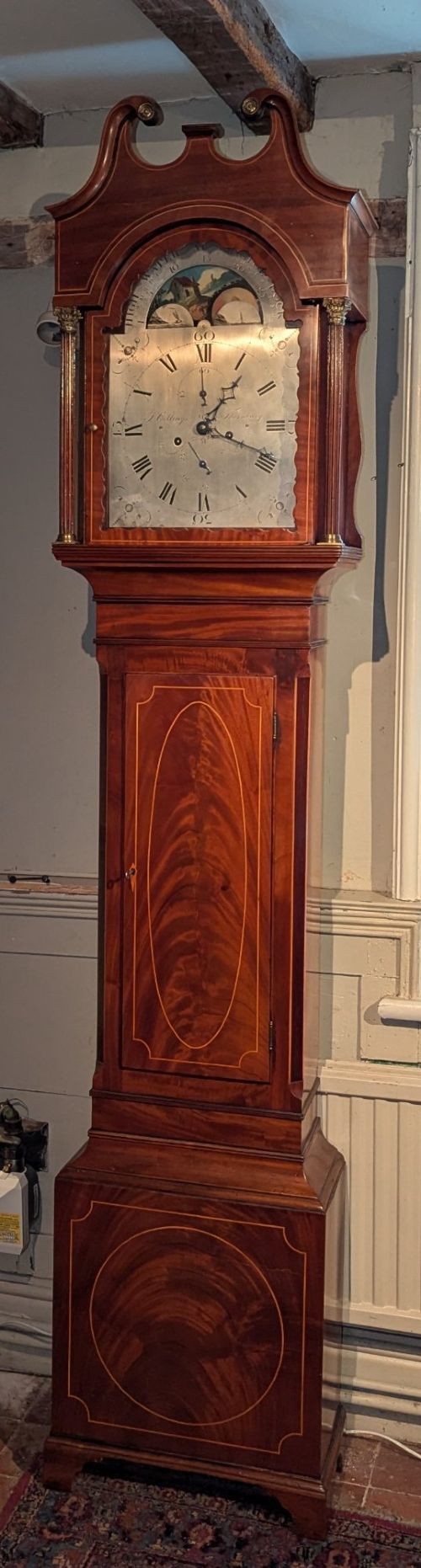
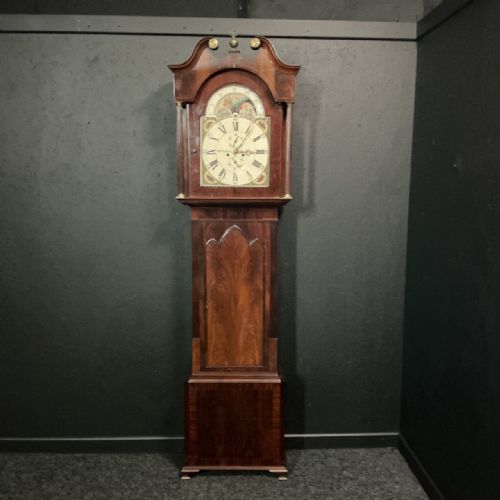
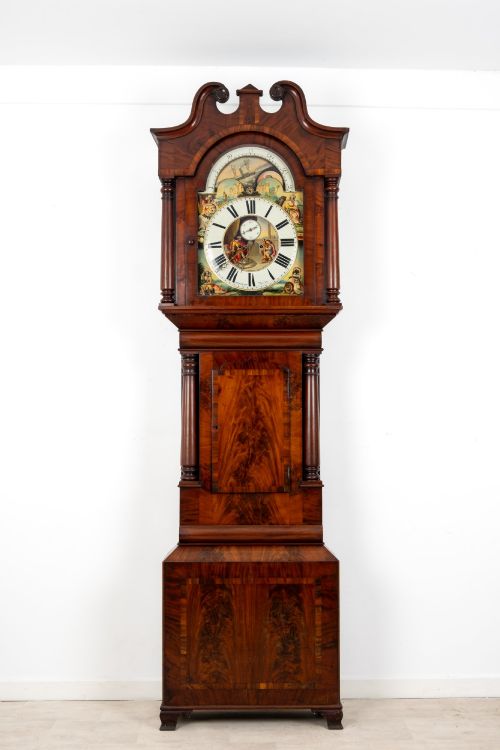
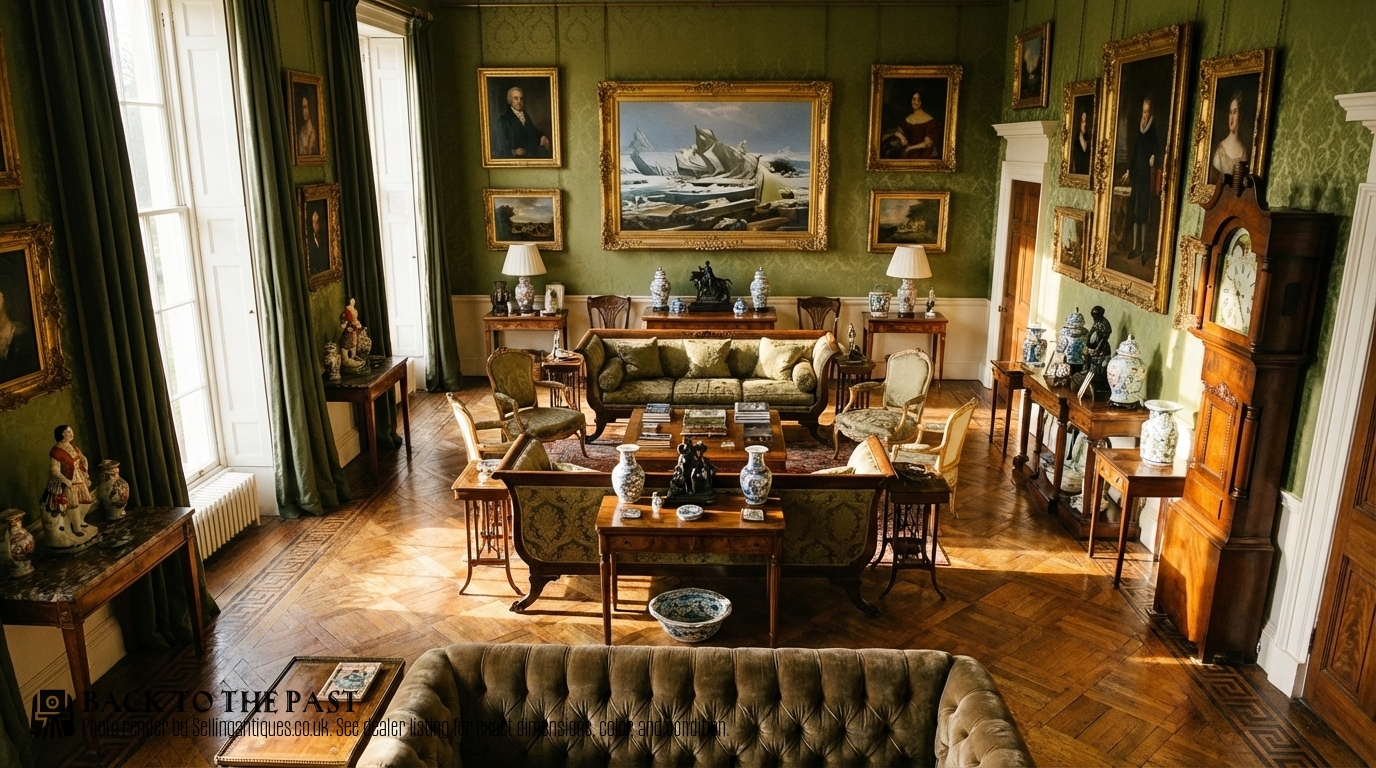
A grandfather clock moon dial is a tall floor-standing timekeeper featuring an arched dial that tracks the phases of the moon. The pieces appearing here span periods from the mid-eighteenth century through the Victorian era and into the early twentieth century. You most frequently encounter mahogany and oak cased models housing painted iron dials with mechanical moon rollers.
Makers housed these movements in longcase bodies ranging from simple regional oak cases to elaborate inlaid flame mahogany architectural hoods. The complication serves both a practical historical purpose for tides and agriculture and provides a moving visual centerpiece on the arch above the chapter ring.
Materials and construction
Cabinetmakers constructed the tall cases using solid timbers of mahogany, flame mahogany, and oak, often incorporating decorative stringing and crossbanding. Glazed hood doors protect the brass and painted iron dial faces where steel hands and brass gear trains regulate the time and lunar displays.
Dial faces combine hand-painted iron sheets with brass chapter rings and subsidiary seconds or calendar dials. The mechanical moon roller behind the arched aperture rotates via internal peg and gear mechanisms linked to the eight-day or thirty-hour movement.
Listings feature mahogany and oak timber construction, spanning the Georgian, Victorian, and Edwardian eras with painted iron dials.
Quality and execution
The sophistication of the painted moon disk and the artistic merit of the cottage or seascape scenes flanking the lunar phases distinguish exceptional dials from standard production. Cabinetwork execution also separates examples, seen in the choice of figured timber veneers and the crispness of carved details on the hood and trunk.
Movement quality is evident in the weight of the brass plates, the precision of the wheel-cutting, and whether the maker signed the dial plate. Regional provincial clocks show varied competency, from ambitious provincial master makers to standard workshop output.
Parkinson Bros Batley·Edward Shepley Manchester·Edward White Birmingham·Will Lassell Toxteth Park·Thomas Lees Bury·John Banks Oldham·Thos Russell Lancaster·Furnival Oldham·Thomas Dean Leigh·Stanyer Nantwich·Richardson Manchester·R Lawson Leigh·John Wood Grantham·Edward Glase Bridgnorth·James Rayner Hull·Henry Smith·Robert Darling Melrose·William Mercer Liverpool·David Griffith Carnarvon·John Wyat Altringham·James Waring Stockport
The Grandfather Clock Moon Dial Glossary
- Moon dial
- A painted or engraved semicircular disc rotating behind an arched aperture to display the phases of the moon. It completes a full cycle roughly every twenty-nine and a half days.
- Longcase clock
- A tall weight-driven pendulum clock housed in a protective wooden case comprising a base, trunk, and hood. They are commonly known as grandfather clocks.
- Chapter ring
- The circular ring fixed to the dial face that displays the numerals for the hours and minutes. On these clocks, it sits below the arched moon phase display.
- Flame mahogany
- A veneer cut from the fork of the mahogany tree where the branch joins the trunk, producing a distinctive rippled, fiery flame pattern. Makers utilised it on high-grade case fronts.
- Penny moon
- A simple early form of moon display featuring two painted moons on a rotating disc visible through a semicircular cutout. It provides a straightforward lunar indication without complex subsidiary mechanics.
Grandfather Clock Moon Dial: Frequently Asked Questions
How does a moon phase dial work?
A mechanical disk with two painted moons rotates behind the arched dial opening, driven by the clock's gear train. It advances incrementally to show the lunar cycle from new moon through full moon.
This display required periodic manual adjustment to stay synchronized with the actual lunar month because a standard mechanical gear ratio approximates the twenty-nine and a half day cycle.
Are these clocks eight day or thirty hour?
The listings feature both eight-day movements requiring weekly winding and thirty-hour movements requiring daily or near-daily attention. Weight-driven power systems operate pendulums suspended inside the trunk.
Eight-day versions typically utilise two heavy weights hung on chains or lines, whereas simpler thirty-hour variants often operate with a single weight and chain.
Where were these longcase clocks made?
Clockmakers and cabinetmakers worked across English and Scottish towns and cities, signing dials from regional centres such as Manchester, Liverpool, Birmingham, and smaller market towns. Provincial makers sourced local timbers like oak while importing high-grade mahogany through port cities.
Regional variations appear in the dial painting styles and cabinet proportions, reflecting local workshop traditions rather than strict London standards.
How do I set the moon phase?
You advance the moon dial manually by turning the disk with your finger through the inspection hatch or behind the dial plate, depending on the specific movement design. Almanac data guides you to set the correct phase corresponding to the current night sky.
Careful handling prevents damage to the delicate hand-painted iron surface of the rotating disc during adjustment.