


Grand Tour Vase
A grand tour vase brings the classical antiquity of Rome and Greece directly into a nineteenth-century interior as a scholarly souvenir of continental travel.
Grand Tour Vase
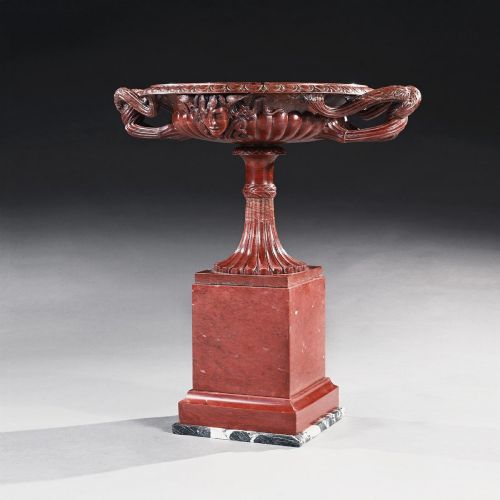
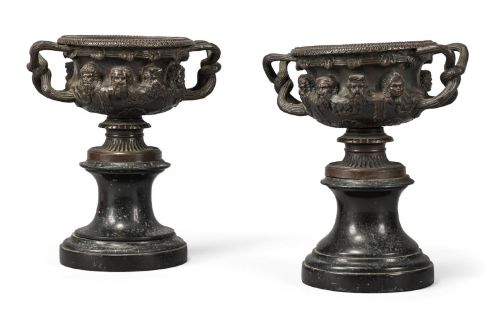
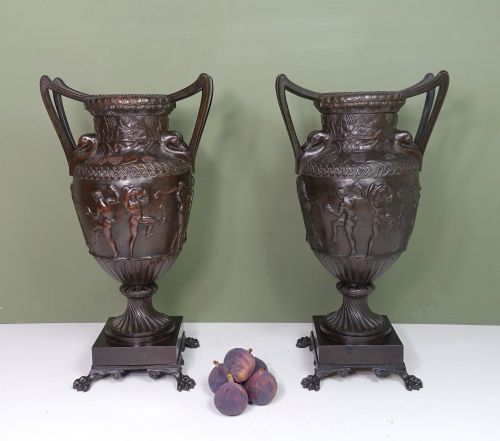
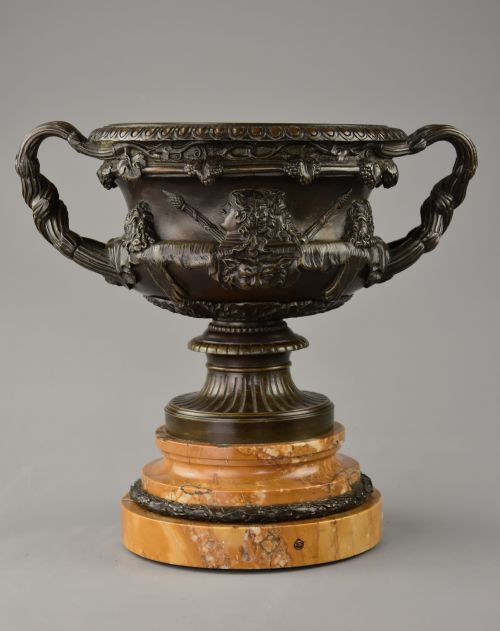
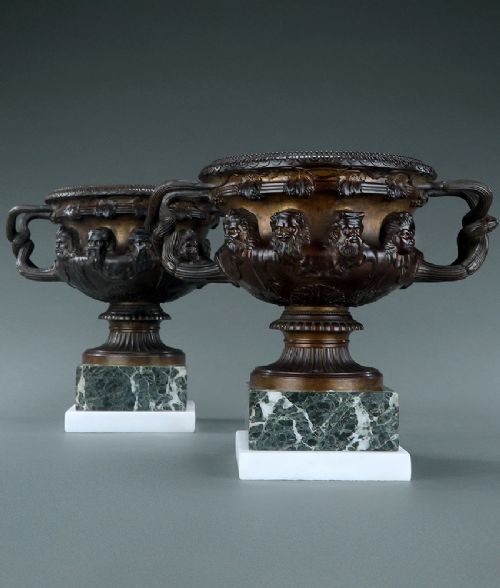
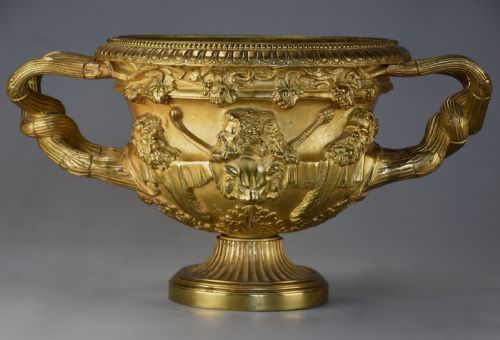
A grand tour vase is typically a bronze or marble souvenir collected by travellers on the classical education tour of Europe during the nineteenth century. These ornamental urns and vases reproduce famous ancient sculptures, such as the Warwick, Medici, and Borghese vases, translated into cabinet or mantel scale.
Most examples date from the Victorian era, spanning the mid to late nineteenth century, created by European workshops catering to wealthy collectors. Their appeal lies in the fusion of classical scholarship and high-status interior ornamentation.
Materials and construction
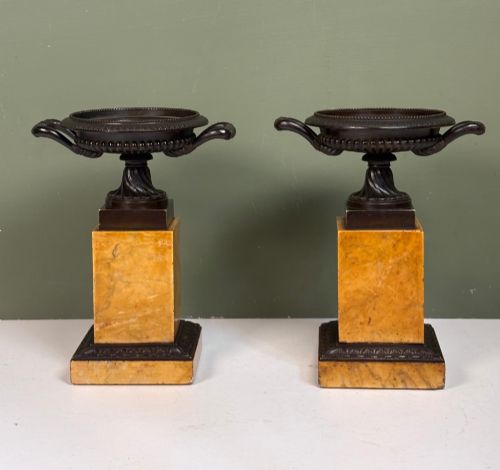
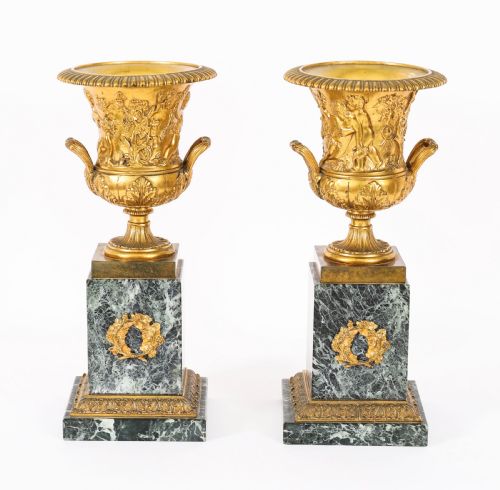
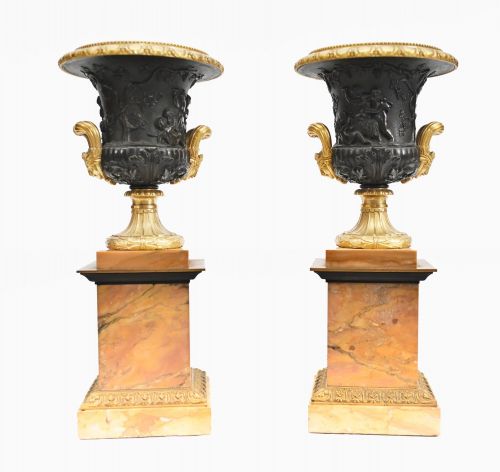
Foundry-cast bronze forms the backbone of these pieces, frequently finished with a dark patination, gilt highlights, or ormolu mounts to mimic ancient metalwork. Master founders employed lost-wax and sand-casting techniques to capture intricate classical details, such as Bacchic figures, cherubs, and scrolling handles.
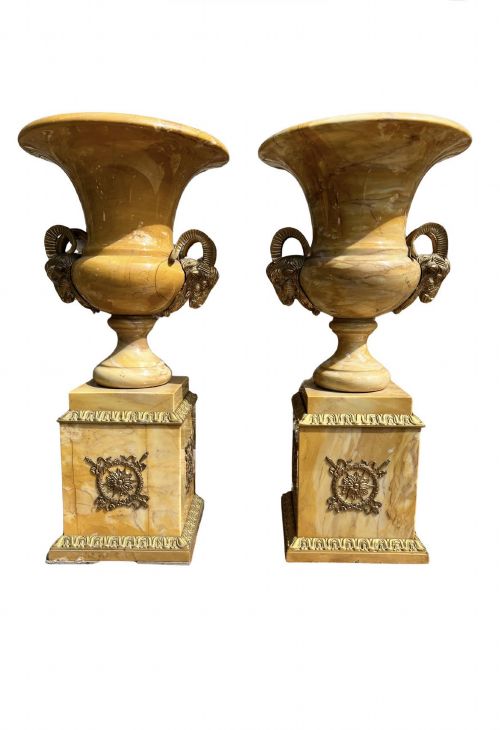
Stone varieties including white marble, Sienna marble, serpentine, and alabaster provide heavy, contrasting bases and carved vessel bodies. These natural materials were turned on lathes and hand-finished to replicate the weathered texture of archaeological finds.
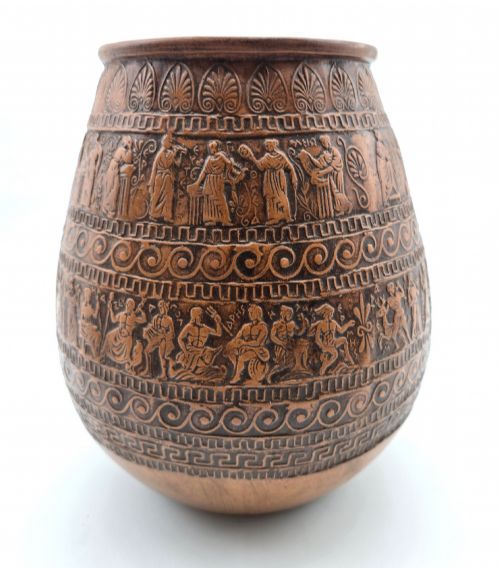
Makers also utilised terracotta and moulded composition materials like scagliola for lighter decorative urns and planters. Metal and stone components were then assembled mechanically, often combining cast bronze bodies with turned marble plinths.
Travellers occasionally strapped heavy marble urns to the backs of mules to transport them down Italian mountainsides.
Assessing quality and execution
The choice and execution of the base material mark another clear division between standard souvenirs and exceptional works. Solid marbles with rich natural veining and finely turned profiles outclass simpler wooden or slate substitutes.
The depth and nuance of the surface patination reveal the artisan's skill, moving from flat, uniform dark paint to subtle, hand-applied chemical patinas that simulate ancient burial. Signed or stamped foundry surfaces often accompany the most rigorous artistic execution.
A.D Delafontaine·Bardedienne
The Grand Tour Vase Glossary
- Campana urn
- A bell-shaped vessel with flared rims and looped handles, heavily represented among classical souvenir bronzes. This form derives directly from ancient garden urns excavated in Italy.
- Ormolu
- Gilded bronze applied as decorative mounts or handles upon marble and bronze bodies. The technique involves the application of a mercury-gold amalgam to a bronze base.
- Reduction
- A smaller scale copy of a monumental ancient sculpture, reproduced accurately for domestic display. These miniatures allowed nineteenth-century collectors to bring museum masterpieces into their private studies.
- Patination
- The surface coloration and finish achieved naturally by age or artificially by chemical treatment on metal. A fine patina enhances the sculptural contours of bronze and brass objects.
- Volute krater
- An ancient vessel type characterised by scroll-shaped handles rising above the lip. They appear frequently in classical revival metalwork and ceramic designs.
Grand Tour Vase: Frequently Asked Questions
What is a grand tour vase?
A grand tour vase is a nineteenth-century decorative object modelled after famous classical antiquities discovered in Italy and Greece. Wealthy travellers collected these miniature reductions as physical evidence of their cultural education abroad.
They function today as sculptural mantel or table ornaments, bridging the gap between classical archaeology and Victorian interior design.
How do I date a grand tour piece?
Dating relies on examining the casting technique, material combination, and surface patination typical of nineteenth-century European foundries. Pieces marked with specific founder signatures or tied to exhibition periods provide the clearest chronological anchors.
Most surviving examples date from the Victorian period, particularly between eighteen-fifty and eighteen-ninety, reflecting the peak of continental tourism.
Where were these pieces displayed?
Collectors originally placed these vases in libraries, studies, and formal drawing rooms to signal their classical learning and travel experiences. They were positioned on mantelpieces, pedestals, or dedicated display tables where their bronze and marble details could be closely inspected.
Today, they suit similar prominent interior positions, functioning as focal points on sideboards or architectural shelves.
What are the most famous antique models?
The most celebrated models replicate iconic ancient excavations such as the Warwick Vase, the Medici Vase, and the Borghese Vase. These specific antiquities captured the imagination of nineteenth-century travellers and were reproduced by the finest European founders.
Finding a signed reduction of one of these specific monuments represents the pinnacle of collecting this genre.