






Grand Tour Style Urns
Grand tour style urns bring classical antiquity home, offering sculptural bronze and marble forms that capture nineteenth-century travel souvenir tastes.
Grand Tour Style Urns
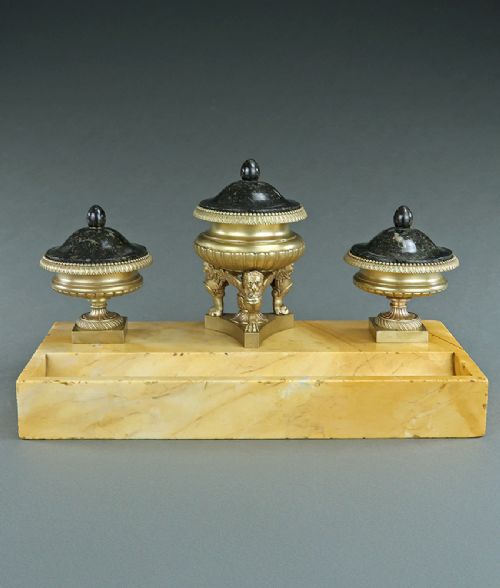
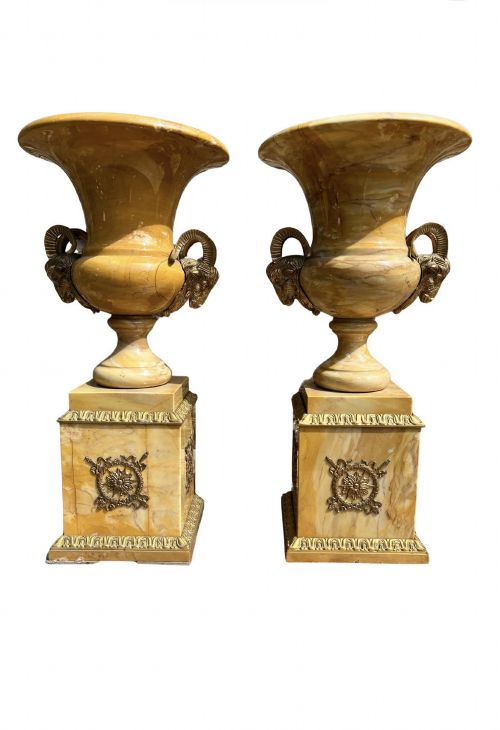
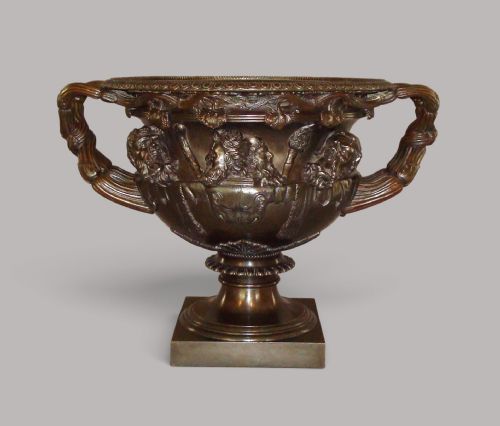
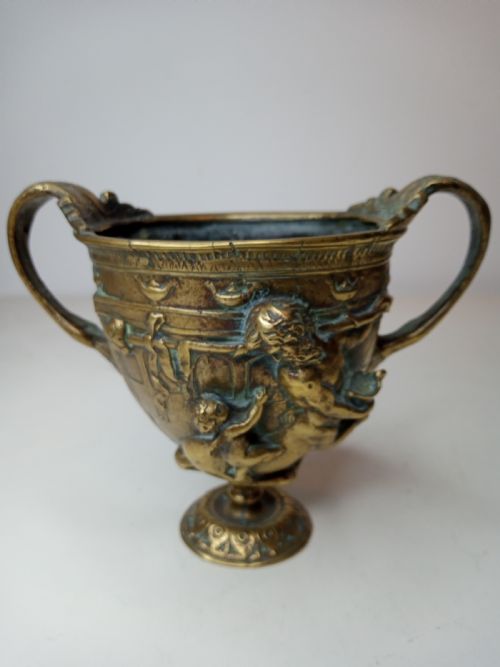
Grand tour style urns recall the classical antiquities collected by travellers journeying through Italy during the nineteenth century. These ornamental objects take many forms, including campana shapes, tazzas, oil lamps, and reductions of famous monuments like the Warwick Vase.
The pieces appearing here span the nineteenth century alongside later revivals, utilising materials modelled directly after ancient Roman and Greek prototypes. Buyers most frequently encounter paired bronze and marble decorative vessels designed for display on mantelpieces or side tables.
How they were made
Foundry workers cast the metallic elements in bronze, brass, and ormolu, often finishing the surfaces with rich patination or gilding. Stonemasons shaped dense stones such as Sienna marble, green marble, and porphyry to form the plinths, bodies, and pedestals.
Artisans combined these heavy mineral bodies with cast metal mounts, securing handles, collars, and covers with threaded pins or fitments. Miniature reductions of ancient vases relied on skilled modelling to translate large architectural monuments into cabinet-sized decorative objects.
Grand Tour Style Urns Retail Price Guide 2026
Typical asking prices for grand tour style urns among the pieces listed under this phrase on Sellingantiques today, from the lower quarter to the upper quarter. They describe what is for sale here now, not the wider market.
Listings span the nineteenth and early twentieth centuries, featuring bronze, Sienna marble, ormolu, and brass worked into campana urns, tazzas, and oil lamps.
What varies in quality
The refinement of the metal chasing dictates visual success, separating sharp, deeply articulated leaf tips and figural reliefs from soft, indistinct castings. Heavier gauge bronze and solid, richly figured marble indicate superior production standards compared to lighter alloys and plain stone.
Proportion and fidelity to the ancient source material define the better examples, where classical profiles maintain correct balance and weight. The integration between stone components and metal mounts reveals the maker's precision during assembly.
The Grand Tour Style Urns Glossary
- Campana urn
- A bell-shaped vessel with a flaring rim and a tapered foot, modelled after ancient earthenware and marble garden vases found in Italy.
- Tazza
- A shallow saucer-like ornamental cup or vase raised upon a high stem and foot, frequently rendered in bronze and marble.
- Ormolu
- Gilded bronze utilised for decorative mounts and decorative details, popular in French and English classical revival interiors.
- Encrier
- A desk stand or inkstand designed to hold writing equipment, often incorporating classical urn or vase motifs.
- Warwick Vase
- A monumental ancient marble krater discovered at Hadrian's Villa, reduced in bronze and marble during the nineteenth century as a grand tour souvenir.
Grand Tour Style Urns: Frequently Asked Questions
What is a grand tour urn?
These decorative objects are nineteenth-century souvenirs modelled after classical Greek and Roman antiquities encountered by travellers abroad.
Craftsmen produced them in bronze, marble, and brass to decorate domestic interiors with classical motifs.
Where were they displayed?
Victorian and Regency collectors placed these ornamental pieces upon mantelpieces, side tables, and pedestals within libraries and drawing rooms.
Pairs frequently served as garnitures framing clocks or architectural ornaments on large pieces of furniture.
How do I identify the materials?
Examination of the body reveals natural mineral veining in stones like Sienna marble or green marble, whilst metal components show cast bronze, brass, or gilded ormolu surfaces.
Heavier pieces often combine turned stone bases with detailed metal handles and rims.
Are these period pieces?
The listings include nineteenth-century works alongside early twentieth-century interpretations created in the same classical revival tradition.
Stylistic cues and material patination help distinguish the nineteenth-century examples from later decorative items.