

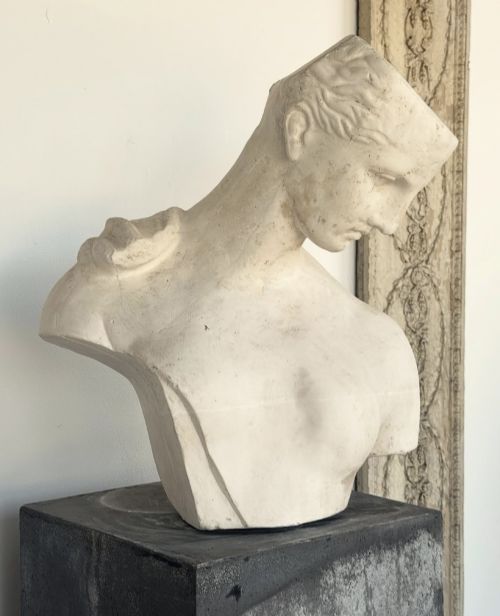
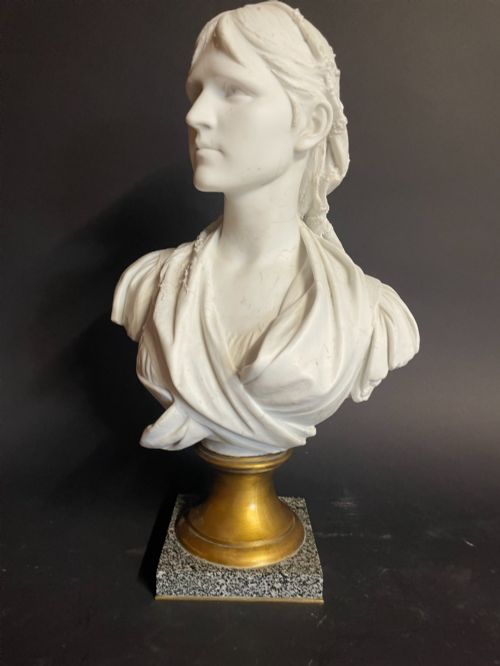
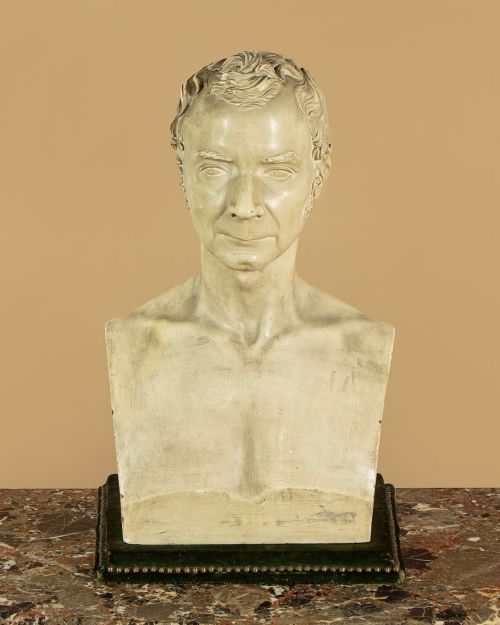
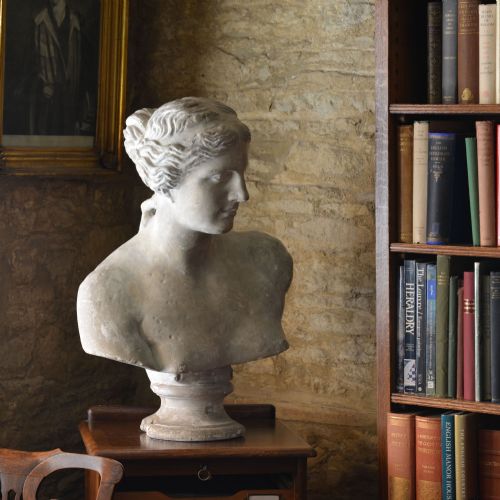


Grand Tour Plaster Bust
A grand tour plaster bust brings the solemn marble of antiquity into the study, offering a tangible link to classical history.
How they were made
These works rely primarily on gypsum plaster poured into moulds taken from classical originals, capturing fine details of hair, drapery, and facial expression. Some examples incorporate paint or a verdigris patina to simulate the appearance of aged bronze or weathered stone.
Supporting structures occasionally include marble, brass, or granite bases and pedestals that give stability and heft to the lighter plaster bodies above. Scagliola surfaces also appear, offering a polished imitation of natural stone through pigmented plaster techniques.
What varies in quality
Surface treatment dictates much of the character, distinguishing simple white plaster from sophisticated painted finishes or patinated surfaces that mimic bronze. The weight and integration of the base material also contribute to the overall substance of the piece.
Grand Tour Plaster Bust Retail Price Guide 2026
Typical asking prices for grand tour plaster bust among the pieces listed under this phrase on Sellingantiques today, from the lower quarter to the upper quarter. They describe what is for sale here now, not the wider market.
Listings feature nineteenth-century dates alongside materials such as gypsum plaster, marble, brass, granite, and terracotta.
Brucciani
The Grand Tour Plaster Bust Glossary
- Plaster
- A building material consisting of a powder of calcified gypsum that is mixed with water and moulded into shape. It provides a smooth surface that accepts paint and patination readily.
- Scagliola
- A composite substance made from glue, plaster, and pigments, used to imitate marble and other fine stones. Craftsmen apply it to pedestals and columns to support sculptural busts.
- Patination
- The process by which a surface acquires an aged appearance through handling, exposure, or deliberate chemical treatment. In these pieces, it often simulates ancient bronze or weathered stone.
- Neoclassical
- A style of art and architecture inspired by the classical arts of ancient Greece and Rome. It dominates the aesthetic of nineteenth century portrait busts and associated pedestals.
- Gypsum
- A soft sulphate mineral used as the primary raw material for plaster. Its fine grain allows for precise replication of classical sculptural details.
Grand Tour Plaster Bust: Frequently Asked Questions
What is a grand tour plaster bust?
A grand tour plaster bust is a nineteenth century sculptural replica of a classical antique, purchased by travellers touring European cultural centres.
These pieces served as academic studies and decorative objects in domestic libraries and hallways.
How do I care for a plaster bust?
Plaster requires gentle dusting with a soft, dry brush and protection from moisture and direct sunlight.
Avoid using water or liquid cleaners, as moisture can soften the gypsum material and damage painted or patinated surfaces.
Were these busts made in sets?
Some pieces were produced as pairs or matched groups representing philosophers, emperors, or mythological figures.
Collectors often acquire them individually or as opposing pairs to balance a mantelpiece or bookcase.
How can I tell the age of a plaster bust?
Age is indicated by the composition of the plaster, the nature of the surface patina, and the style of the mounting.
Nineteenth century examples typically show appropriate surface wear and structural materials consistent with historical workshop practices.