
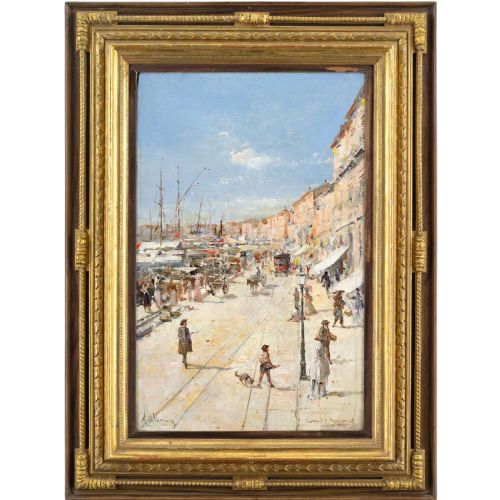
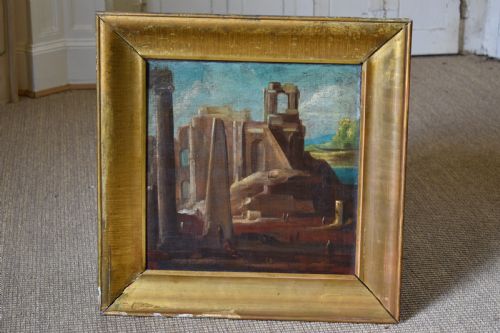
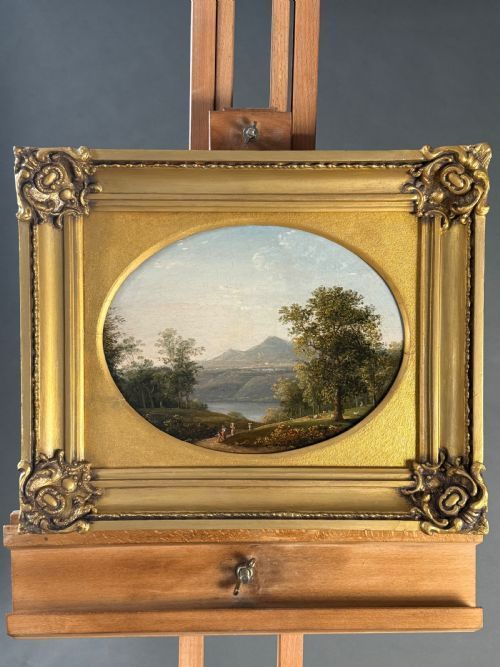
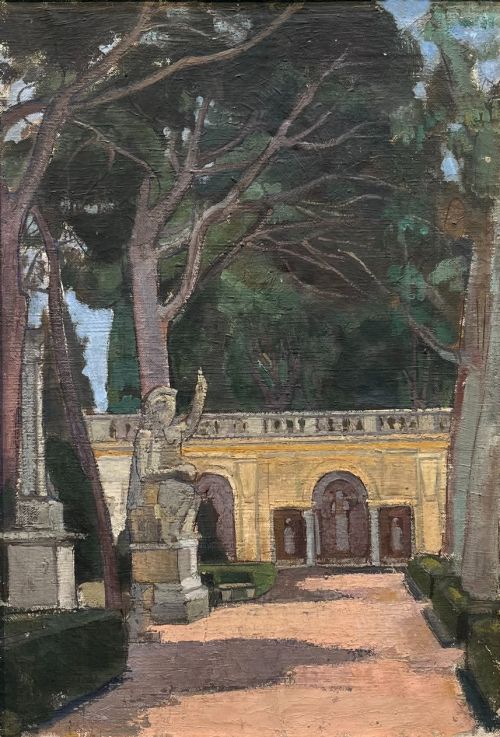

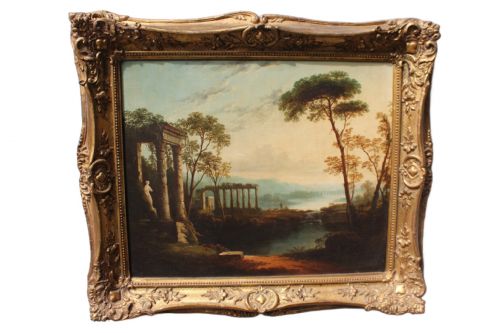


Grand Tour Oil Painting
A grand tour oil painting captures the classical ruins, sunlit canals, and southern light collected by travellers across centuries.
Grand Tour Oil Painting
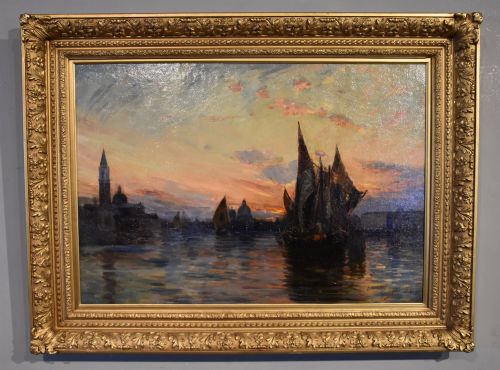
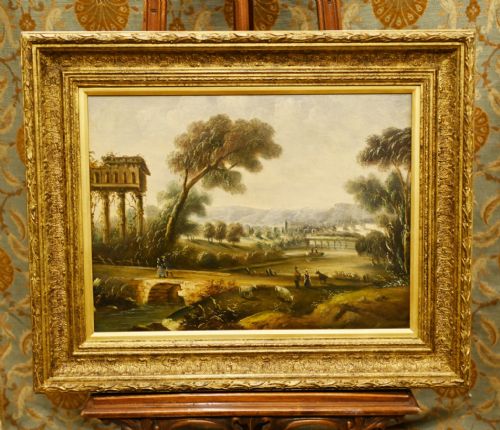
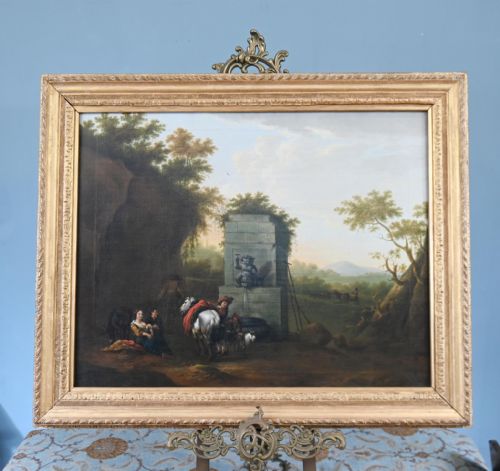
A grand tour oil painting records the Italian landscapes, Venetian canals, and classical ruins encountered by travellers during their travels abroad. These works span periods from the eighteenth century through the early twentieth century, showing pastoral scenes, coastal views, and architectural capriccios.
Buyers encounter oil paintings on canvas framed in giltwood or gesso, often depicting subjects such as the Doge's Palace, the pyramids, or Roman antiquities. The selection includes works by named artists alongside pieces by the British School in Rome and continental painters.
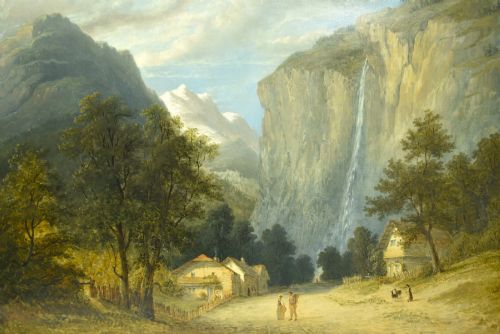
The form encompasses townscapes of Venice, Swiss waterfalls, and Sicilian street scenes executed in oil paint. These artworks reflect the visual tastes of collectors who journeyed through Italy, Switzerland, and Egypt.
Materials and technique
These works are executed in oil paint upon canvas surfaces, utilising rich pigments to render the distinct light of Mediterranean and Alpine locations. The physical support consists of stretched canvas housed within decorative wooden frames finished in giltwood, gesso, or gilded wood.
Artists employed traditional brushwork techniques to build depth in landscape and architectural subjects, capturing atmospheric effects from Venetian lagoons to desert pyramids. The integration of oil on canvas with ornate frames defines the physical construction of these pieces.
Camels and desert pyramids occasionally join Venetian canals on the itinerary.
Assessing quality
Quality rests upon the precision of architectural rendering and the handling of light within the composition, distinguishing accomplished topographical observation from generic studio output. Works attributed to documented hands or specific schools display superior draughtsmanship in classical ruins and figures.
The preservation of the original oil paint surface and the craftsmanship of the accompanying giltwood or gesso frame contribute significantly to the standing of a piece. Finer examples maintain crisp detail in townscapes and landscapes without obscuring the brushwork.
Augusto Alberici·JACOB PHILIPP HACKERT·Thomas Hodgson Liddell·Marc Aldine·Antoine Bouvard Senior·E. Perez Senet·Jane Vivian·Alfred Pollentine·Francesco Guardi·Hugo Vogel·Guido Agostini·Thomas Jones
The Grand Tour Oil Painting Glossary
- Capriccio
- An architectural fantasy placing together classical ruins, buildings, and other architectural elements in a fictional compositional landscape. This style was popular among painters working in Rome and Venice.
- Giltwood
- Wood carved and treated with a thin layer of gold leaf or metallic powder, commonly used for framing antique artworks. It provides the ornate borders typical of nineteenth-century presentations.
- Gesso
- A plaster mixture applied to wood frames as a base for moulding and gilding. It allows for intricate decorative relief work around the edges of paintings.
- Neoclassical
- A style inspired by the classical art and culture of ancient Greece and Rome. It informs the subject matter of ruined temples and classical figures in pastoral landscapes.
Grand Tour Oil Painting: Frequently Asked Questions
What is a grand tour oil painting?
These artworks are paintings created to commemorate travels through Europe, particularly Italy, during the eighteenth and nineteenth centuries. They typically depict classical ruins, Venetian canals, and Mediterranean landscapes.
Travellers commissioned or purchased these canvases as visual records of their educational journeys abroad. The subjects range from architectural studies to pastoral scenes executed by British and continental artists.
How were these paintings displayed?
Owners typically housed these works in heavy giltwood, gesso, or gilded wood frames designed to complement nineteenth-century domestic interiors. The frames enhanced the decorative impact of the canvas when hung in libraries or drawing rooms.
Such presentation reflected the prestige associated with travel and classical education. The combination of oil on canvas and ornate framing made them central decorative elements in period homes.
How do I identify a nineteenth-century piece?
Dating relies on stylistic evidence, artist signatures, and framing materials such as gesso and giltwood. Many works carry inscriptions or signatures that link them to specific schools or documented painters.
The subject matter often points towards particular decades, such as Venetian townscapes or Alpine waterfalls recorded during the Victorian era. Examining the canvas preparation and stretcher construction also helps confirm the period.
Where were these paintings created?
Artists produced these works both on location during travels and within studios in Rome, Venice, and other cultural centres. Many paintings originated in Italy through the hands of local artists or visiting British painters.
Schools such as the British School in Rome fostered artists who painted classical landscapes for returning travellers. This local production ensured authenticity in the depiction of light and architecture.