
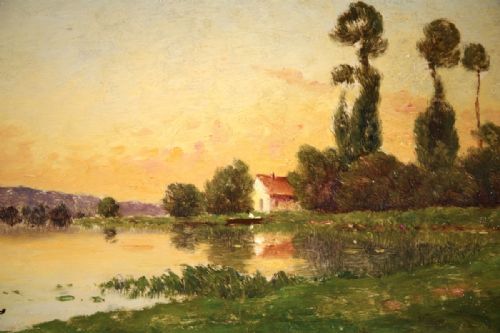


Original Sunset Oil Painting
An original sunset oil painting captures the last light on canvas, bringing deep warmth and atmosphere to a room through layered brushwork and rich pigments.
Original Sunset Oil Painting
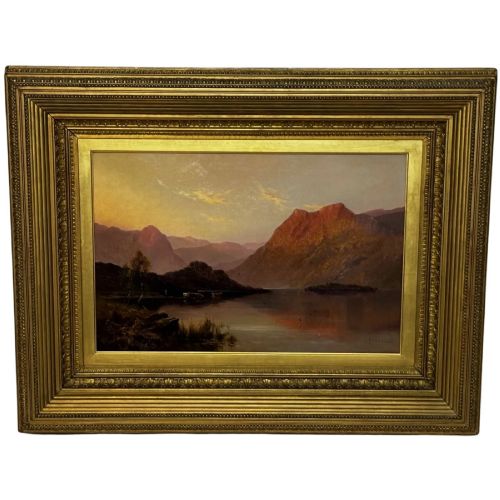
An original sunset oil painting places light at the heart of the composition, recording dusk across coastal shores, lochs, and pastoral fields. These works date from the nineteenth century through the mid-twentieth century, capturing the fading day in varied British and European landscapes.
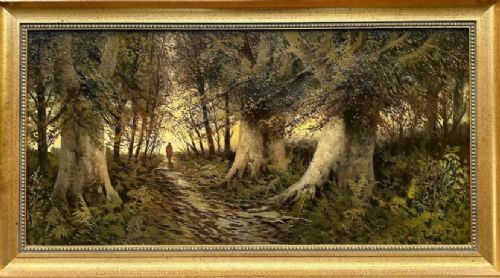
The most common examples on this page are nineteenth-century canvases and early twentieth-century boards depicting woodland edges, rivers, and harvest scenes. Painters utilise the medium to render dramatic evening skies, glowing horizons, and silhouetted figures against gathering shadows.
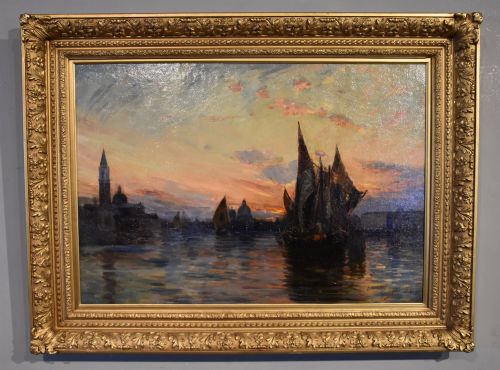
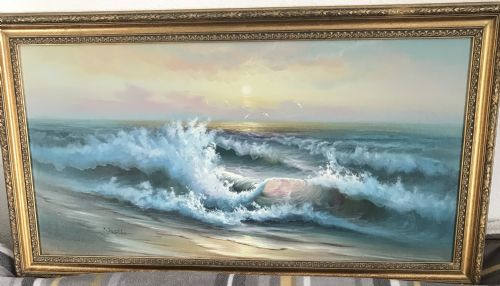
Buyers encounter subjects ranging from Scottish Highlands and English rural views to Venetian lagoons and marine seascapes. Each piece documents a specific topographical or atmospheric study created by artists working directly from nature or within traditional studios.
Materials and technique in period works
Artists built these compositions using oil paint applied to stretched canvas, wooden panels, or rigid boards. The medium allows for slow blending, creating gradual transitions from bright yellows and oranges into deep purples and blues across the evening sky.
Makers often set finished works into original gilt wood frames decorated with gesso mouldings. The gold leaf enhances the warm tones of the twilight scene while protecting the perimeter of the canvas or panel from physical damage.
Several Victorian artists painted marshes simply to watch geese ruin an otherwise quiet evening.
Distinctions in execution and condition
Quality rests in the handling of light and atmospheric depth, where superior works render the transition of dusk with subtle gradations of colour rather than stark contrasts. The confidence of the brushwork defines the success of the composition, distinguishing accomplished plein air studies from rigid formulaic output.
Physical preservation dictates long-term stability, with pristine surfaces retaining original varnish layers and stable paint without extensive craquelure or past intervention. The integrity of the support, whether canvas tension or panel flatness, influences the structural soundness of the painting.
Alfred Fontville de Breanski Jr·Thomas W Lascelles·Thomas Hodgson Liddell·Henri Jaques Delpy·William Greaves·George Vicat Cole·David Watts·Roger de la Corbiere·Arthur Winter Shaw·Walter Williams·Alfred de Breanski Snr·WALTER HOLMES·Daniel Sherrin·Charles Pettitt·Samuel Bough·W Hallam·Henry Cooper·William Langley·William Burns·Ada Stone·Robert Gallon·J S Rolfe·William Ashton·Robert Ernest Roe
The Original Sunset Oil Painting Glossary
- Canvas
- A heavy woven fabric stretched across a wooden frame to serve as a support for oil paint. It provides a textured surface that responds well to traditional layering techniques.
- Gesso
- A plaster-like mixture applied to wood panels or frames to prepare the surface for gilding or painting. It creates a smooth, durable base that seals the organic material underneath.
- Gilt wood
- Carved timber coated in thin layers of gold leaf or metallic powder. This finish surrounds period paintings with a reflective border that complements warm pastoral palettes.
- Impressionism
- An art movement focusing on transient effects of light and spontaneous brushwork. Practitioners record open-air scenes with visible strokes rather than blended finishes.
- Panel
- A flat sheet of wood used as a rigid painting support instead of fabric. Panels offer a stable surface that resists the sagging associated with aged textiles.
Original Sunset Oil Painting: Frequently Asked Questions
How do I clean an oil painting?
Dust accumulates lightly on textured paint surfaces over decades, requiring only gentle removal with a soft, dry brush. Professional conservators should handle any deeper cleaning to protect fragile varnish and pigment layers.
Avoid using water, chemical solvents, or damp cloths on the canvas or board. Moisture penetrates microscopic cracks in the paint layer and causes permanent damage to the underlying support.
Where should I hang my painting?
Select an interior wall away from direct sunlight and strong heat sources such as radiators or fireplaces. Stable room temperatures prevent the wooden stretcher frames and canvas from expanding and contracting.
Ensure the hanging wall is structurally sound and supports the weight of the heavy gilt wood frame securely. Standard picture wire and proper wall hooks distribute the load evenly across the structure.
How do I identify the period?
Examine the back of the canvas, stretcher bars, and frame for old handwritten labels, framer stamps, and artist signatures. Nail types, canvas weave density, and panel stamps provide reliable clues to the decade of creation.
Stylistic conventions within British landscape painting also point to specific eras, such as the distinct palette of Victorian fine art versus mid-century modern interpretations. Comparing brushstroke techniques with documented works confirms the broader historical context.
Are these paintings ready to hang?
Most pieces arrive fitted with secure hanging hardware and protective backing boards attached to the reverse of the frame. You can place them directly onto a wall upon delivery without immediate framing work.
Inspect the wire and eyelets upon arrival to ensure they remain secure after transit. Older frames may require minor adjustments to their hanging cords to sit evenly against the wall.