
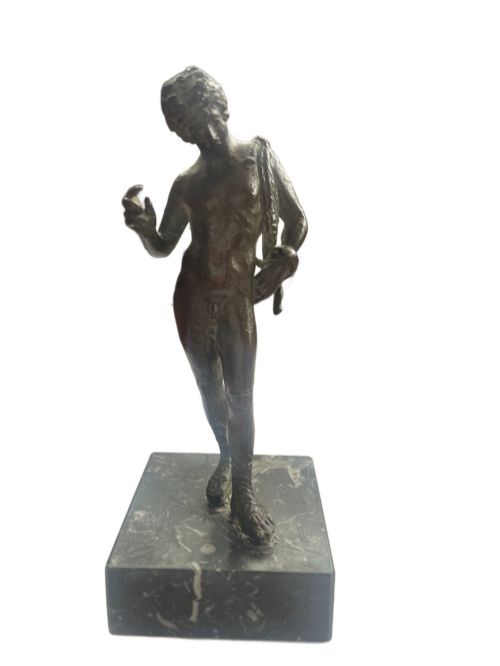
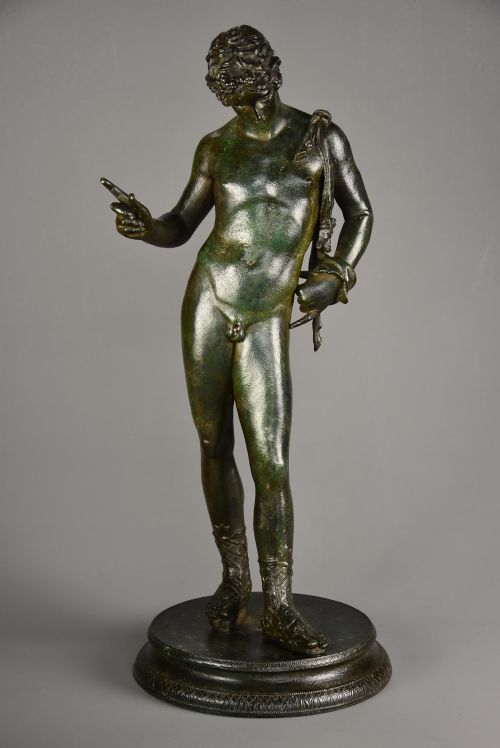
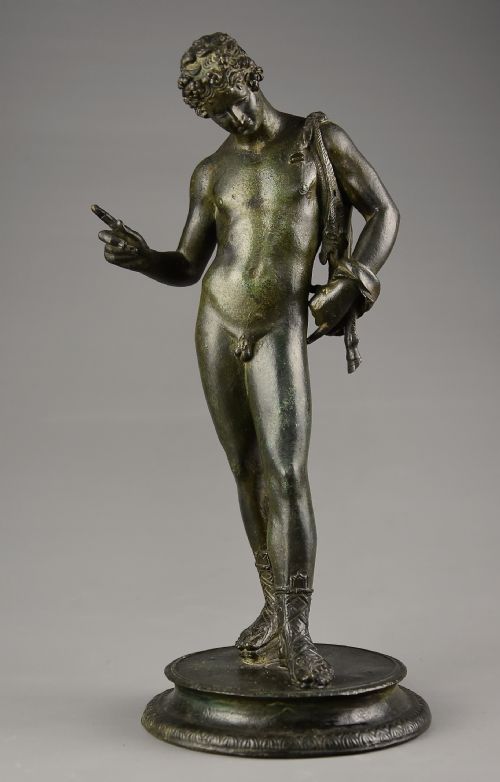


Grand Tour Narcissus
A grand tour narcissus is a classic bronze souvenir from nineteenth-century Italy, capturing classical sculpture for the home.
Grand Tour Narcissus
A grand tour narcissus sculpture represents a classical figure, often identified as Dionysus or Bacchus, modelled after ancient originals discovered in Pompeii. These nineteenth-century bronzes served as cultural mementos for travellers journeying through Italy.
The version most commonly met on this page is a dark or green patinated bronze figure mounted on a marble or fossil marble base. Such pieces range from cabinet-sized statuettes to larger sculptures reflecting the neoclassical taste of the period.
Materials and casting methods
These figures were produced in Italian foundries using bronze, sometimes finished with gilding or chemical patination to simulate the appearance of excavated antiquities. Dark green and brown patinations predominate, applied to highlight the musculature and contours of the cast metal.
Bases were fashioned from natural stone, frequently incorporating fossil marble or standard marble to anchor the metal sculpture. Signature marks or foundry stamps occasionally appear on the bronze or base, indicating the workshop of origin.
Several figures identified as narcissus actually depict Dionysus, demonstrating that even historical tourists occasionally mixed up their mythology.
Quality variations
The crispness of the chasing distinguishes finer casts from simpler souvenir pieces, showing how well the metal retains the detail of the original model after casting. Subtle variations in the application of the green or dark patination also affect the visual depth of the bronze surface.
The material and finish of the base contribute to the overall standard of the object, with fossil marble mounts offering a more substantial presentation. Furthermore, documented signatures from known Neapolitan founders elevate the standing of a sculpture within the historical record.
Michele Amodio·Sabatino
The Grand Tour Narcissus Glossary
- Grand Tour
- A traditional journey through Europe, chiefly Italy, undertaken by upper-class travellers to study classical art and culture. Souvenirs like bronze sculptures were collected to commemorate the travels.
- Patination
- The colouring or treatment applied to the surface of bronze to alter its appearance. Dark green and brown tones are typical of these nineteenth-century classical figures.
- Neoclassical
- A Western cultural movement drawing inspiration from the art and culture of classical antiquity. This style informs the aesthetic of the figures found in these listings.
- Fossil Marble
- A limestone containing visible organic fossils, frequently used as a base material for nineteenth-century bronze sculptures. It provides a heavy and decorative mount for the figures.
Grand Tour Narcissus: Frequently Asked Questions
What is a grand tour narcissus?
A grand tour narcissus is a nineteenth-century bronze sculpture modelled after an ancient Roman statue found in Pompeii. Though often called narcissus, the figure frequently represents Dionysus or Bacchus.
Travellers in Italy purchased these souvenir bronzes as portable examples of classical sculpture. They reflect the nineteenth-century interest in archaeology and neoclassical aesthetics.
Who made these bronze sculptures?
These pieces were cast by Italian workshops and foundries, particularly in Naples, which catered to foreign travellers. Some examples bear signatures from makers such as Michele Amodio or Sabatino.
Many other pieces remain unsigned, produced as commercial souvenirs for the nineteenth-century export market. Foundry marks and signatures help identify the origin of specific casts.
How were they displayed?
These bronze figures were designed to sit on desks, mantelpieces or library tables within nineteenth-century homes. Their marble or fossil marble bases provided stability and a formal presentation.
Collectors displayed them alongside other classical souvenirs, such as small architectural models and intaglios. They functioned as conversation pieces that signaled the owner's cultural education.
How do I identify the period?
Dating relies on the casting quality, the type of patination, and the character of the marble base. The majority of these pieces date from the nineteenth century, specifically around the eighteen-seventies and eighteen-eighties.
Examining the underside of the bronze and the wear on the stone base can also provide clues to age. Signed pieces occasionally carry specific dates or foundry locations.