


Grand Tour Centrepiece
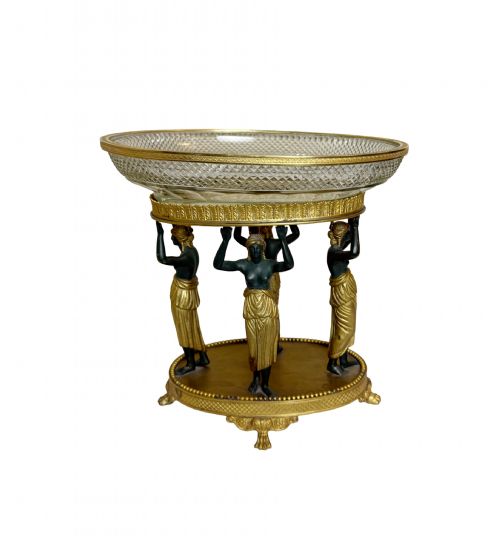
A grand tour centrepiece brings classical antiquity and neoclassical grandeur to a room through bronze, marble, and cut crystal.
Grand Tour Centrepiece
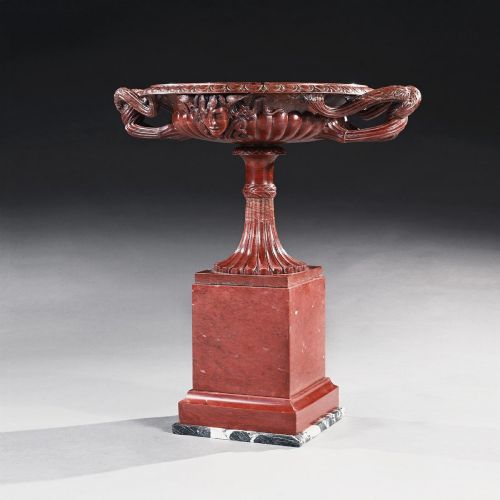
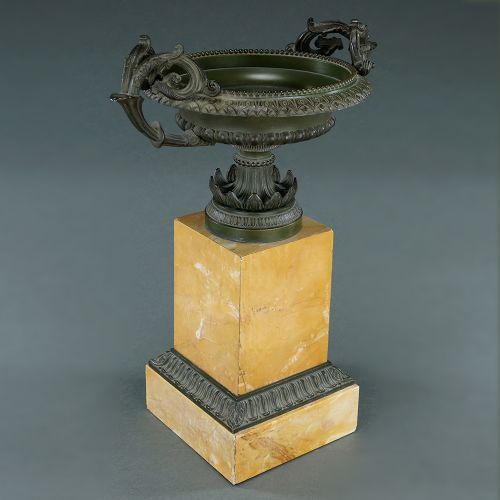
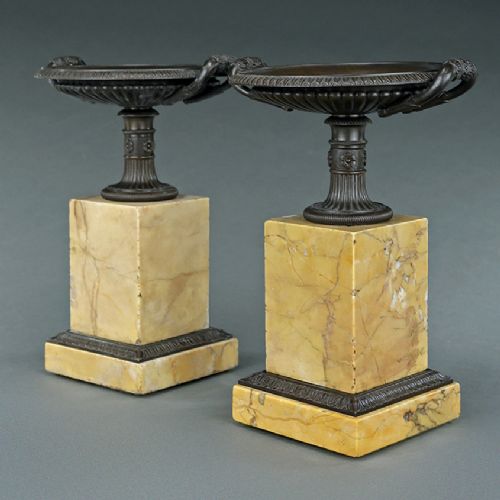
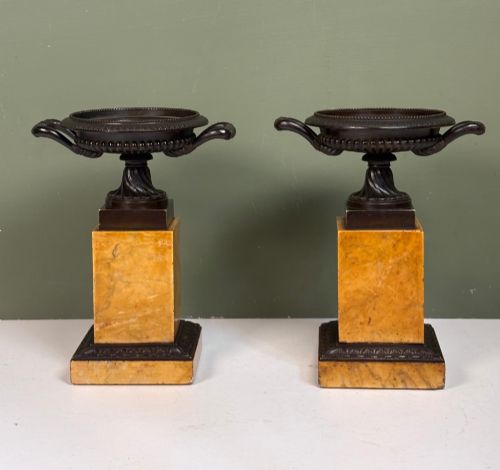
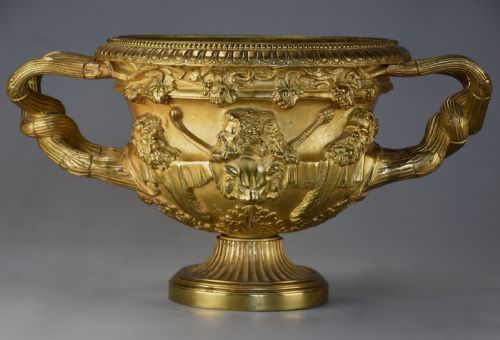
When you search for a grand tour centrepiece, you encounter heavy decorative vessels and tazzas created as souvenirs of European travel during the eighteenth and nineteenth centuries. These pieces replicate famous classical antiquities such as the Warwick Vase in miniature form.
The objects take the form of tazzas, urns, jardinières, and decorative bowls. They combine classical architectural styling with ornamental mounts and heavy stone bases.
Most examples originate from nineteenth-century Italy and France, drawing upon neoclassical, Renaissance revival, and French empire design traditions. They serve as table centrepieces or mantel displays that echo archaeological finds.
How they were made
Foundry workers cast patinated and gilt bronze into detailed classical shapes, often utilising reduction techniques to scale down monumental antiquities like ancient vases and architectural monuments. These metal elements combine with hand-turned marble, alabaster, rosso antico, and malachite bases.
Stone sections are carved and polished to showcase the natural veining of the mineral, while crystal elements receive deep geometric or linear cutting. Artisans then mount the bronze handles, rims, and figural details onto the stone using threaded pins or adhesives.
Listings feature nineteen-century pieces created in bronze, marble, gilt bronze, ormolu, rosso antico marble, cut crystal, and malachite.
What varies in quality
The crispness of the bronze casting separates standard souvenirs from exceptional studio pieces, particularly in the rendering of classical motifs, faces, and foliate relief. Fine work displays sharp chasing across the metal surfaces and smooth, even patination.
The selection and turning of the stone dictate the upper tier of the range, where flawless rosso antico, malachite, or rouge griotte marbles exhibit rich natural figuring without structural repair. Heavy gauge mounts and substantial crystal bodies further distinguish superior examples.
Benedetto Boschetti
The Grand Tour Centrepiece Glossary
- Tazza
- A shallow bowl or cup mounted on a stem and foot, commonly used in classical antiquity and revival periods for display or serving.
- Ormolu
- Ground metallic gold applied to a bronze object through a mercury amalgamation process, or used to describe high-grade gilt bronze mounts.
- Rosso Antico
- A deep red antique marble prized by Italian stonemasons and sculptors for replicating excavated classical artefacts.
- Warwick Vase
- A monumental Roman marble vase discovered in Hadrian's Villa, widely reproduced during the nineteenth century as a grand tour bronze reduction.
Grand Tour Centrepiece: Frequently Asked Questions
How do I date a marble tazza?
Dating a marble tazza involves examining the hand-turned characteristics of the stone base and the manufacturing methods of any attached metal mounts. Nineteenth-century examples often display specific patination on the bronze and distinct weathering patterns on the marble.
Comparing the proportions and subject matter to known classical antiquities also helps narrow down the period of production. Artisans during the 1800s utilised specific reduction techniques that differ from later twentieth-century reproductions.
Where were these pieces made?
These decorative objects were primarily produced in workshops across Italy and France, catering directly to travellers undertaking the grand tour. Cities like Rome, Florence, and Paris held active studios specialising in bronze casting and stone carving.
Local artisans copied ancient sculptures and architectural ruins found during archaeological excavations. Souvenirs were then purchased and transported back to British and European homes.
How do I care for bronze and marble?
Care for bronze and marble requires keeping the surfaces free from dust using a soft, dry cloth. Avoid using harsh chemical cleaners or polishes that can strip the original patination from the bronze or etch the polished stone.
Place the piece away from direct heat sources and moisture to protect vulnerable stone types like alabaster and malachite. Gentle handling is essential due to the heavy weight and fragile joined components of these items.