




Cut Crystal Fruit Dish
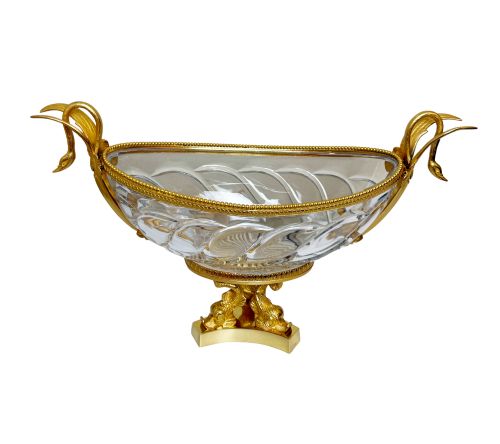
These cut crystal fruit dish options bring heavy lead glass and bronze mounts together for a centrepiece that holds fruit or stands alone.
Cut Crystal Fruit Dish
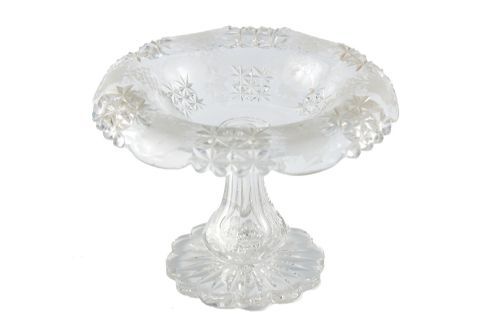
A cut crystal fruit dish combines deep glass cutting with metal mounts, functioning as a centrepiece bowl or tazza on a dining table or sideboard. These pieces appear across Victorian, Edwardian, Georgian, and Art Deco periods, shifting from heavy Victorian crystal to coloured overlay styles of the 1930s.
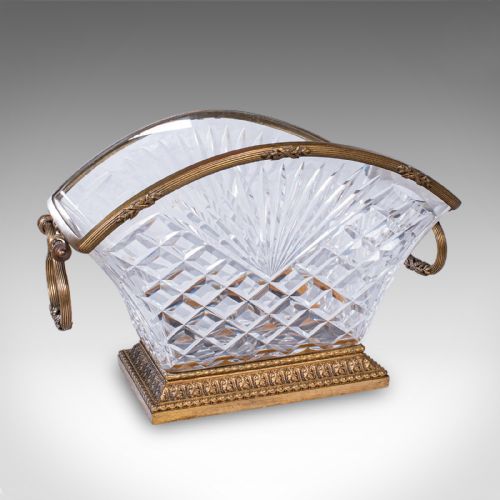
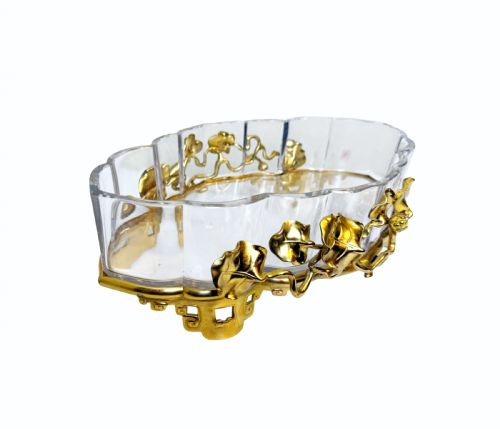
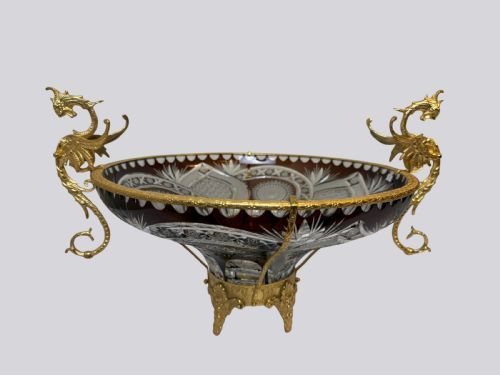
The versions most common on this page are large Edwardian and Victorian cut glass bowls paired with gilt bronze or ormolu frames. Makers from English houses to Belgian factories produced these vessels for formal dining.
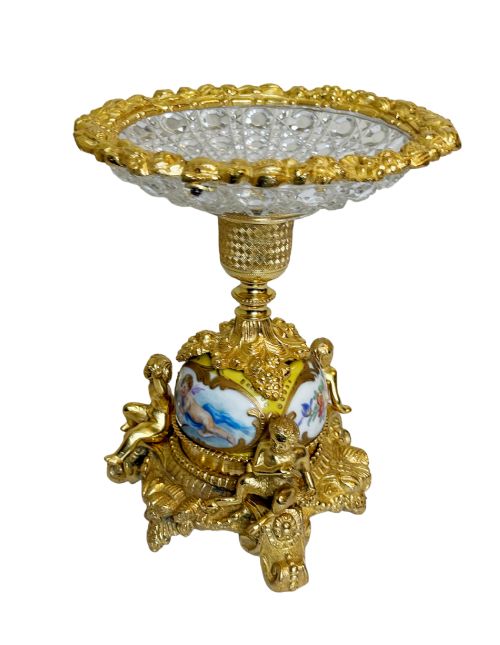
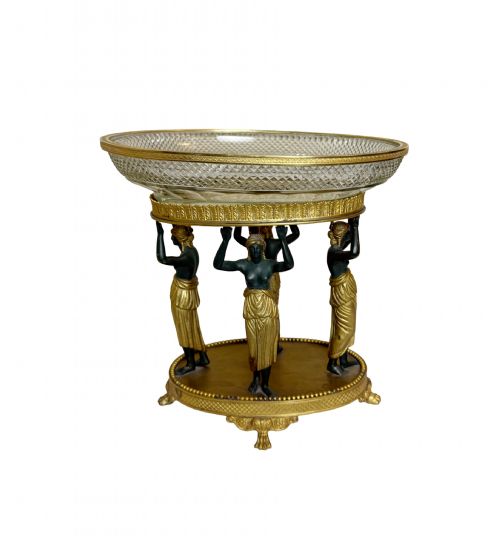
The form ranges from simple oval fruit bowls to elaborate centrepieces supported by cherubs or bronze stands. Coloured glass versions introduce cobalt blue, green, and yellow over crystal alongside traditional clear lead crystal.
Assessing Quality
Quality rests on the depth and crispness of the glass cutting alongside the weight and detail of the metal mounts. Sharp, clean facets on lead crystal distinguish better examples from simpler pressed glass.
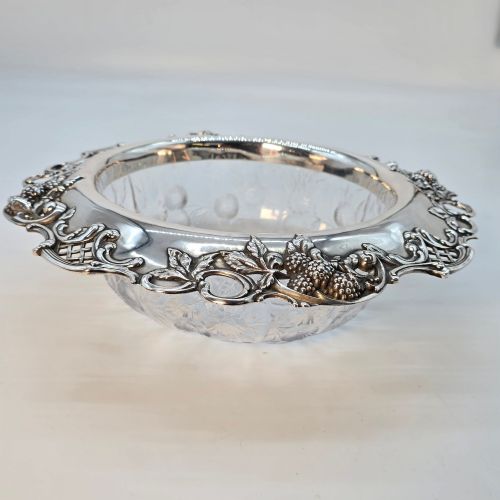
The integration between the glass bowl and its gilt bronze or silver frame determines the refinement of the piece. Cast metal mounts with finely chased details indicate higher workshop standards than standard cast frames.
The selection includes formal centrepieces with cherub mounts alongside simple oval fruit bowls and footed tazza stands.
Tiffany and Co·Joseph Simon·Val St Lambert·Waterford
The Cut Crystal Fruit Dish Glossary
- Cut Crystal
- High-clarity lead glass shaped by abrasive wheels to form decorative facets. This material provides the heavy weight and sharp refraction seen in antique bowls.
- Ormolu
- Finely ground high-carat gold applied to a bronze base using mercury. This technique creates a rich golden finish on the decorative mounts.
- Tazza
- An ornamental cup or shallow bowl raised on a stem and foot. These pieces frequently display etched or cut patterns across the upper basin.
- Gilt Bronze
- Bronze metal coated with a thin layer of gold. It provides structural support and ornamentation for the glass vessels.
- Overlay Glass
- A technique where a layer of coloured glass is fused over a clear crystal core. Cutaway patterns expose the clear glass beneath the colour.
Cut Crystal Fruit Dish: Frequently Asked Questions
How do I clean an antique crystal bowl?
Wash the glass by hand in lukewarm water using a mild detergent, laying a towel in the bottom of the sink to prevent chipping. Avoid soaking metal mounts to protect gilt bronze and silver surfaces.
Dry the piece immediately with a lint-free cloth to maintain the clarity of the cut crystal facets.
Can I use these for serving fruit?
These dishes function well for holding fresh fruit on a dining table or sideboard just as they did historically. Ensure heavy citrus or moisture is not left in contact with vulnerable metal mounts for extended periods.
Most owners use them as decorative centrepieces or fill them with dry arrangements to preserve the interior condition.
How do I date a cut crystal dish?
Examine the weight of the glass, the style of the cutting, and the character of any metal mounts. Victorian and Edwardian pieces often feature deep geometric cutting paired with heavy gilt bronze frames.
Later pieces from the 1930s introduce coloured overlay glass and distinct factory marks associated with Art Deco production.
What is the difference between glass and lead crystal?
Lead crystal contains a high percentage of lead oxide, which increases the weight, refractive index, and ringing sound of the material. This composition allows artisans to cut deeper, sharper facets than standard soda-lime glass permits.
Antiques described as cut crystal utilise this heavier lead content for enhanced brilliance.