
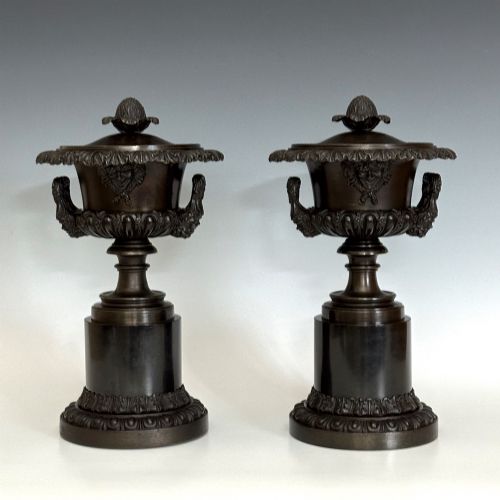


Grand Tour Bronze Vase
When you encounter a grand tour bronze vase, you are looking at a classical souvenir collected during nineteenth-century European travels.
Grand Tour Bronze Vase
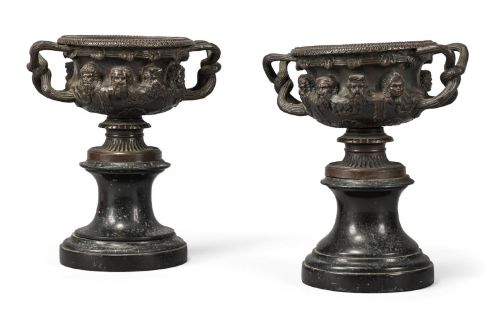
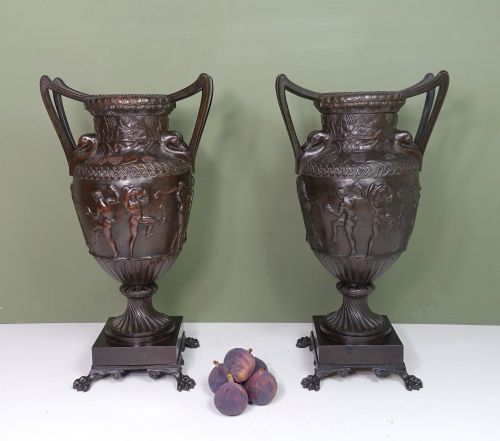
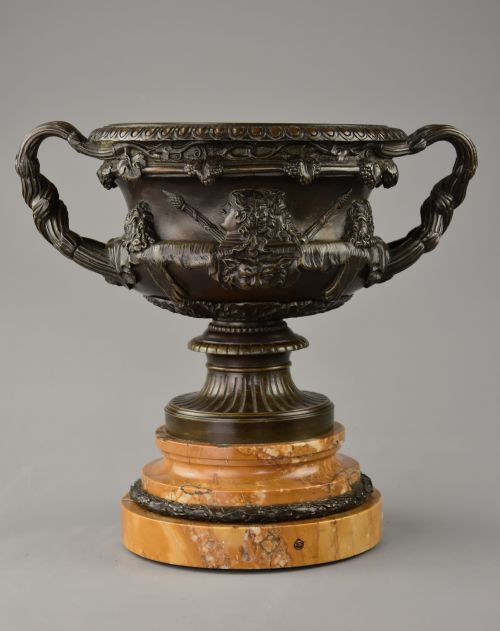
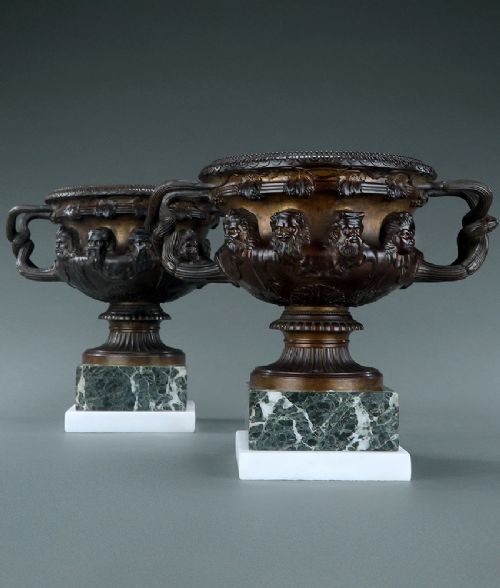
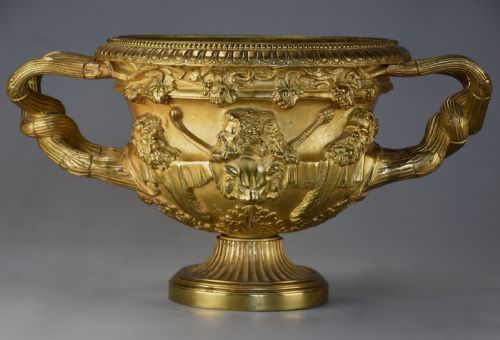
A grand tour bronze vase represents miniature or full-scale reductions of famous antiquities encountered by travellers visiting Italy and France during the nineteenth century. These ornamental vessels mirror classical architecture and sculpture, taking specific historical forms such as the Warwick, Borghese, Albani, Medici, and Townley vases.
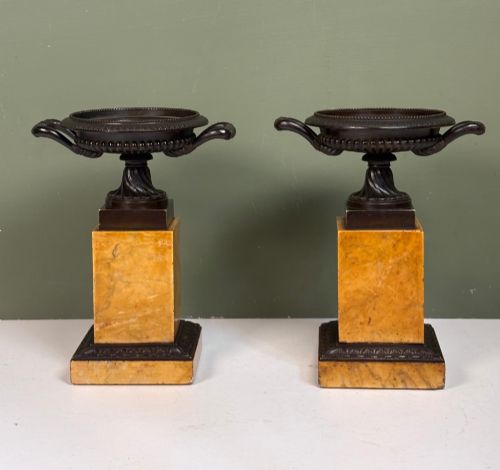
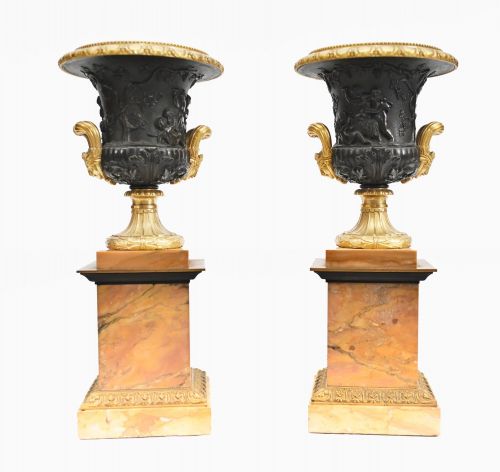
The surviving pieces on this page span the Victorian era and the broader nineteenth century, frequently incorporating forms like campana urns, ewers, tazzas, and tripod Atheniennes. Makers produced these souvenir pieces to satisfy the appetite for classical antiquity among collectors returning from continental journeys.
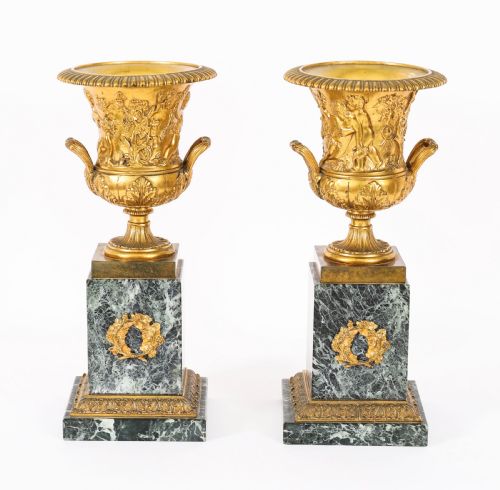
Many examples combine cast metal with contrasting plinths of white or green marble, slate, and wood to emulate museum displays. Buyers select these decorative urns and planters to bring neoclassical formality and historical resonance into nineteenth-century or modern interiors.
How They Were Made
Foundries manufactured these pieces using traditional metalcasting techniques, shaping molten bronze into detailed sculptural reductions of ancient monuments. Artisans then applied chemical patination or mercury gilding, known as ormolu, to achieve varied surface tones ranging from deep brown to brilliant gold.
Many designs integrate secondary materials such as carved marble bases, slate plinths, and glass inserts to support the primary bronze vessel. Complex ornamentation, including figural handles depicting Bacchus, dolphins, or cherubs, was cast separately and attached mechanically to the main body.
The documented forms include campana urns, tazzas, ewers, and tripod Atheniennes reflecting classical revival styles.
What Varies in Quality
The fidelity of the reduction separates standard souvenir foundry work from exceptional studio casting. Superior examples capture the precise sculptural depth and classical proportions of the original museum antiquities without losing definition in the foliage, figures, or relief panels.
Finishing work dictates the tactile appeal of the object, distinguishing basic patination from meticulous chasing and fire gilding. Furthermore, the selection and turning of the accompanying marble or slate base indicate the original investment in the piece's overall presentation.
A.D Delafontaine·Bardedienne·Clodion
The Grand Tour Bronze Vase Glossary
- Campana vase
- A classical vessel shape resembling an inverted bell, widely utilised for decorative urns during the nineteenth century. These pieces often feature flared rims and integral pedestal bases.
- Ormolu
- Finely ground high-carat gold applied to a bronze object through a mercury amalgamation process. This technique creates a durable, luminous golden surface finish characteristic of French decorative arts.
- Patination
- The chemical or natural coloration of the metal surface resulting from age and deliberate treatment. Artisans developed patinas to mimic excavated antiquities or to accentuate sculptural details.
- Reduction
- A scale copy of a larger monumental sculpture or architectural artefact. Foundries produced these smaller models to allow private collectors to display famous museum pieces at home.
- Tazza
- A shallow saucer-like ornamental vessel elevated on a stem and foot. They served primarily as decorative table pieces or display containers within neoclassical interiors.
Grand Tour Bronze Vase: Frequently Asked Questions
What is a grand tour bronze vase?
A grand tour bronze vase is a nineteenth-century decorative metal reduction modelled after famous classical antiquities discovered in Italy. Wealthy travellers purchased these objects as souvenirs to commemorate their educational journeys through Europe.
These ornamental urns translate ancient marble and stone monuments into manageable domestic scales. They reflect the nineteenth-century passion for classical revival aesthetics and interior decoration.
How were these vases displayed?
Victorian collectors typically placed these bronze vessels on mantelpieces, pedestals, or side tables as focal points within formal rooms. Many examples were mounted on marble or slate bases to elevate their status as works of art.
Some iterations functioned practically as planters, posy vases, or wine coolers, while others remained purely ornamental. Their architectural silhouettes suited the symmetry of neoclassical and Victorian interior schemes.
How do I identify the subject?
Many grand tour pieces replicate specific historic artefacts, such as the Warwick or Borghese vases, which are often identifiable by their distinctive handles and body shapes. Signature decorative motifs like Bacchic scenes, centaurs, or acanthus leaves point directly to classical sources.
Examining the casting style and sculptural details helps connect the piece to known ancient archetypes. Foundry stamps or signatures on the bronze surface occasionally provide direct attribution to the maker.
How do I care for bronze?
Bronze requires minimal maintenance, needing only gentle dusting with a soft dry cloth to prevent the accumulation of grit. Avoid using chemical polishes, abrasive cloths, or water, as these can strip the historical patination or damage gilt surfaces.
Keep the pieces away from excessive moisture and direct heat sources to preserve the integrity of both the metal and any accompanying marble bases.