

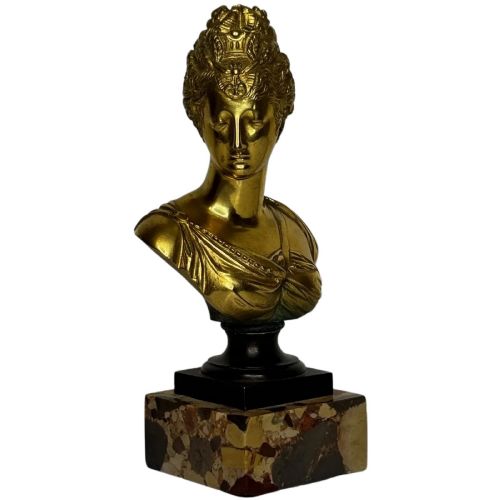


Grand Tour Bronze Head
A grand tour bronze head brings the gravitas of classical antiquity straight into a study through heavy patinated metal and carved marble bases.
Grand Tour Bronze Head
When you search for a grand tour bronze head, you encounter sculptural reductions and portrait studies produced for travellers visiting classical sites during the nineteenth century. These pieces capture historical figures, mythological deities, and Roman emperors, translating ancient marble originals into portable metal objects.
The versions most common on this page date from the nineteenth century, encompassing Neoclassical and Victorian aesthetics alongside French Renaissance Revival and Mannerist influences. Formats range from standalone portrait busts on marble plinths to fountain heads, decorative urns, and ornamental ewers incorporating bronze elements.
Subjects span classical antiquity and later history, featuring figures such as Diana de Poitiers, Marcus Aurelius, Caracalla, Hippocrates, Menelaus of Sparta, Hypnos, and the Pseudo Seneca. Artists and makers occasionally surface, including Mathurin Moreau and Bulio, alongside works after antique or Renaissance masters like Cellini.
How they were made
Materials recorded in these pieces rely heavily on bronze, patinated bronze, gilt bronze, and verdigris patina, frequently paired with marble plinths. Alternative mediums such as bronzed terracotta, plaster, and paint also appear.
Foundries and studios utilised traditional casting techniques to replicate classical sculptures, applying chemical patination to simulate age and archaeological discovery. Stonemasons then mounted these metal casts onto turned or squared marble bases to create stable display pieces.
Grand Tour Bronze Head Retail Price Guide 2026
Typical asking prices for grand tour bronze head among the pieces listed under this phrase on Sellingantiques today, from the lower quarter to the upper quarter. They describe what is for sale here now, not the wider market.
Collectors can invite the ancient god of sleep, Hypnos, into their bedroom cast in green verdigris bronze.
What varies in quality
Quality rests upon the crispness of the chase work and the subtlety of the chemical patination applied to the metal surface. Superior castings retain the anatomical sharpness and expressive detail of the original classical prototypes.
The choice and execution of the supporting plinth also distinguish finer examples, particularly where dense black or coloured marble complements the metalwork. Maker signatures or attribution to known sculptors elevate specific pieces above anonymous souvenir productions.
Mathurin Moreau·Bulio
The Grand Tour Bronze Head Glossary
- Patinated bronze
- Bronze treated with chemical solutions to produce a specific surface colour and aged appearance. This finish protects the metal and defines the visual character of nineteenth-century souvenirs.
- Neoclassical
- A style rooted in the revival of classical Greek and Roman art forms. It emphasises balance, proportion, and historical subjects.
- Verdigris patina
- A green or bluish-green crust formed naturally on copper and bronze through atmospheric oxidation or artificially applied by makers. It mimics the appearance of long-buried ancient artefacts.
- Plinth
- A heavy rectangular or circular block of marble supporting the sculptural bust. It provides stability and frames the metalwork for display.
- Grand tour
- The traditional trip undertaken by European aristocrats and scholars to study classical art and architecture. Souvenirs purchased along the route formed the core of these collections.
Grand Tour Bronze Head: Frequently Asked Questions
What is a grand tour bronze head?
These pieces are nineteenth-century sculptural reductions and portrait busts purchased by travellers visiting classical sites across Europe.
They replicate ancient Greek and Roman originals in metal and marble, serving as scholarly mementos of historical exploration.
How were these busts displayed?
Sculptures were mounted on heavy marble plinths designed to sit upon library desks, mantelpieces, and cabinet tops.
The stone bases provided weight and stability while echoing the architecture of classical museums.
Which subjects appear most often?
Portraits represent Roman emperors, Greek philosophers, mythological deities, and historical figures from antiquity through the Renaissance.
Subjects include Marcus Aurelius, Hippocrates, Menelaus of Sparta, and Hypnos.
How do I identify nineteenth-century pieces?
Examine the casting method, the composition of the patination, and the material of the accompanying base.
Nineteenth-century examples combine traditional foundry techniques with period marble turning and chemical treatments.