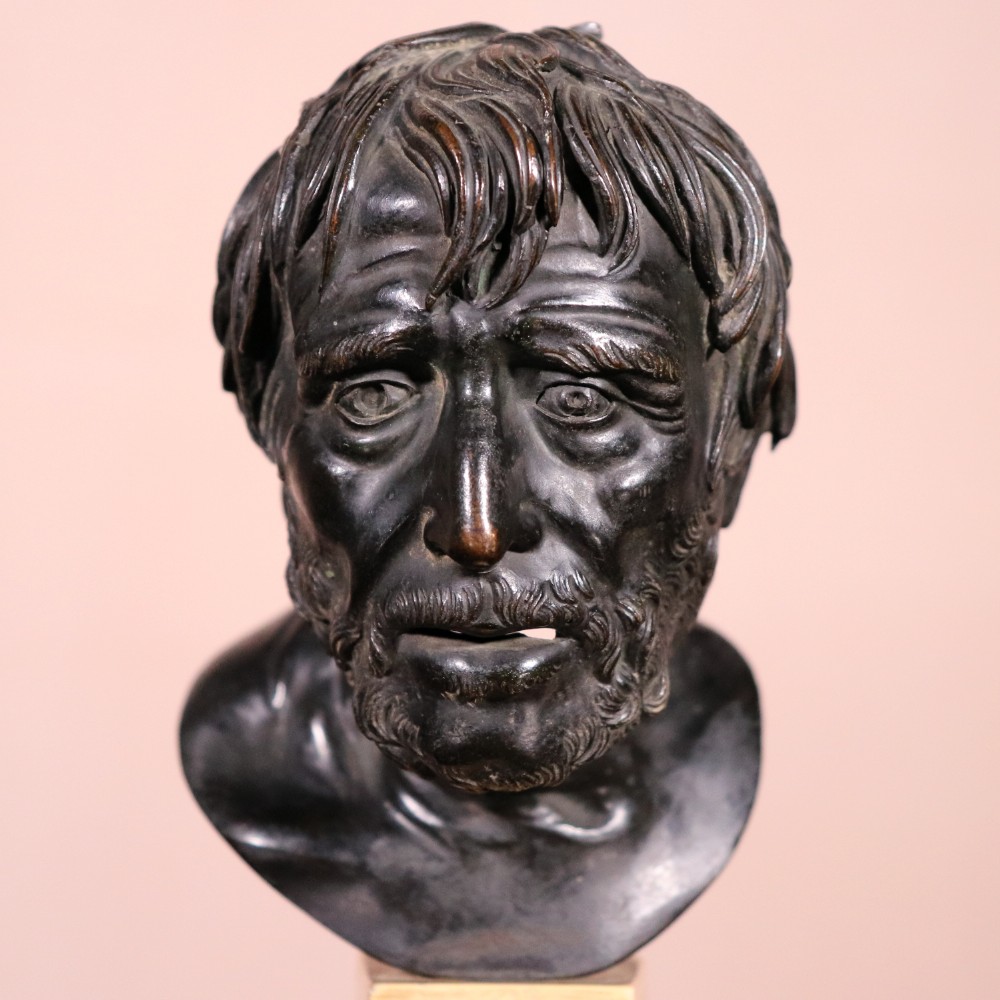
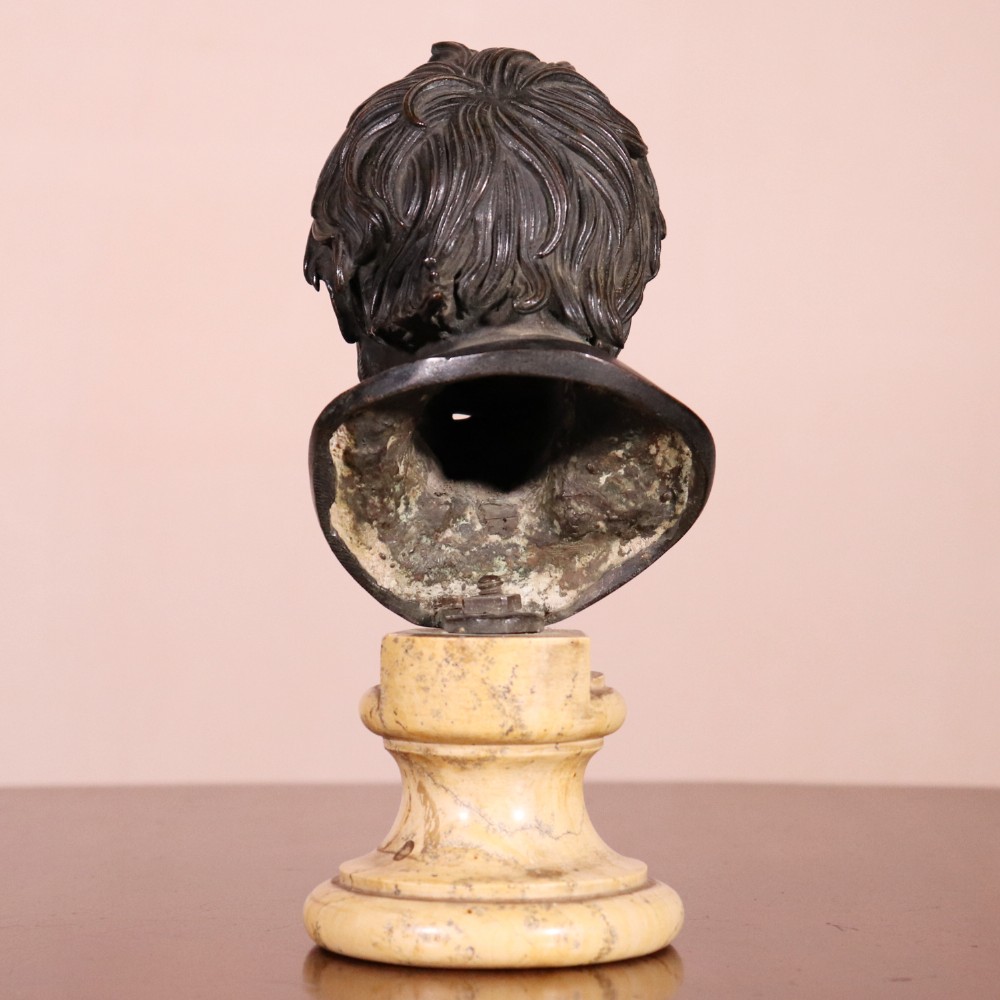
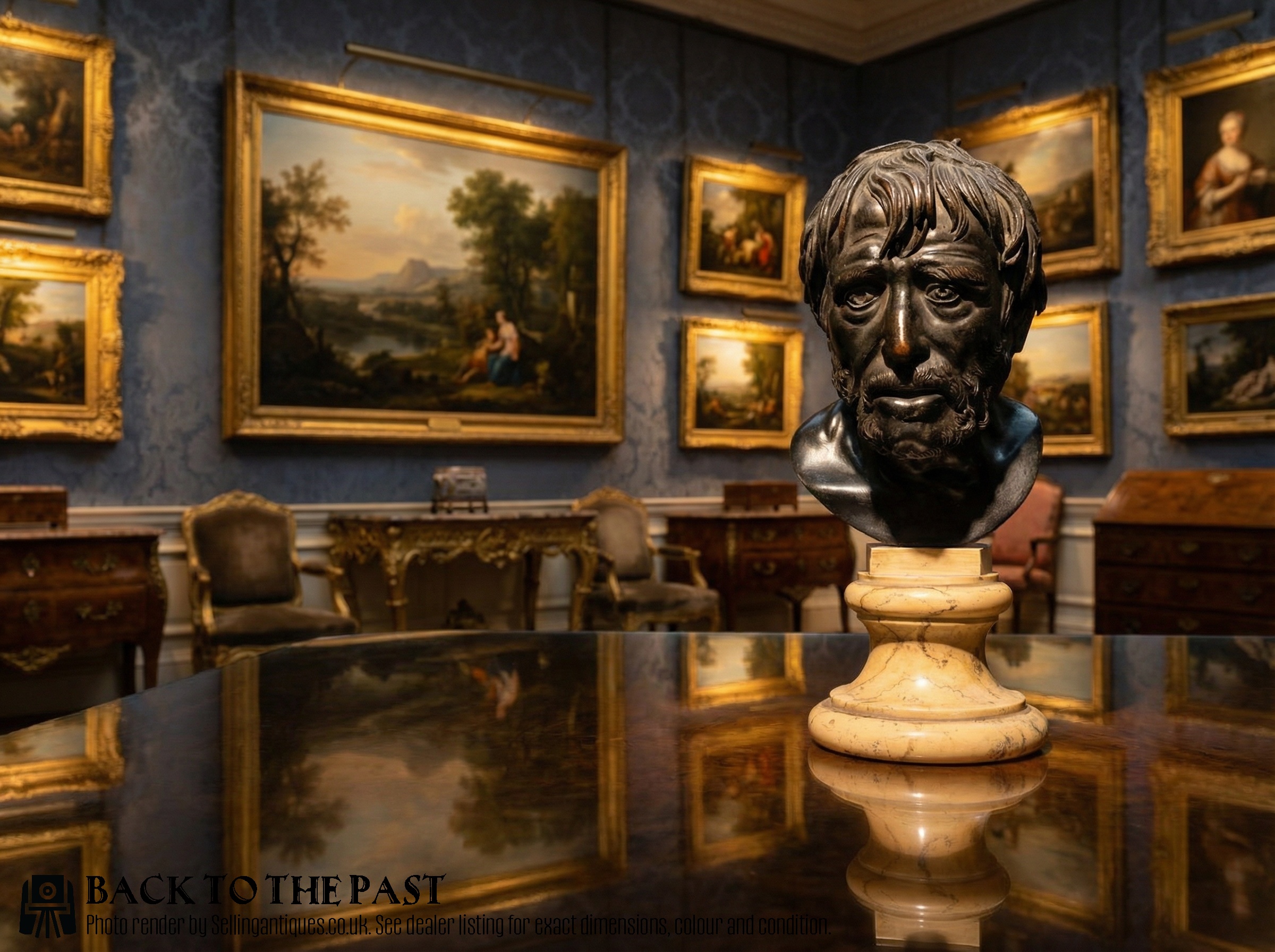
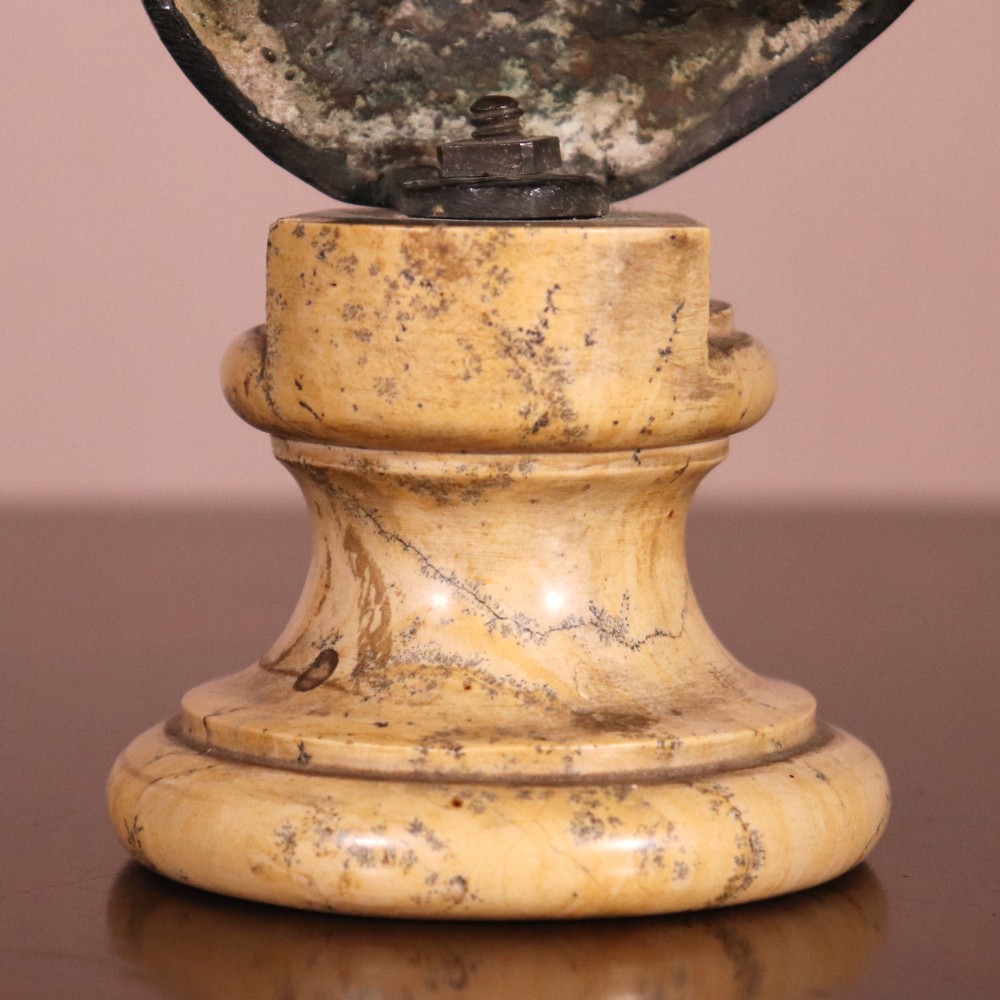
Mark Jones Antiques has dated this Grand Tour Bronze Bust to the 1880s.
It was originally believed to depict Seneca the Younger, the Roman philosopher, because its emaciated features were supposed to reflect his Stoic philosophy. However, modern scholars agree it is likely a fictitious portrait, probably intended as either Hesiod or Aristophanes. It is thought that the original example was a lost Greek bronze of circa 200 BC. The bust is conserved in the Museo Archeologico Nazionale, Naples.
Mark Jones Antiques has dated this Grand Tour Bronze Bust to the 1880s.
Mark jones antiques are dealers in fine antique furniture, ‘design’, works of art, and works by the sporting artist ‘snaffles’.
You can view the stock and full dealer information on the Mark Jones Antiques Profile Page

19th Century Grand Tour Bronze Bust of the Pseudo Seneca