


Graduated Side Tables
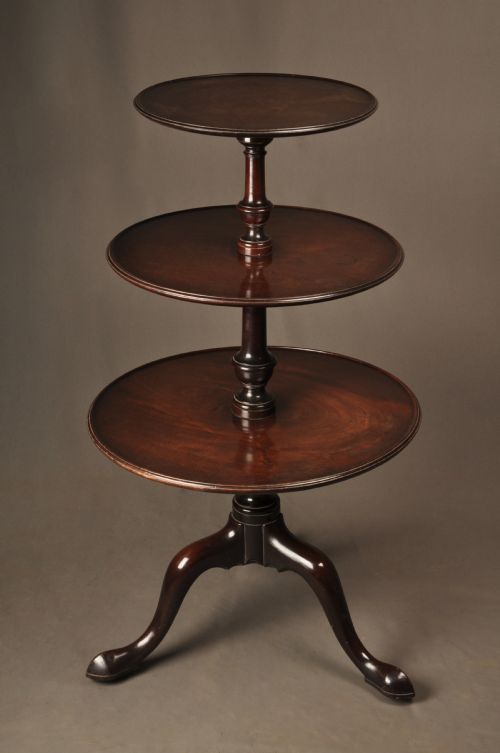
Graduated side tables span Georgian nests of four and tiered serving pieces that slide together to save space when not in use.
Graduated Side Tables
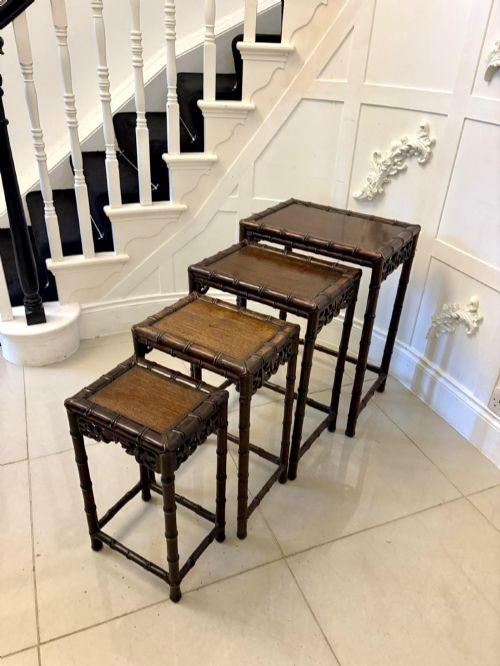
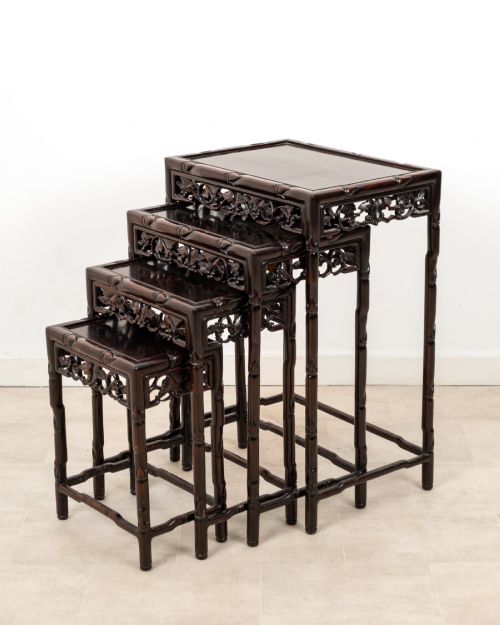
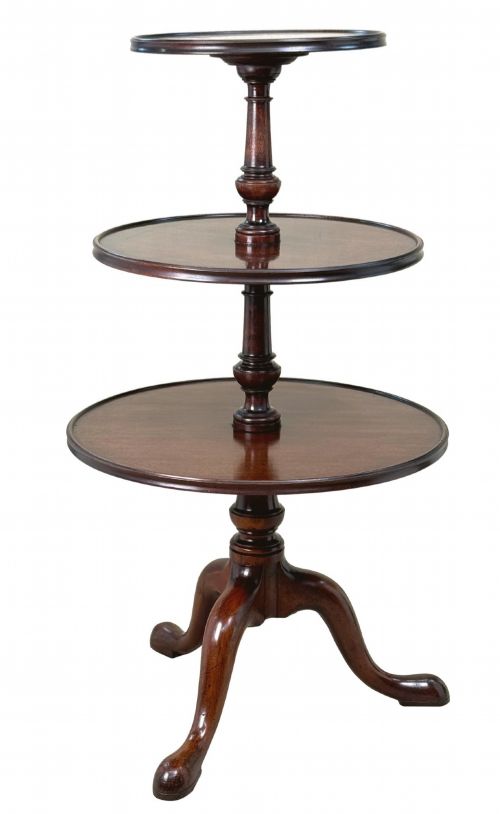
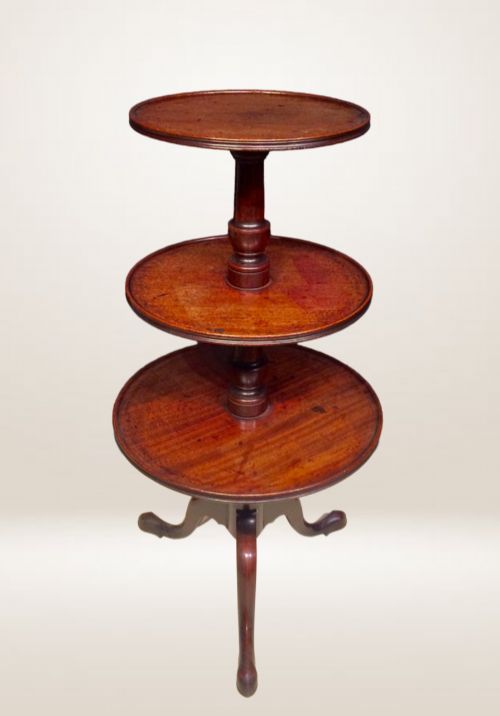
Graduated side tables appear primarily as nests of four or multi-tiered serving pieces designed to occupy minimal floor space until deployed. The form ranges from simple Georgian mahogany dumbwaiters with rotating tiers to Edwardian and Victorian quartetto nests that tuck neatly underneath one another.
Makers and workshops across the Georgian, Victorian, and Edwardian periods utilised this tiered principle to provide multiple surfaces in a single footprint. Buyers encounter both English cabinetwork in mahogany, rosewood, and oak alongside Chinese hardwood and Chinoiserie examples featuring carved details.
The layout of these pieces allows a single footprint to expand into several distinct surfaces for holding items around a room. Whether structured as a nest of tables or a revolving dumb waiter, the design prioritises utilitarian flexibility without sacrificing domestic elegance.
Distinctions in quality
The standard of a graduated piece rests upon the selection of timber and the tightness of the joinery where legs meet the tops. Dense primary woods like Cuban mahogany or figured rosewood indicate a higher grade of manufacture than plain utility timbers.
Refinement in carving and the crispness of turned or faux bamboo supports separate standard production from superior examples. Consistency in proportion across all graduating tiers reveals the skill invested by the original maker.
Forms on this page range from Chinese hardwood quartetto sets to revolving three-tier dumb waiters.
Epstein Co
The Graduated Side Tables Glossary
- Quartetto
- A set of four tables designed to graduate in size so they nest together. This term frequently applies to Victorian and late nineteenth-century nesting sets.
- Dumbwaiter
- A multi-tiered freestanding table, often circular or graduated in diameter, used for serving food and drink without servants present. These pieces frequently feature pivoting or fixed tiers supported on a central column.
- Chinoiserie
- European imitation or evocation of Chinese artistic traditions, visible in carved motifs and structural details on certain hardwood tables. This style reflects the cross-cultural exchange popular in Georgian and later periods.
- Satinwood inlay
- Contrasting light wood inserted into a darker primary timber to create decorative borders or motifs. It adds visual brightness to mahogany and rosewood surfaces.
- Faux bamboo
- Wood carved or painted to resemble natural bamboo stalks. This decorative treatment appears on nineteenth-century pieces influenced by oriental tastes.
Graduated Side Tables: Frequently Asked Questions
What is a quartetto nest?
A quartetto nest consists of four tables built in descending sizes so the smaller ones slide beneath the largest. This configuration maximises surface area while occupying the floor space of a single small table.
Cabinetmakers utilised this format extensively during the Victorian and Edwardian eras for entertaining or needlework.
How were dumbwaiters used?
Dumbwaiters served dining rooms by holding dishes, bottles, and cutlery near the table to reduce the need for attending servants. The graduated tiers allowed different courses or utensils to be organised by size and weight.
Many examples feature rotating tiers mounted on a central pillar for easy access from any seat.
How do I date a nest of tables?
Dating relies on timber selection, leg profiles, and construction methods characteristic of periods like the Georgian, Victorian, or Edwardian eras. Earlier pieces often display solid mahogany and hand-cut joints, while later examples incorporate broader stylistic influences such as Chinoiserie.
Matching the wood grain and wear patterns across all graduating tables helps confirm an intact original set.
Are these tables sturdy enough for daily use?
Most antique graduated tables were built from durable hardwoods like mahogany, oak, or rosewood to withstand regular domestic demands. Their multi-tiered frames distribute weight effectively when placed on level flooring.
Care should be taken with delicate joints on smaller nesting tables or older turned supports during relocation.