



Gothic Wooden Trunk
A gothic wooden trunk brings heavy oak timbers and mediaeval ironwork directly into your hallway, offering both practical storage and centuries of ecclesiastical history.
Gothic Wooden Trunk
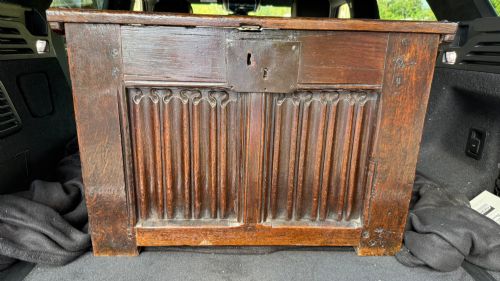
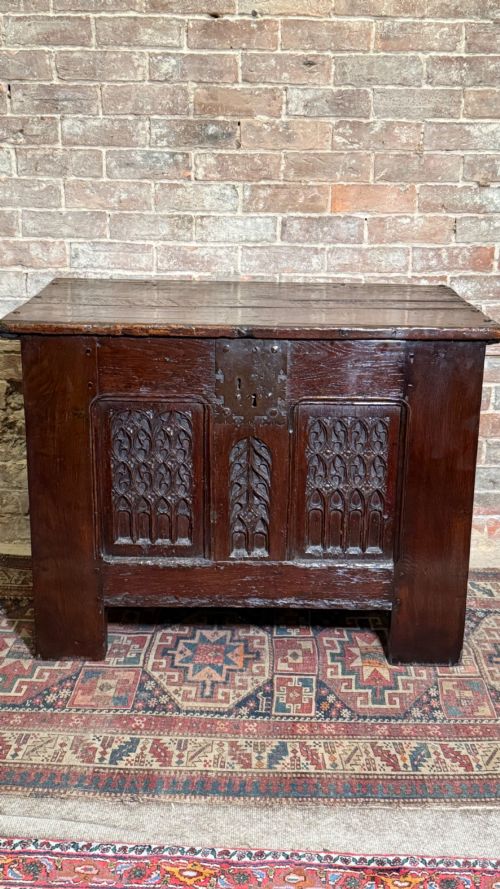
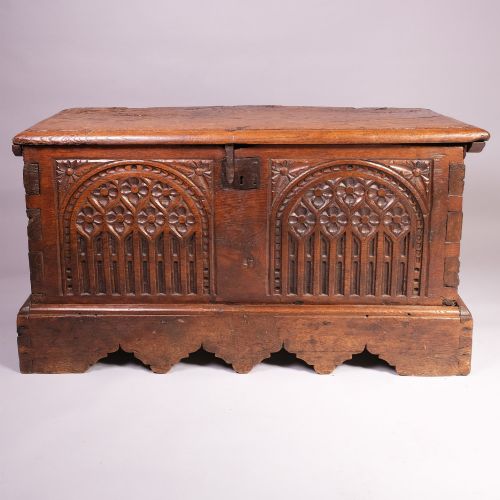
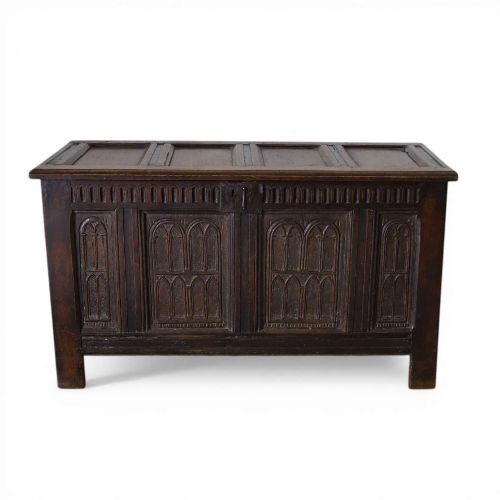
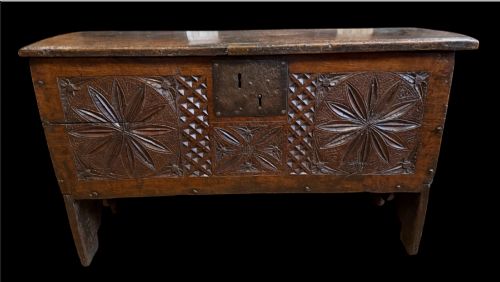
A gothic wooden trunk encompasses heavy plank coffers, ironbound storage chests, and carved ecclesiastical pieces spanning from pre-sixteenth century examples through to later revival interpretations. You will find sturdy oak chests alongside elm, pine, and walnut variants, often sharing architectural tracery or linenfold carving that reflects their mediaeval origins. These storage pieces range from regional English church coffers to Spanish cathedral chests and Scandinavian painted strongboxes.
The most common formats on this page are sixteenth-century and seventeenth-century oak coffers, which were originally built to safeguard parish valuables or household linen. Alongside these early pieces, you encounter nineteenth-century Gothic Revival interpretations and Arts and Crafts versions like the pollard oak coffer chest by Jack Grimble. Continental examples from Italy, Spain, and Westphalia also appear, demonstrating iron strapwork, mineral pigment, and chip-carved detailing.
Timbers, ironwork, and construction
Makers relied on sturdy native timbers such as oak, elm, and pine, splitting boards radially or hewing them directly from the log to form thick structural panels. Early coffers frequently utilised a simple plank construction held together by heavy dovetails or pinned joints, while later pieces adopted frame and panel formats. Surfaces were often left bare to weather naturally, though some examples received original paint finishes or mineral pigments.
Several trunks preserve traces of mediaeval mineral pigments, proving that our ancestors enjoyed brightly painted furniture long before wood was left bare.
Evaluating construction and survival
The integrity of the primary timbers and the survival of original surface finishes dictate the standing of any given piece. Trunks retaining their earliest wrought ironwork, original hinges, and untouched patination command greater attention than those with replaced hardware or excessive restoration. The crispness of the Gothic carving - whether linenfold panels, chip carving, or tracery - also marks the distinction between standard workshop output and finer commission work.
Structural alterations, such as shortened legs or replaced base boards resulting from damp storage floors, influence the overall cohesiveness of the object. Pieces that retain their original colour and unblemished board thickness offer a more honest representation of their period. Evaluating quality involves looking at how cleanly the joinery has withstood centuries of movement and shrinkage.
Jack Grimble
The Gothic Wooden Trunk Glossary
- Coffer
- A heavy wooden chest traditionally used for storing valuables, documents, or church plate. These pieces often feature boarded construction and reinforced iron bands.
- Linenfold
- A style of relief carving used on wooden panels to imitate folded drapery or linen cloth. This motif appears frequently on sixteenth-century oak furniture.
- Tracery
- Architectural stonework ornamentation copied in wood carving, typical of Gothic design. It often decorates the front panels of mediaeval and revival chests.
- Dug out
- A primitive form of furniture made by hollowing out a single massive log. These date to early periods and rely on sheer timber weight for stability.
- Cassone
- An Italian antique chest intended for holding a bride's trousseau. These often display rich decorative treatments such as gilding or walnut panelling.
Gothic Wooden Trunk: Frequently Asked Questions
How were gothic wooden trunks used originally?
These trunks served primarily to secure valuable household goods, ecclesiastical vestments, and legal documents against theft or fire. Their heavy construction and iron bindings made them secure strongboxes for travel or stationary storage.
In ecclesiastical settings, similar coffers held parish records and church silver. Domestic versions stored textiles, woollens, and family heirlooms away from damp floorboards.
How do I spot a genuine early piece?
Examine the tool marks on the timber, looking for evidence of adze work, pit sawing, and hand-forged iron nails. Pegs should be irregular and hand-cut rather than uniform.
Timber shrinkage over centuries creates natural distortion and gaps that modern reproductions struggle to replicate convincingly. The patination should show deep wear around touch points like handles and keyholes.
How should I care for an oak coffer?
Keep the timber away from direct heat sources and drastic humidity changes to prevent the heavy oak planks from splitting. Maintain a stable room temperature to protect the antique wood.
Apply a microcrystalline wax sparingly when the surface feels dry, avoiding modern silicone polishes. Allow the natural grain and historic patination to breathe without excessive buffing.
Can I use a trunk for coffee table storage?
These chests offer generous internal capacity for blankets and books while anchoring a sitting room with historic character. Ensure the flat top surface is protected with discreet coasters if placing drinks.
Consider the height and depth of the chest relative to your seating to maintain comfortable access. The robust construction easily supports daily use within a busy modern home.