


Ornate Wooden Coffer
An ornate wooden coffer brings heavy character to a room, offering robust storage in oak, teak, and walnut with traditional iron and brass work.
Ornate Wooden Coffer
An ornate wooden coffer serves as a substantial storage chest, taking forms from Danish dome top examples to Indian dowry chests and Italian cassone marriage chests. These pieces range from seventeenth-century walnut constructions to nineteenth-century teak and oak variants, reflecting diverse regional furniture traditions.
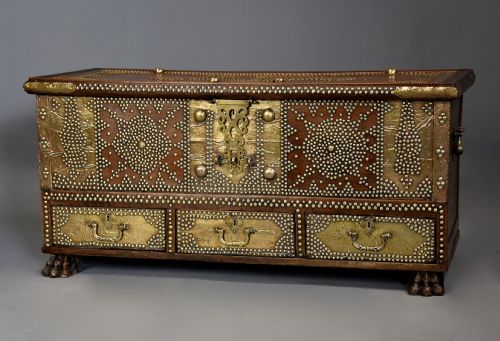
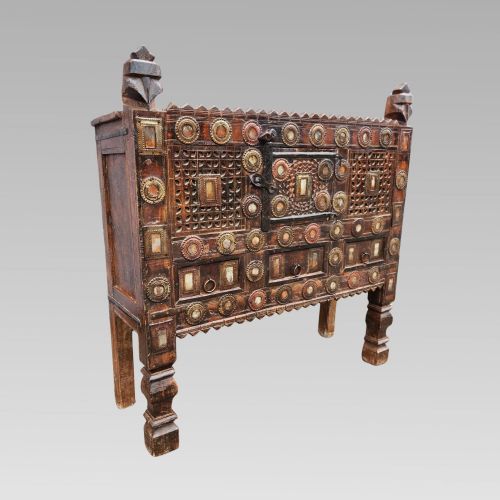
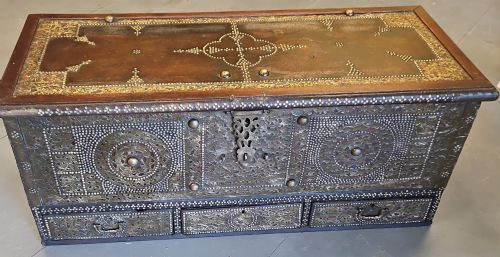
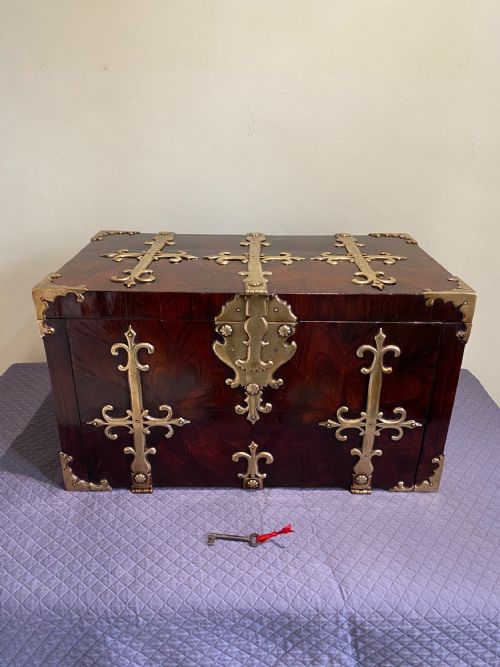
Buyers examining an ornate wooden coffer encounter heavy timber framing embellished with carving, metal studs, or iron mounts. The selection on this page spans European Gothic and Baroque styles alongside colonial Indian and Zanzibar trading pieces.
Forms extend beyond traditional blanket chests to include strongboxes, table cabinets, and steamer trunks. Each piece demonstrates the heavy utilitarian purpose of secure storage combined with decorative surface detail.
Materials and construction
Makers constructed these coffers from dense hardwoods including oak, teak, walnut, and kingwood, often pairing heavy timber panels with structural metalwork. Blacksmiths forged iron hinges, lock plates, and corner brackets to reinforce the wooden frames against heavy use.
Surface decoration relies heavily on hand carving, brass studding, and lacquered finishes applied directly to the timber. Carpenters utilised pegged joints and dovetailed corners to build durable boxes intended to withstand long journeys or domestic storage.
Listings feature woods like teak, oak, kingwood, and burr walnut, spanning the seventeenth to the early twentieth century.
Assessing quality and craftsmanship
Quality rests on the depth and precision of the hand-carved ornament and the integration of original metal mounts. Finer examples display meticulous attention to joint work and the preservation of original patinated surfaces on woods like burr walnut or teak.
The sophistication of regional decorative techniques separates standard utilitarian boxes from high-status marriage chests and trader coffers. Original brass studwork, intact hardware, and untouched timber patination elevate the standing of a piece.
The Ornate Wooden Coffer Glossary
- Coffer
- A large wooden chest used historically for storing valuables, documents, or textiles. Coffers usually feature sturdy lids and heavy timber construction.
- Cassone
- An ornate Italian marriage chest typically decorated with carving, gilding, or painted panels. These large chests formed a central part of Renaissance dowry traditions.
- Damchiya
- A traditional Indian dowry chest or storage cabinet featuring deep relief carving and mirrored panels. These pieces served as significant domestic storage furniture.
- Studwork
- Decorative metal pins or studs driven into wood surfaces in geometric patterns. This technique provided both surface ornament and structural reinforcement.
- Dowry chest
- A specialised storage piece prepared to hold linens and household goods for a bride. These chests often display the finest regional carving and embellishment.
Ornate Wooden Coffer: Frequently Asked Questions
What were ornate wooden coffers used for?
Historic households utilised these heavy chests to store valuable textiles, legal documents, and personal belongings securely. Their sturdy construction made them suitable for safeguarding valuables at home or transporting goods during trade.
Over time, many functioned as marriage chests or dowry storage, holding family heirlooms and linens. Today, they serve a similar storage role while acting as prominent statement furniture in living spaces.
How do I style a coffer at home?
A coffer works effectively as a coffee table in a living room, providing interior storage while offering a flat wooden surface on top. Placing one at the foot of a bed or in a hallway utilises its original storage function.
Because these pieces feature heavy carving and metal mounts, they pair well with simpler modern interiors or traditional rooms. Keeping the surrounding area uncluttered allows the detailed woodwork and brass work to stand out.
How do I identify seventeenth-century coffers?
Seventeenth-century pieces typically exhibit heavy oak or walnut construction with simpler paneling, deep hand-carving, and prominent iron hardware. The joinery often utilises pegged frames and hand-cut dovetails characteristic of early vernacular cabinet making.
Later Victorian and nineteenth-century interpretations frequently incorporate exotic hardwoods like teak and kingwood, alongside intricate brass studding or lacquer work. Comparing the timber density and the style of the metalwork helps distinguish early examples from later revivals.
Are these chests durable for daily use?
The dense hardwoods used in these coffers, such as oak and teak, provide exceptional structural durability for everyday domestic environments. Their original purpose required them to withstand heavy transport and secure heavy loads.
Routine maintenance involves treating the timber surfaces appropriately and avoiding excessive moisture. The robust joinery ensures they remain functional storage furniture after centuries of use.