

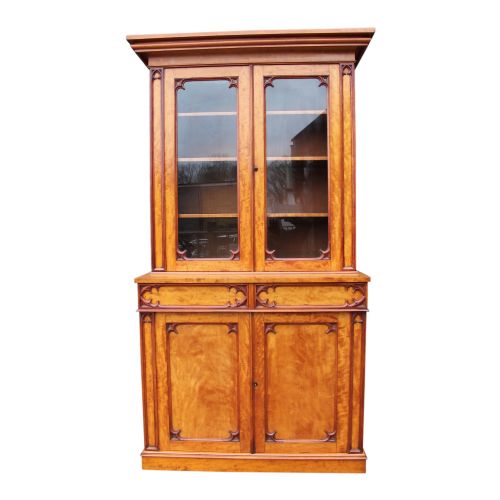
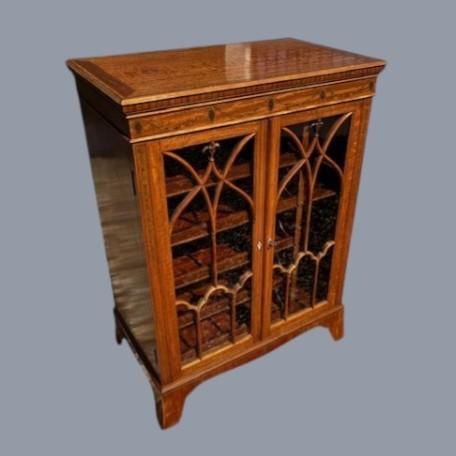
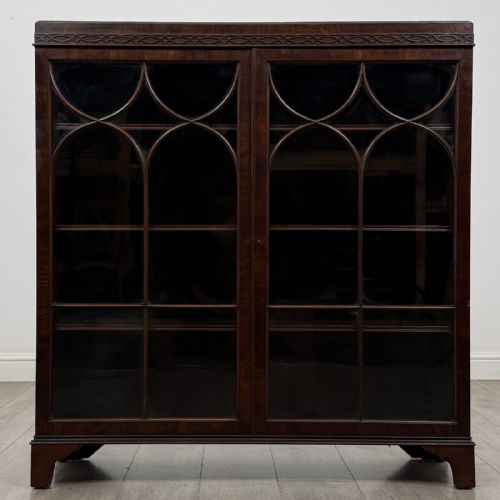
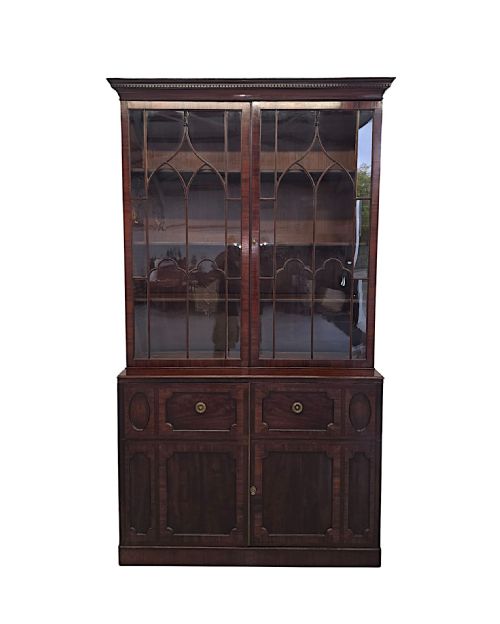
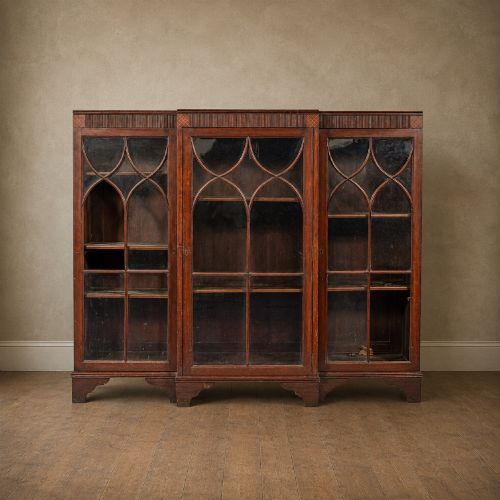
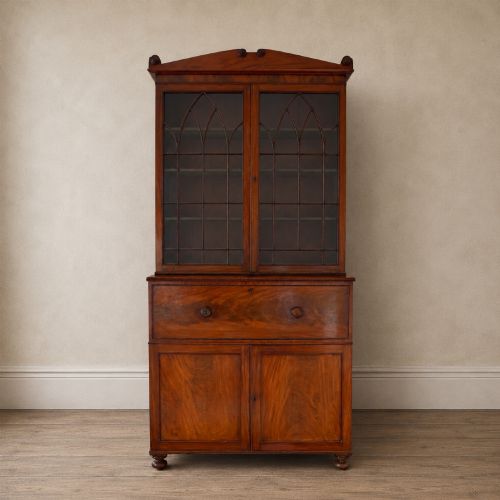


Gothic Tracery Glazed Cabinet
A gothic tracery glazed cabinet brings architectural stonework into domestic furniture through pointed arches and delicate wooden glazing bars.
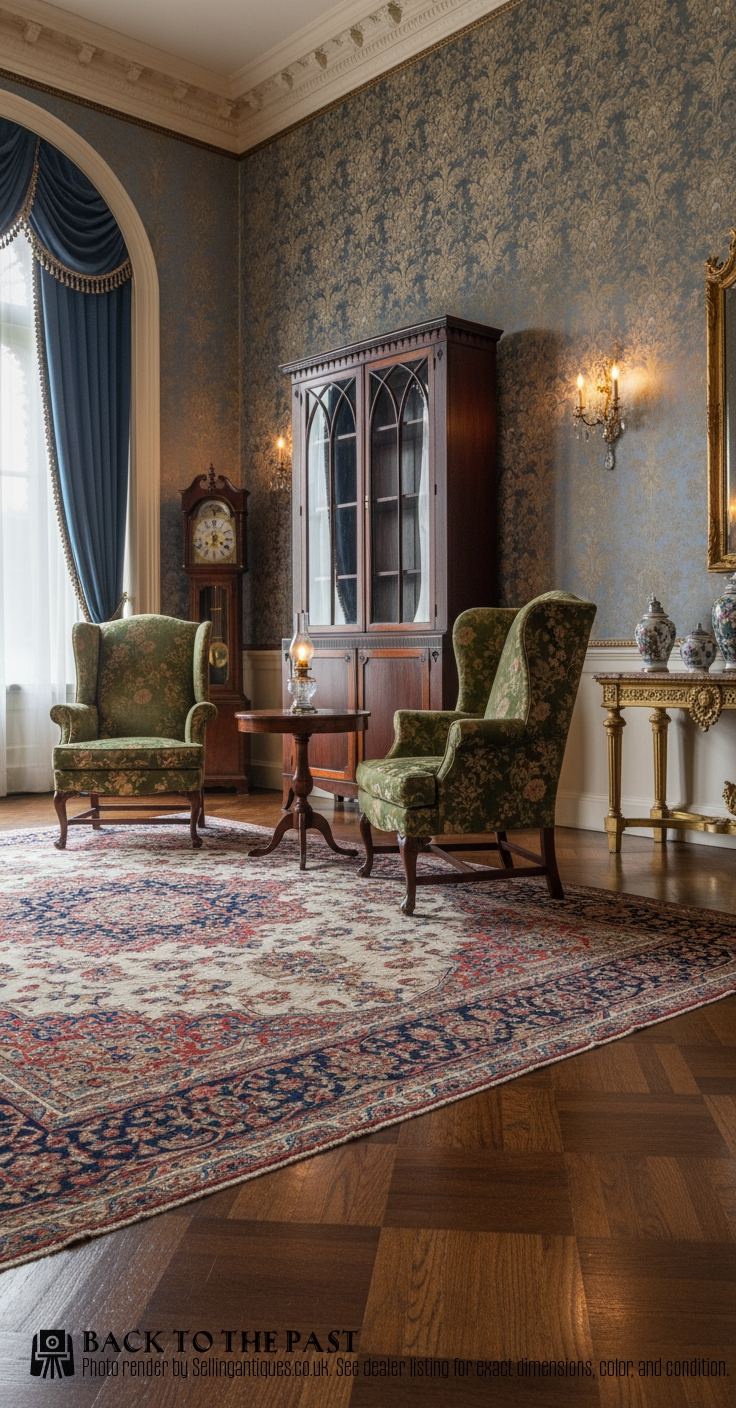
Gothic Tracery Glazed Cabinet
A gothic tracery glazed cabinet unites architectural aspiration with storage, primarily taking the form of bookcases and display cabinets. These pieces span periods from the Georgian era through the nineteenth century and into the Edwardian decades.
The dominant forms on this page are tall library bookcases and breakfront display units. They trace lineages from early nineteenth century Gothic Revival through to later Victorian interpretations and Edwardian Sheraton revivals.
Makers drew directly upon medieval ecclesiastical stone tracery to organise the glass panels of upper doors. The result is a substantial piece of furniture designed to house books and prized collections behind geometric wooden framing.
How they were made
Cabinet makers constructed these pieces predominantly using timber carcasses of mahogany, oak, walnut, and satinwood, occasionally enhanced with brass hardware. The glazing bars required immense joinery skill to form the pointed arches and intersecting cusps without compromising the structural integrity of the door frames.
Pine formed secondary carcass elements, while decorative effects relied on figured timber veneers, inlaid satinwood, and painted finishes such as scrumbled pine. Glass was glazed by hand into the intricate wooden apertures, securing large display areas within heavy timber surrounds.
Gothic Tracery Glazed Cabinet Retail Price Guide 2026
Typical asking prices for gothic tracery glazed cabinet among the pieces listed under this phrase on Sellingantiques today, from the lower quarter to the upper quarter. They describe what is for sale here now, not the wider market.
A solitary painted pine dresser sneaks into the gothic library, reminding us that country carpenters copied cathedral windows with whatever wood came to hand.
What varies in quality
The distinction between standard domestic production and exceptional cabinet work lies in the handling of the wooden tracery itself. Thinner, more finely proportioned glazing bars demand superior joinery and better timber selection than heavy, utilitarian equivalents.
Proportion and scale dictate the visual success of the piece, particularly in breakfront library bookcases where architectural cornices must balance the lower cupboards. The choice of primary timber grain, from figured mahogany to exotic satinwood, elevates the overall presence of the cabinet.
The Gothic Tracery Glazed Cabinet Glossary
- Tracery
- The stonework framework supporting the glass in a Gothic window, translated here into timber glazing bars. This pattern forms the defining visual characteristic of the cabinet doors.
- Breakfront
- A piece of furniture where the central section projects forward from the flanking wings. This architectural arrangement creates depth and shadow across the front elevation.
- Secretaire
- A cabinet incorporating a pull-down writing drawer fitted with small compartments and pigeonholes. It combines the storage of a bookcase with a functional writing surface.
- Scrumbled
- A paint technique simulating the grain of more expensive timber over a softer wood base. It was widely used in traditional country house furniture to achieve a decorative finish.
- Glazing bar
- The narrow strip of wood holding the panes of glass within a window or cabinet door. Complex Gothic designs require intricate profiling of these wooden bars.
Gothic Tracery Glazed Cabinet: Frequently Asked Questions
What rooms suit a gothic tracery glazed cabinet?
These tall cabinets demand generous wall space and high ceilings to balance their strong vertical proportions. They function effectively in libraries, studies, and principal reception rooms where their architectural glazing adds depth and formal character.
Because they provide substantial enclosed storage alongside display space, they work well to house book collections or curated objects while protecting them from dust.
How do I date a gothic tracery glazed cabinet?
Dating relies on identifying the underlying furniture style combined with timber choices and construction methods. Pieces from the Georgian period often display restrained classical proportions beneath the Gothic decoration, whereas Victorian examples tend towards heavier, more exuberant ornamentation.
Later Edwardian revivals frequently incorporate lighter timbers like satinwood and refined inlay work, reflecting the taste of the early twentieth century.
Are these cabinets all mahogany?
Mahogany appears frequently across the selection, valued for its stability and rich grain, but makers utilised several other timbers. Oak, walnut, and satinwood all feature prominently, alongside painted pine in country house examples.
The choice of wood usually corresponds to the period and the regional workshop tradition from which the piece emerged.
How should I care for the glazed doors?
The delicate wooden glazing bars require careful handling when cleaning and polishing the surrounding timber framework. Avoid applying excessive moisture near the joints where glass meets wood to protect the historic joinery.
Maintaining stable relative humidity in the room prevents the timber frames from expanding or contracting, which can otherwise stress the fitted glass panes.