

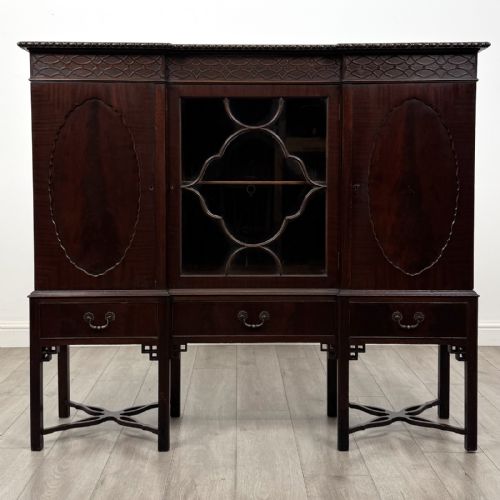


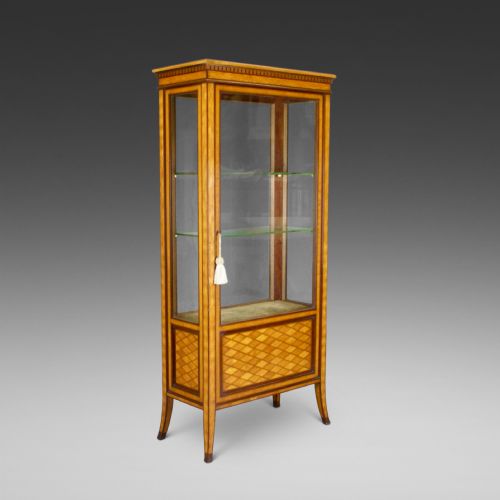


Georgian Revival Display Case
A georgian revival display case brings glass, mahogany and satinwood together to show off precious objects with period elegance.
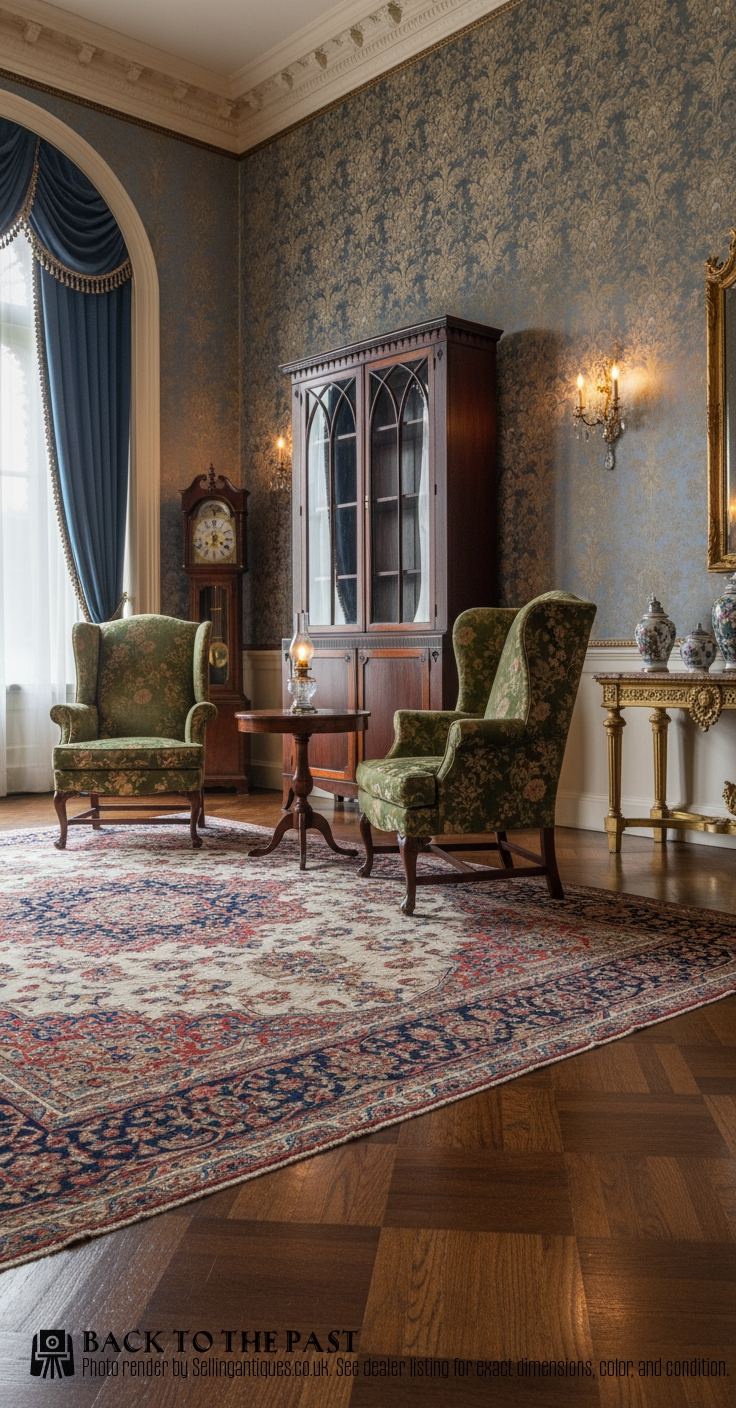
Georgian Revival Display Case
A georgian revival display case takes the glazed fronts and timber framing of earlier centuries and remakes them for later homes. You encounter cabinets, corner cabinets and bookcases across this selection, spanning periods from the nineteenth century into the twentieth.
Most examples lean heavily on mahogany or satinwood, often standing tall with glass panels designed to protect silver, books or small treasures. The forms range from simple corner units to large two-part bookcases and side cabinets.
Revival styles dominate the selection, drawing directly on Sheraton, Chippendale and Gothic design vocabularies. These pieces combine practical storage with the transparent display function characteristic of the category.
How they were made
Cabinetmakers built these frames primarily in mahogany and walnut, frequently applying satinwood inlay and parquetry to surface panels. Brass hardware adds functional contrast to the polished timber.
Glass panels are fitted into glazed doors to allow maximum visibility, sometimes backed by fabric lining. The construction relies on traditional joinery methods suited to large display cabinets and bookcases.
Georgian Revival Display Case Retail Price Guide 2026
Typical asking prices for georgian revival display case among the pieces listed under this phrase on Sellingantiques today, from the lower quarter to the upper quarter. They describe what is for sale here now, not the wider market.
The selection includes corner cabinets, bookcases and bijouterie cabinets fashioned from mahogany, walnut, satinwood and brass.
What varies in quality
The sophistication of the inlay work and the choice of timbers set individual cabinets apart. Finely figured mahogany and intricate satinwood parquetry indicate a higher grade of manufacture than plain surfaces.
Proportion and the handling of revival styles determine visual success. Pieces that interpret Sheraton or Chippendale vocabulary with crisp detail command greater attention than heavier, less resolved examples.
The Georgian Revival Display Case Glossary
- Parquetry
- Geometric mosaic woodwork used for decorative surface patterns. It appears on cabinet doors and tabletops.
- Satinwood
- A durable, yellowish timber prized for its lustrous sheen and pale tone. Makers used it extensively for inlay and banding.
- Bijouterie cabinet
- A glazed display table or cabinet designed specifically for small ornaments and jewellery. These pieces often feature glass on multiple sides.
- Corner cabinet
- A storage unit shaped to fit neatly into the corner of a room. Surviving examples utilise both solid and glazed doors.
Georgian Revival Display Case: Frequently Asked Questions
What is a georgian revival display case?
A georgian revival display case is a cabinet made in later periods that adopts the glass fronts, timber framing and decorative motifs of eighteenth-century furniture.
These pieces use materials like mahogany and satinwood to showcase books, silver or small collections while echoing historic styles.
Where should I place a corner cabinet?
A corner cabinet fits directly into the internal angle of a room, making efficient use of overlooked space.
They work well in dining rooms or living spaces where you want to display glassware or ceramics without blocking walkways.
How do I care for satinwood inlay?
Keep inlaid timber furniture out of direct sunlight to prevent the pale satinwood from darkening or fading unevenly.
Dust regularly with a dry cloth and avoid silicone-based polishes that can damage the historic finish.
How do I date a revival cabinet?
Examine the secondary timbers inside the cabinet, the type of glass used in the doors, and the style of the brass hardware.
Revival pieces often combine older stylistic idioms with construction techniques characteristic of the nineteenth and early twentieth centuries.