





Gothic Tracery Chairs
Gothic tracery chairs bring medieval window patterns into domestic seating, combining architectural stone motifs with timber and iron craftsmanship.
Gothic Tracery Chairs
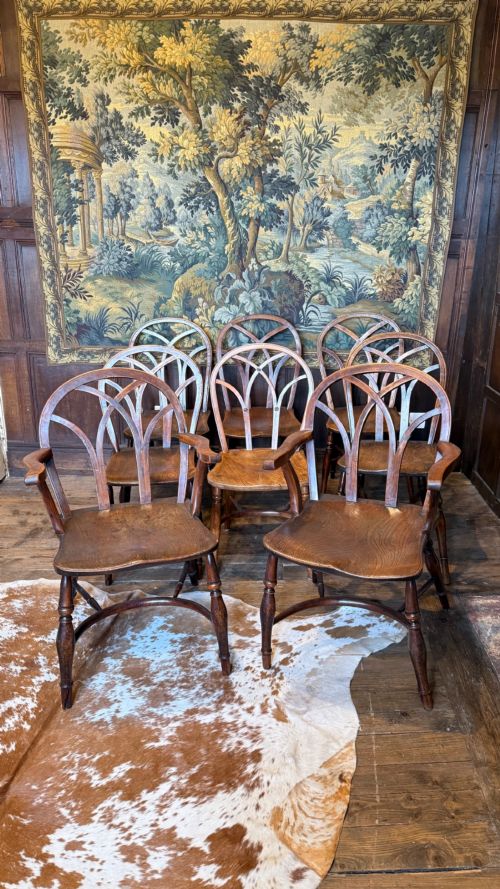
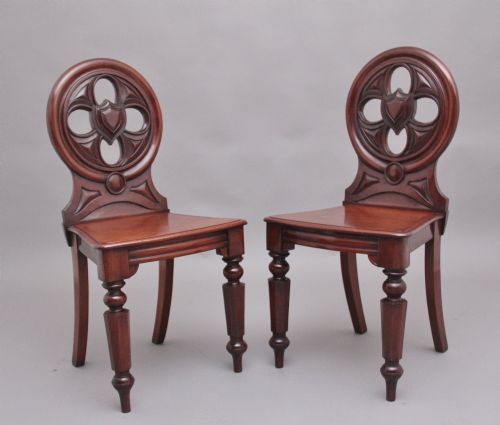
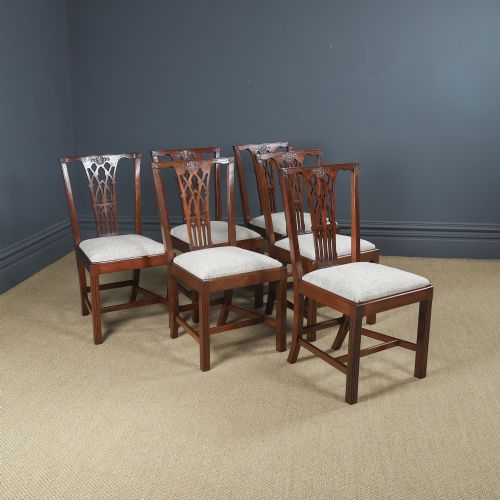
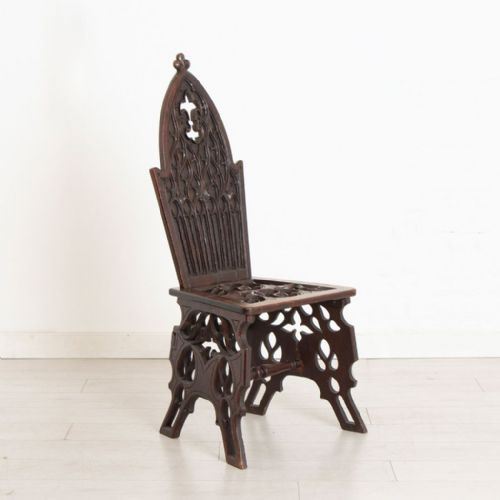
When you search for gothic tracery chairs, you encounter seating that adapts medieval church architecture, particularly pointed archways and geometric stonework window designs, into wooden and iron frames. The pieces on this page span several centuries, including Georgian and Victorian revivals alongside pieces from nineteen-ten.
The aesthetic bridges domestic comfort with ecclesiastical grandeur, manifesting in forms such as Windsor chairs, hall chairs, and wainscot armchairs.
How they were made
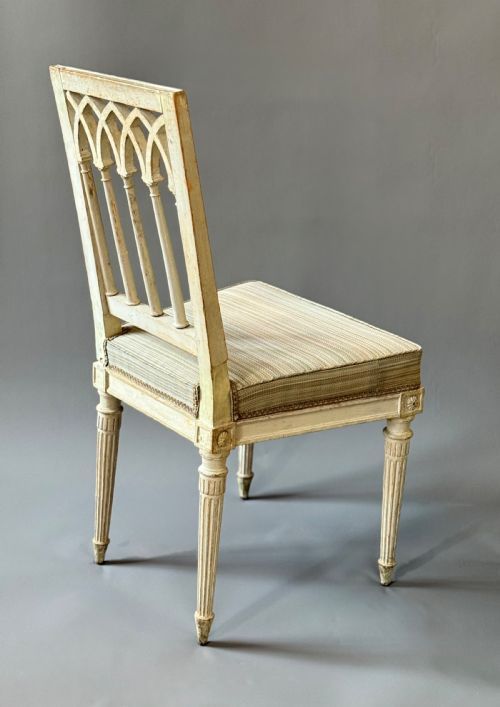
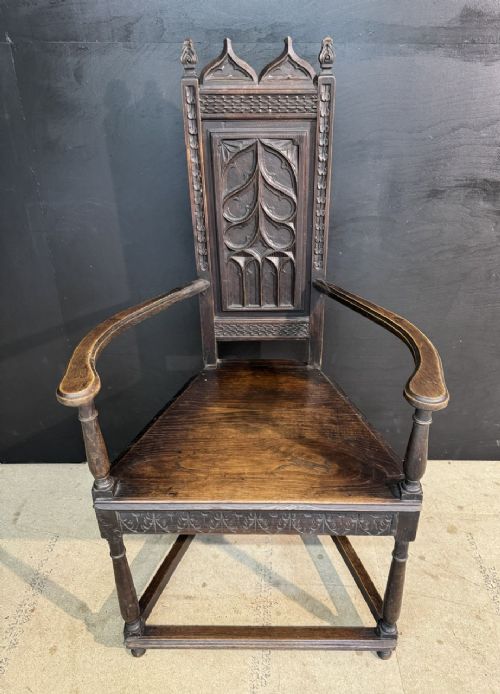
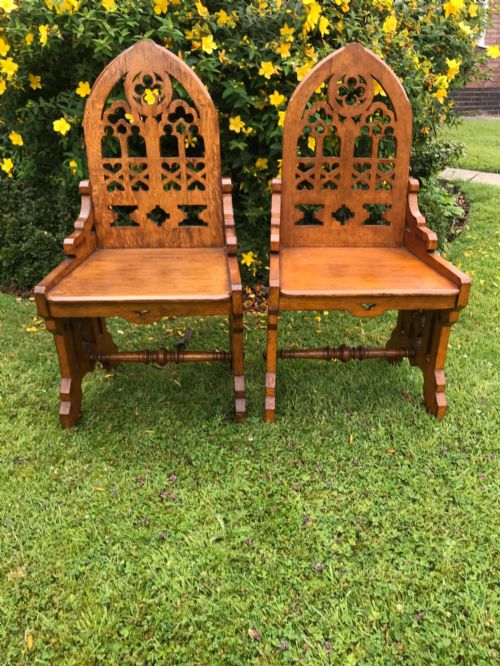
Carpenters and joiners built these seats primarily from solid oak and mahogany, employing mortise and tenon joinery to support the complex cutout patterns of the backrests. Cabinetmakers shaped the timber by hand, carving pointed arches and trefoils directly into the wood.
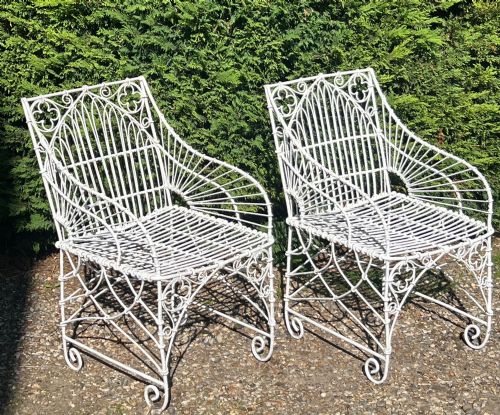
Metal versions utilise cast iron and wrought iron, particularly for garden furniture and park sets, cast in moulds to replicate stone tracery. Upholstered examples integrate leather and fabric fixed with brass tacks over buttoned cushioning.
Listings feature oak, mahogany, leather, fabric, brass, and wrought iron across dining chairs, armchairs, and garden sets.
What varies in quality
The distinction between ordinary and superior examples lies in the depth and precision of the carved tracery. Master carvers rendered the architectural cusps and geometric openings with crisp, sharp lines that reflect stone masonry.
Material selection dictates longevity and visual weight, with dense golden oak and figured mahogany providing structural integrity superior to secondary woods. The integration of the Gothic motif into the structural frame, rather than as applied ornamentation, separates thoughtful design from superficial styling.
The Gothic Tracery Chairs Glossary
- Tracery
- The stonework framework supporting glass in a Gothic window, translated in furniture into the pierced woodwork of chair backs.
- Wainscot chair
- An early wooden armchair characterised by panelled construction and solid wooden backrests, often associated with seventeenth and nineteenth century revival periods.
- Chippendale style
- An eighteenth century furniture design movement that frequently incorporated Chinese and Gothic fretwork patterns into chair splats.
- Gothick
- The eighteenth century romantic interpretation of medieval design, predating the more academic Victorian Gothic Revival.
- Wrought iron
- Iron beaten into shape by a blacksmith, utilised alongside cast iron in garden seating.
Gothic Tracery Chairs: Frequently Asked Questions
What defines gothic tracery chairs?
These chairs are defined by the incorporation of medieval architectural window motifs into the backrests and frames. They translate stone tracery into timber, oak, mahogany, or iron.
Such seating emerged strongly during Georgian and Victorian revival periods, adapting ecclesiastical aesthetics for domestic libraries, halls, and gardens.
How were these chairs used historically?
They served as formal seating in libraries, studies, dining rooms, and grand halls. Sturdier iron variants were placed in outdoor gardens and courtyards.
Armchairs provided comfort for reading, while side and hall chairs functioned as occasional seating or architectural statements against walls.
Are these chairs comfortable for daily use?
Comfort varies significantly depending on the specific form. Wooden seat panels and rigid architectural backs offer an upright posture suited to dining or writing.
Library armchairs featuring buttoned leather upholstery and generous proportions provide a softer, more relaxed seating experience.
How do I distinguish between periods?
Georgian and eighteenth century pieces often display lighter mahogany frames with delicate fretwork influenced by cabinetmakers of the era. Victorian revivals tend toward heavier oak construction with deep, sculptural carvings.
Nineteenth century French and English pieces often blend regional craftsmanship with academic architectural accuracy.