
Carved Oak Gothic Seats
Carved oak gothic seats bring heavy architectural presence and centuries of stylistic revival straight into modern rooms.
Carved Oak Gothic Seats
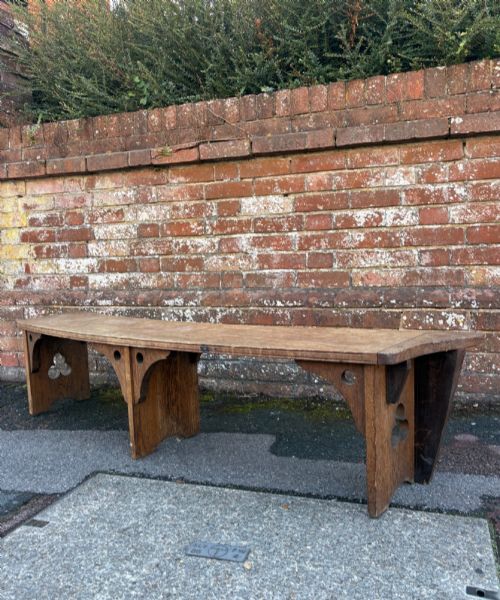
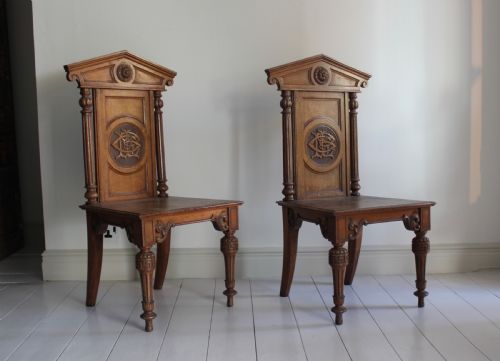
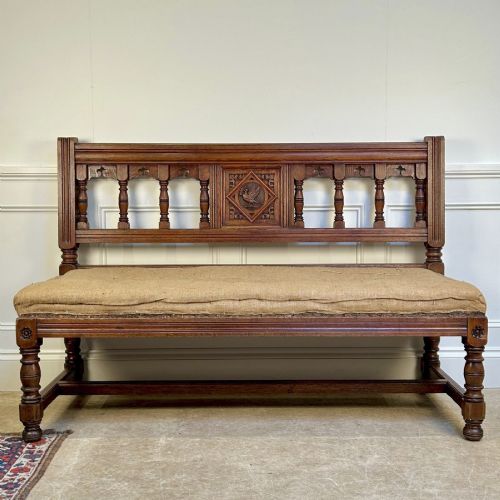
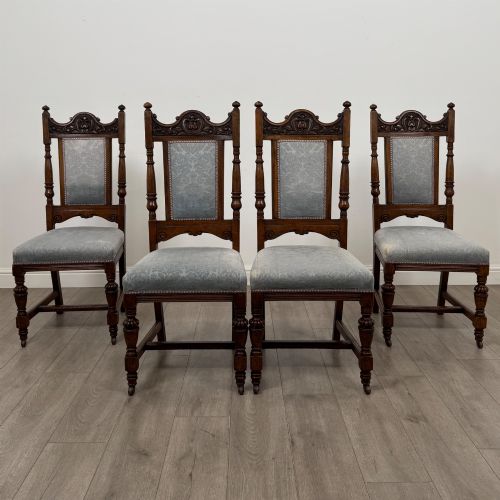
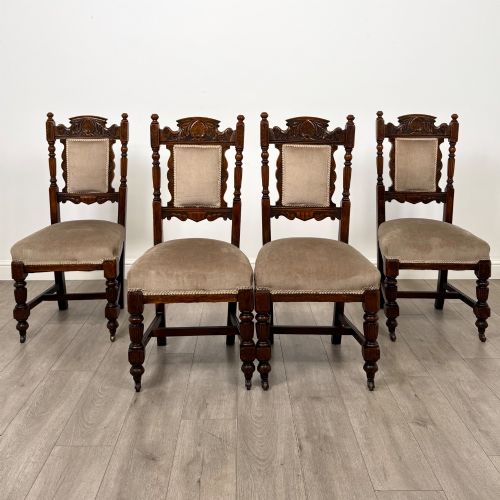
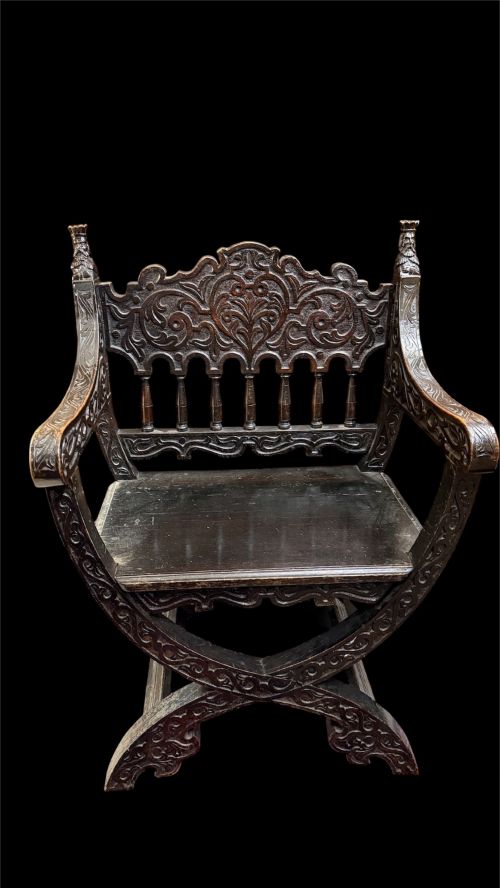
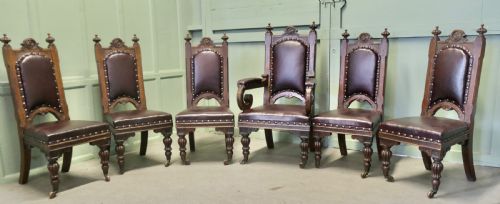
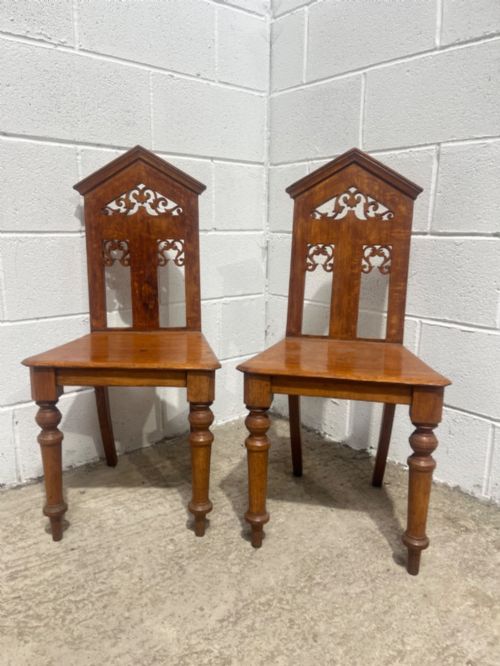
Carved oak gothic seats encompass armchairs, hall chairs, benches, and settles predominantly originating from the nineteenth century and the Edwardian era. These pieces draw heavily on historical architectural forms, incorporating pointed arches, trefoil motifs, and heraldic shields into solid timber frames.
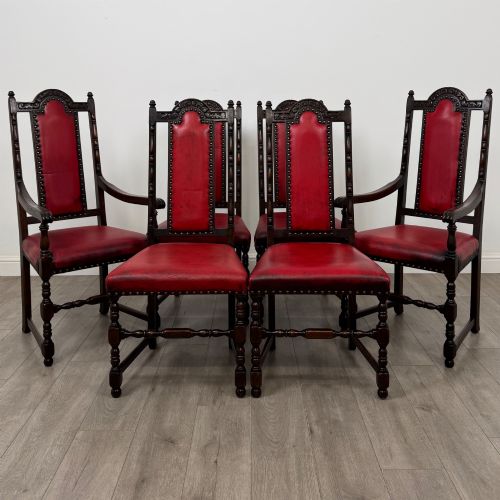
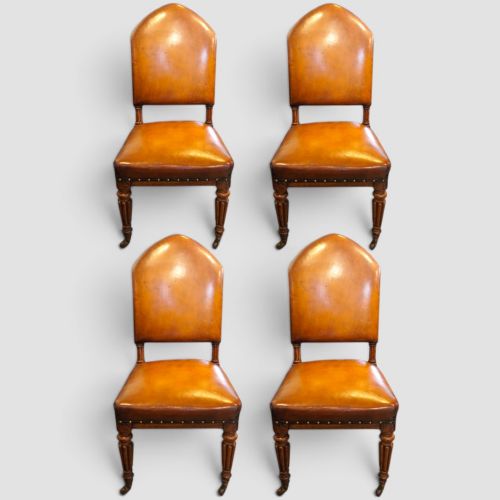
Buyers frequently encounter Victorian examples alongside Arts and Crafts adaptations and Jacobean revivals. The selection ranges from singular hall chairs intended for grand entryways to matched sets of dining chairs and substantial church pews.
Origin points span English, Scottish, and French workshops, utilising robust construction methods suited to heavy daily use. The overarching aesthetic relies on dark timber, high backs, and disciplined ornamentation rather than delicate upholstery.
Materials and Construction
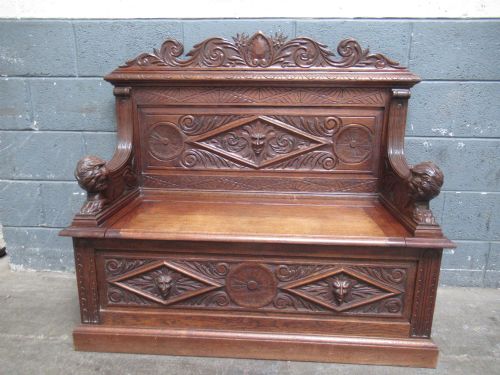
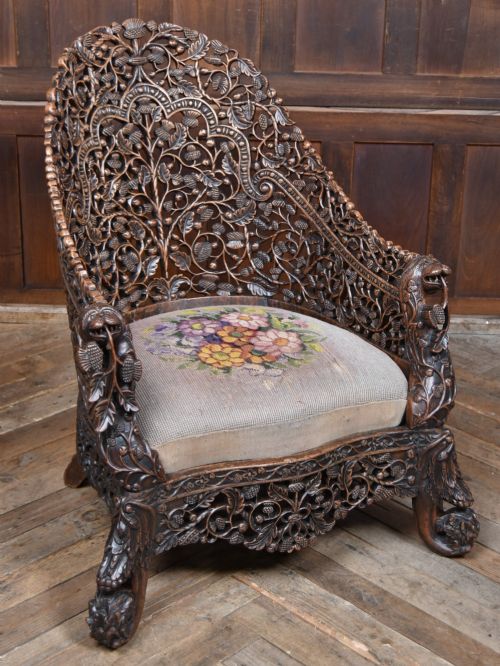
Makers relied principally upon solid oak, complemented by secondary timbers where appropriate, utilising traditional mortise and tenon joinery to ensure structural rigidity. Surfaces were frequently hand-carved with deep relief work, displaying tracery, linenfold panels, or geometric strapwork.
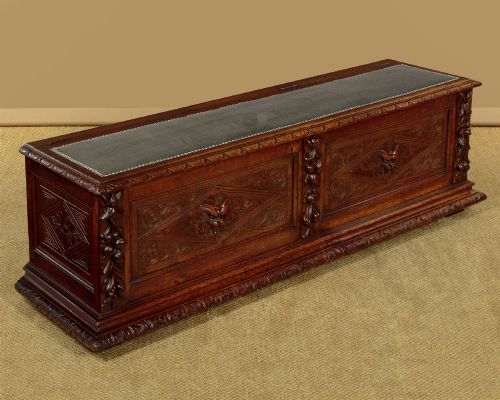
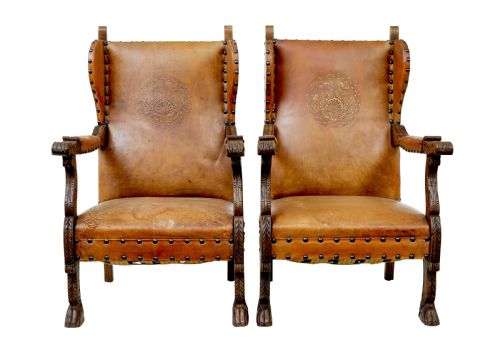
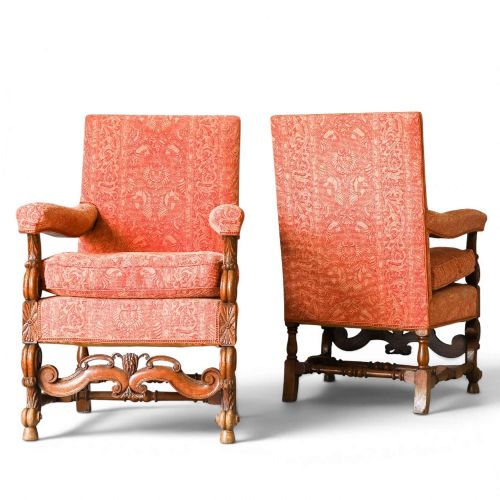
Upholstered variants integrated secondary materials such as embossed leather, heavy fabric, tapestry, and hessian, fixed with brass studs along the borders. Frame stabilization often depended on turned stretchers and heavy brass hardware.
Finishes were generally kept to wax or dark polish to highlight the natural grain of the oak while imparting an aged, ecclesiastical tone.
Recorded forms range from architectural window seats and church pews to swivel desk chairs and monumental settles.
Distinctions in Quality
Quality rests upon the crispness and depth of the hand-carving, distinguishing mechanically produced decoration from bespoke artisan output. Superior pieces maintain tight, original joinery without excessive drying cracks or structural movement in the primary oak frame.
The integrity of secondary materials, such as undamaged embossed leather or period-appropriate brass fittings, elevates the standing of an individual seat. Attribution to known makers or documented design lineages provides an additional measure of distinction.
Gillows·Bruce James Talbert·Pugin
The Carved Oak Gothic Seats Glossary
- Gothic Revival
- An architectural and decorative style drawing inspiration from medieval forms, prevalent during the nineteenth century. It utilises pointed arches, ribbed vaults, and ornate tracery.
- Glastonbury Chair
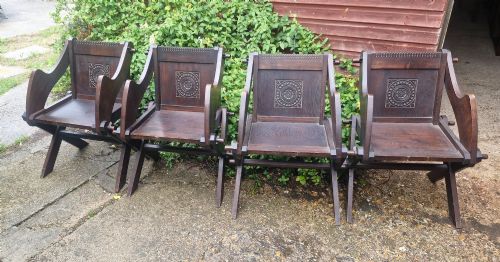
- A specific form of wooden armchair with an X-frame base and a sloping panel back, heavily associated with nineteenth-century ecclesiastical revivals. The design traces its origins to early ecclesiastical seats.
- Trefoil
- A graphic ornamentation consisting of three overlapping rings or leaf-shaped foils. It frequently appears pierced through wooden chair backs and structural supports.
- Settle
- A high-backed wooden bench with solid arms and a storage box seat or solid panel base. It was designed to block drafts in large halls.
- Strapwork
- A decorative motif consisting of flat, interlaced bands resembling leather straps or ribbons. It is typical of Jacobean and Renaissance revival carving.
Carved Oak Gothic Seats: Frequently Asked Questions
How do I spot a true nineteenth-century piece?
Examine the construction joints for hand-cut pegged mortises and inspect the timber for oxidation consistent with age. Tool marks left by hand chisels often differentiate older production from later machine milling.
Check the timber weight and density, as older English and continental oak tends to be heavier and tighter-grained than twentieth-century equivalents.
Were these seats meant for everyday dining?
Many surviving examples served as hall chairs or occasional seating rather than routine dining furniture, owing to their rigid backs and heavy frames. High-back versions were traditionally positioned in entranceways or studies to display heraldic status.
Sets intended for dining rooms did emerge later in the Victorian period, built with slightly more ergonomic proportions while retaining architectural carved details.
How should I care for old oak timber?
Maintain stable indoor humidity levels to prevent the solid oak panels from splitting or warping over time. Apply a microcrystalline wax periodically to nourish the surface without building up excessive residue.
Avoid placing these chairs in direct sunlight or near heat sources, which can dry out the historic timber and weaken leather upholstery.
What is the difference between Gothic Revival and Jacobean Revival?
Gothic Revival focuses on medieval ecclesiastical motifs like pointed arches, quatrefoils, and soaring vertical lines. Jacobean Revival draws from seventeenth-century vernacular design, emphasising geometric panels, turned legs, and strapwork.
Interiors often blended these historical references during the Victorian era, resulting in hybrid styles that combined elements from both periods.