





Gothic Revival Vitrine
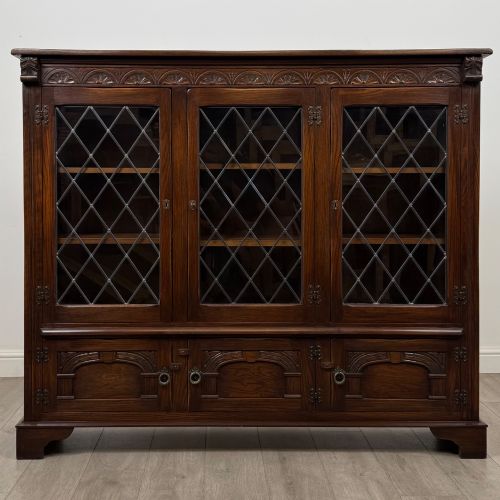
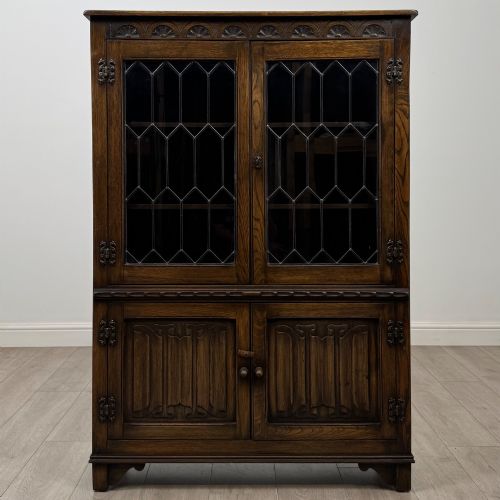
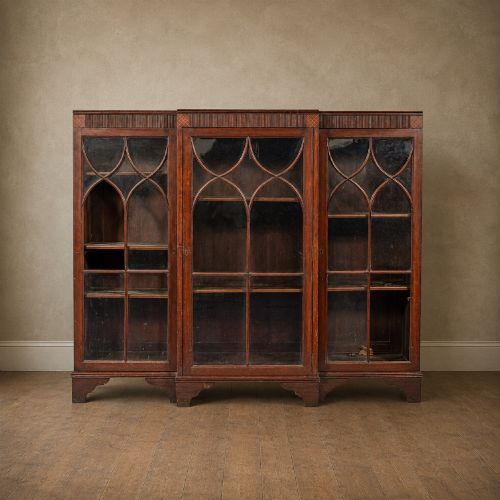
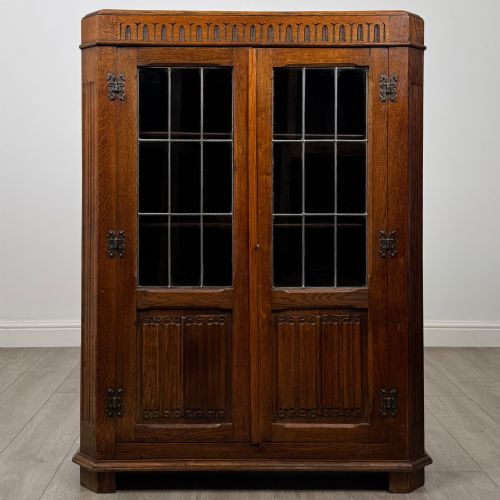
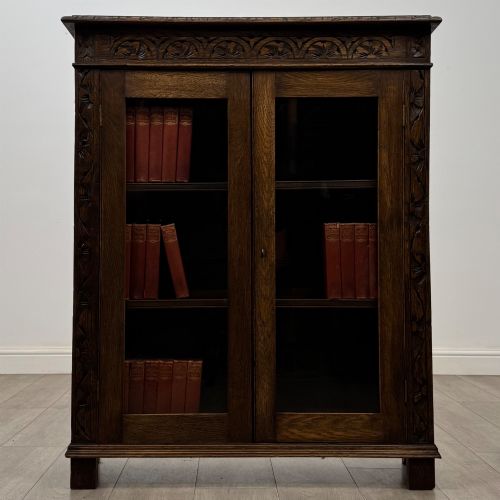
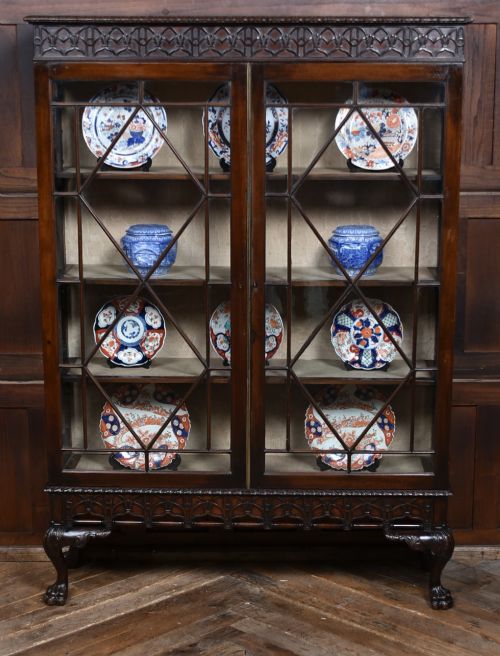
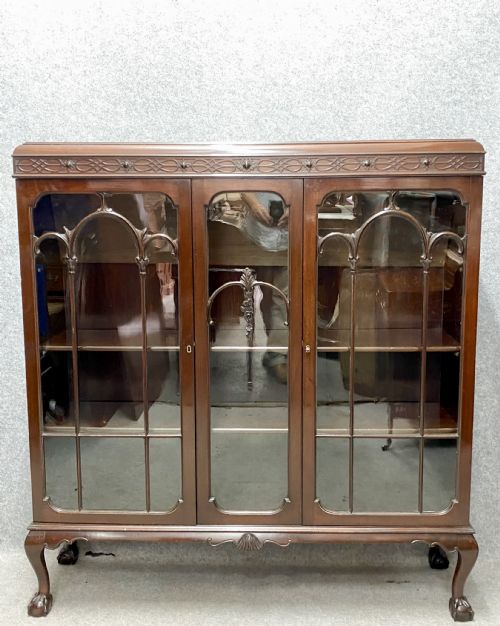
These gothic revival vitrine pieces are architectural display cabinets and bookcases built to showcase collections behind glass.
Gothic Revival Vitrine
A gothic revival vitrine combines the architectural motifs of medieval building traditions with the practical display needs of nineteenth and early twentieth century homes. Buyers search for these pieces to house books, ceramics and curiosities within substantial timber frames that command attention in a room.
The versions met most often on this page date from the Victorian and Edwardian eras, spanning the nineteenth and early twentieth centuries. They appear primarily as carved oak or mahogany display cabinets and bookcases, frequently incorporating glazed doors to protect the contents while keeping them visible.
Materials and construction
Cabinet makers utilised solid timber, predominantly oak and mahogany, often enhanced by satinwood inlay or fabric linings. Structural integrity relied on traditional joinery to support large glass panes and heavy shelved interiors.
Detailing was achieved through extensive hand carving, linenfold panelling, and applied brass, iron or lead elements. Glazing required precise carpentry to secure glass within intricate geometric or arched framework.
Gothic Revival Vitrine Retail Price Guide 2026
Typical asking prices for gothic revival vitrine among the pieces listed under this phrase on Sellingantiques today, from the lower quarter to the upper quarter. They describe what is for sale here now, not the wider market.
The listings show oak and mahogany as the dominant timbers, spanning Edwardian and Victorian periods alongside earlier nineteenth-century examples.
What separates the finest examples
The distinction between standard furniture and superior examples lies in the ambition of the carving and the selection of timber. Dense, well-figured oak and richly grained mahogany provide a substantial canvas for deep relief work and architectural mouldings.
Proportion and execution of revival details define the upper tier of these pieces. Cabinets that integrate secondary materials like satinwood inlay or specialised leaded glass with balanced composition represent the more accomplished workshop production.
The Gothic Revival Vitrine Glossary
- Vitrine
- A glass-panelled cabinet designed specifically for displaying fine objects or collections. It relies on extensive glazing to maximise visibility from multiple angles.
- Linenfold
- A style of wood carving used to decorate panelling, resembling folded cloth or linen. It is frequently encountered on period oak cabinetry.
- Breakfront
- A piece of furniture where the central section projects forward from the flanking wings. This architectural device creates shadow and depth.
- Glazing
- The process of fitting glass into windows or cabinet doors. In these pieces, it often involves timber or lead framing arranged in gothic arch patterns.
Gothic Revival Vitrine: Frequently Asked Questions
How do I clean the glass safely?
Use a soft microfiber cloth and a mild glass cleaner applied directly to the cloth rather than the cabinet. This prevents excess moisture from seeping into antique timber or lead cames.
Take care around older panes, which may be uneven or delicate compared to modern glass. Avoid harsh chemical sprays that could damage surrounding polished wood or fabric linings.
Can I adjust the internal shelving?
Many period display cabinets feature fixed wooden supports built into the original carcase. Altering these often requires professional carpentry to maintain structural stability.
Later Edwardian examples occasionally incorporate adjustable wooden brackets or tracks. Check the interior construction carefully before attempting to move shelves loaded with heavy books or ceramics.
Where should I place a heavy oak cabinet?
Position the piece against a sturdy interior wall away from direct sunlight and heat sources like radiators. Direct heat causes timber to dry out, warp and split over time.
Ensure the floor is level so the large frame does not twist, which can cause glazed doors to bind or misalign. Use appropriate wall fixings if the height and weight demand extra stability.
How do I identify a Victorian piece?
Victorian examples typically feature heavier proportions, deep relief carving, and darker timber finishes like oak or mahogany. Construction often employs hand-cut dovetails and thicker backboards.
Compare the decorative vocabulary, such as tracery and linenfold panels, against documented revival styles from the nineteenth century. The presence of clear or leaded glass arranged in pointed arch motifs is a strong indicator.