

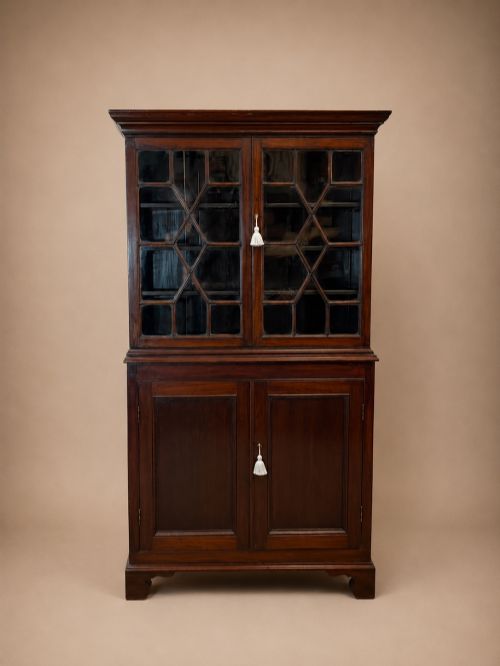


Tall Narrow Glass Cabinet
A tall narrow glass cabinet brings vertical elegance and clear display to modest floor spaces, keeping treasured objects secure behind fine glazing.
Tall Narrow Glass Cabinet
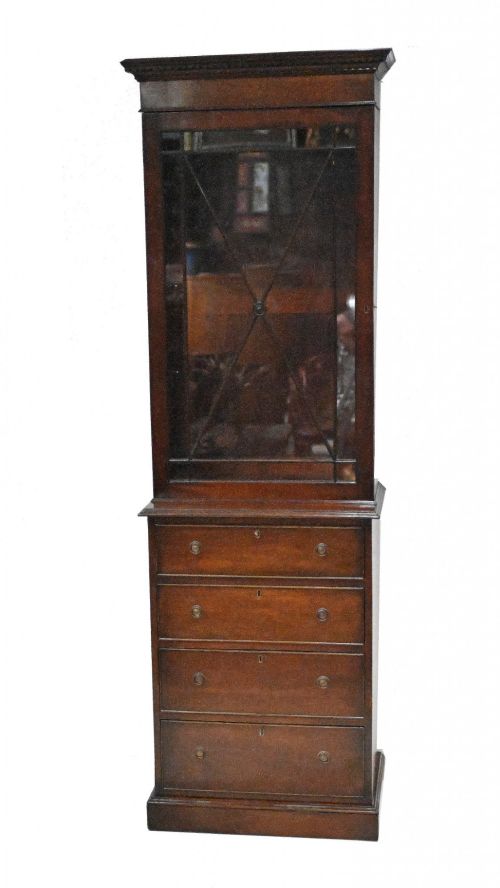
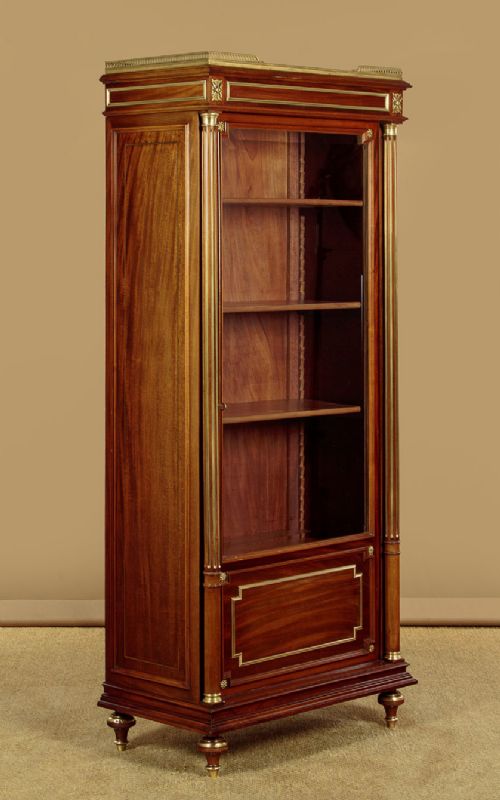
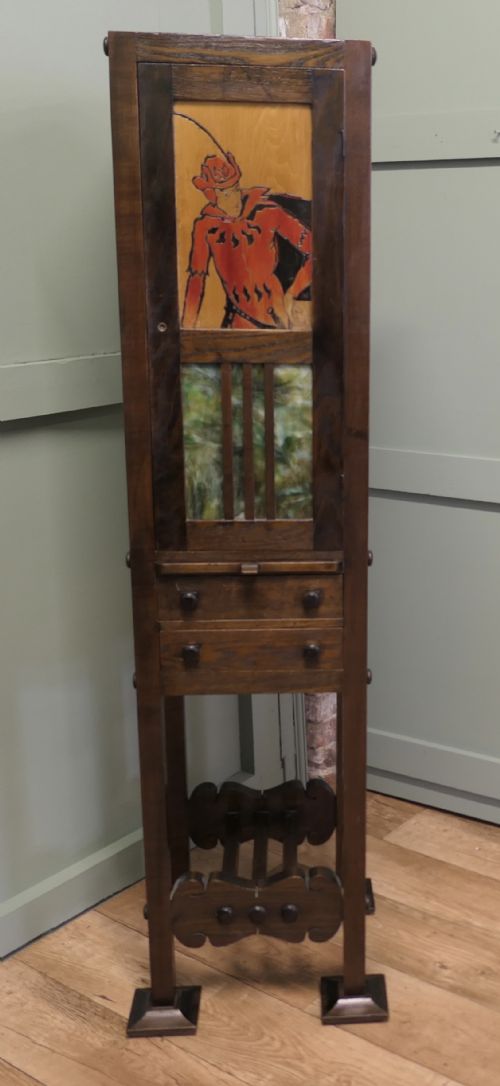
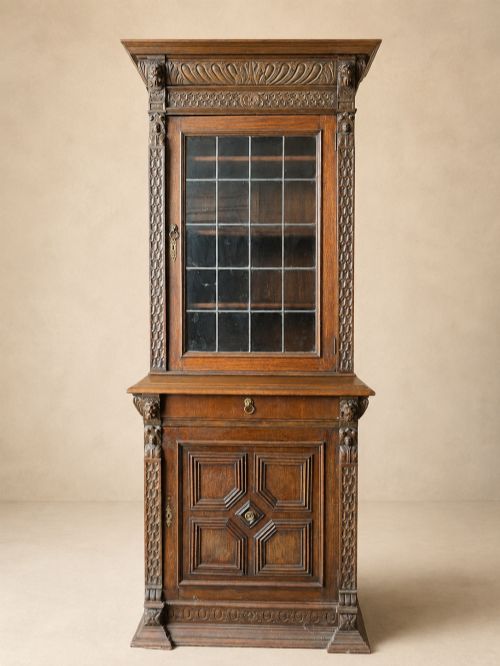
When searching for a tall narrow glass cabinet, a buyer finds slim vertical furniture designed to exhibit small collections while occupying minimal floor space. These pieces range from upright display cabinets and vitrines to narrow bookcases with glazed doors.
The versions most frequently met on this page date from the nineteenth century through the Edwardian era, spanning Victorian, Gothic Revival, and Arts and Crafts styles. They appear in timbers such as mahogany, oak, walnut, and satinwood, often standing as freestanding shop display units or domestic pier cabinets.
How they were made
Cabinet makers utilised dense hardwoods like mahogany, oak, and walnut to construct sturdy upright carcasses that could support heavy glass panes without warping. Surfaces often received subtle embellishments such as marquetry inlay, carved details, or satinwood banding to break up the vertical expanse.
Glazing was held in place with timber bars or lead cording, while internal shelving relied on solid wood or glass supported by wooden adjustable ratchets. Brass hardware, including hinges, locks, and handles, provided functional contrast against the dark timber frames.
Tall Narrow Glass Cabinet Retail Price Guide 2026
Typical asking prices for tall narrow glass cabinet among the pieces listed under this phrase on Sellingantiques today, from the lower quarter to the upper quarter. They describe what is for sale here now, not the wider market.
Listings feature items from the 19th Century, Edwardian period, and 1900, spanning Victorian and Arts and Crafts styles.
What varies in quality
Quality rests in the crispness of the timber carving, the precision of the marquetry work, and the structural integrity of the tall vertical frame. Finer examples display carefully selected grain patterns, such as burr walnut or figured mahogany, rather than plain stock timber.
The refinement of the glazing bars and the weight of the brass fittings further separate standard utility pieces from high-status cabinet work. Superior craftsmanship ensures the narrow doors swing true and close flush against the main body.
The Tall Narrow Glass Cabinet Glossary
- Pier cabinet
- A low or tall display cabinet designed specifically to fit the narrow wall space between windows. These pieces often feature glass doors to showcase porcelain or curios.
- Marquetry
- The art of applying decorative veneer pieces to a structure to form geometric or floral designs. Cabinet makers use contrasting timbers like satinwood and walnut to achieve this effect.
- Vitrine
- A glass-fronted display case used primarily for holding and exhibiting fine objects. The term originates from the French word for glass.
- Glazing
- The process of fitting glass into frames or doors. In these cabinets, individual panes are separated by wooden glazing bars or secured with lead.
- Carcase
- The main structural body or shell of a piece of furniture before drawers, doors, and feet are attached. A well-built carcase maintains rigidity across tall, narrow dimensions.
Tall Narrow Glass Cabinet: Frequently Asked Questions
How were these cabinets originally used?
Households utilised them in drawing rooms and parlours to exhibit porcelain, books, and curiosities.
Some examples also served commercial purposes as freestanding shop display units for retail wares.
What woods appear most often?
Mahogany and oak dominate the selection, bringing strength and rich grain to the tall frames.
Walnut and satinwood also feature, often enhanced with marquetry or lighter timber banding.
How do I date a piece?
Stylistic clues such as heavy Victorian carving, Gothic Revival motifs, or Edwardian simplicity point to specific eras.
The choice of timber, construction methods, and brass hardware further clarify the period.