




Gothic Revival Throne
A gothic revival throne commands attention with architectural timber and imposing height, bringing monumental presence to a room.
Gothic Revival Throne
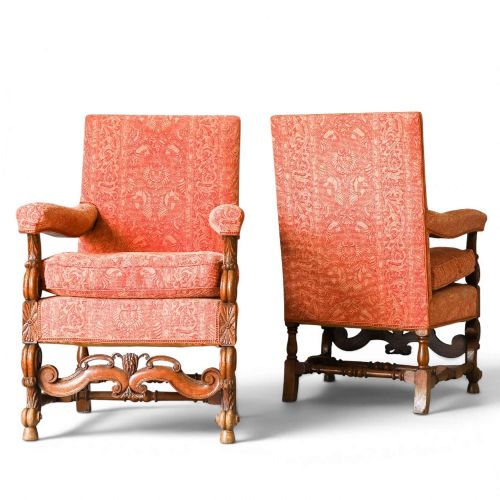
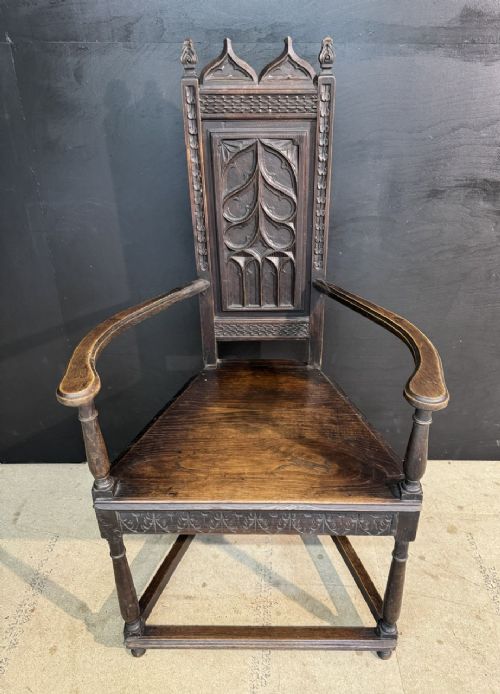
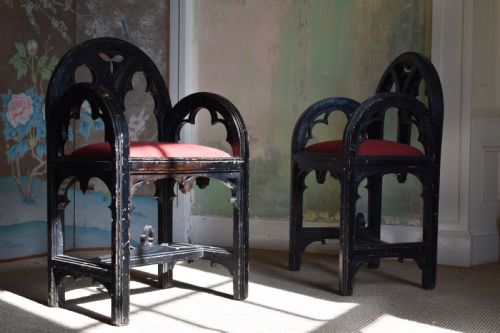
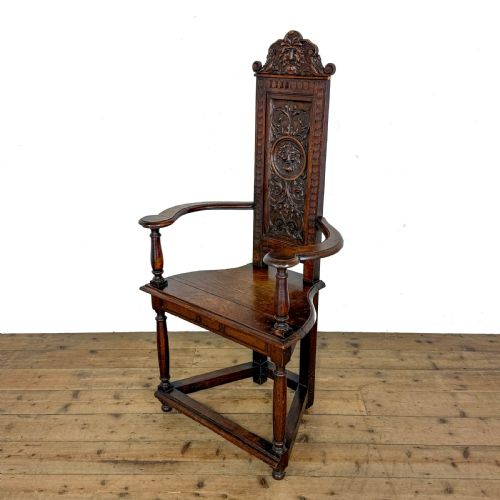
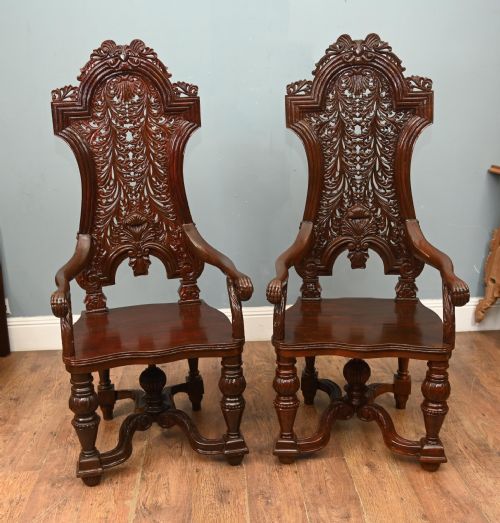
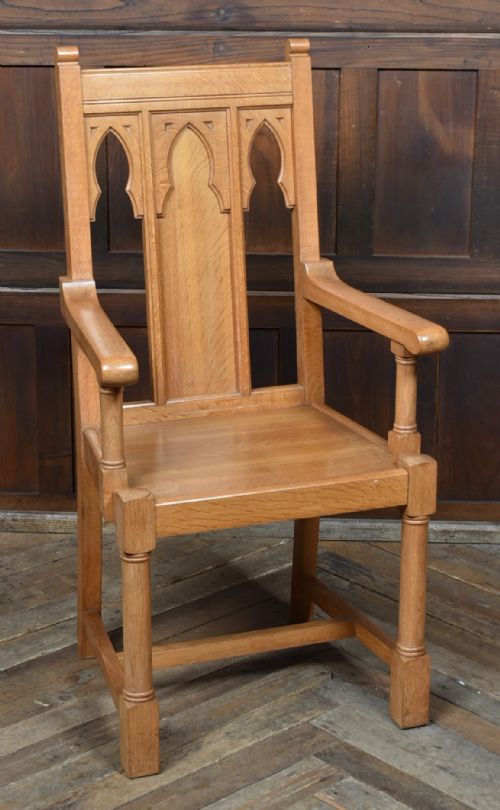
A gothic revival throne represents a substantial seating form drawing heavily on medieval ecclesiastical and secular architecture, predominantly built during the nineteenth century and the Victorian period. These pieces frequently manifest as heavy oak armchairs, high-backed elbow seats, and ecclesiastical seating bearing architectural details such as pointed arches and tracery. Most examples encountered on this page date from the nineteenth century, including specific iterations like Glastonbury chairs, wainscot chairs, and heavy panelled armchairs.
The aesthetic vocabulary bridges several revivalist movements, often blending strict gothic elements with jacobean, renaissance, and arts and crafts influences. Buyers encounter forms ranging from Scottish chapel chairs and english oak abbey seats to french renaissance revival armchairs and large green man carved timber seats. While many bear nineteenth-century manufacturing dates, some pieces adopt seventeenth-century styles through heavy regional joinery and turned wood structures.
Materials and construction
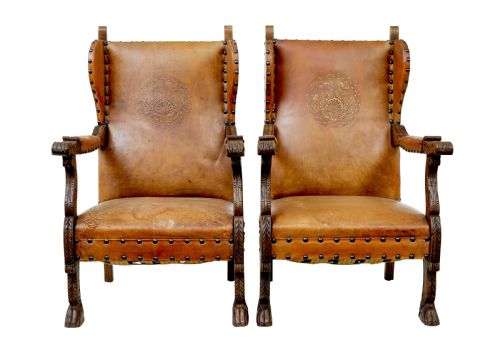
Makers relied primarily on native and continental timbers, with solid oak forming the structural core of almost every gothic revival throne. Walnut, pitch pine, beech, and timber panels appear alongside structural elements in brass, while upholstery typically utilises embossed leather, buttoned hide, fabric, or tapestry inserts.
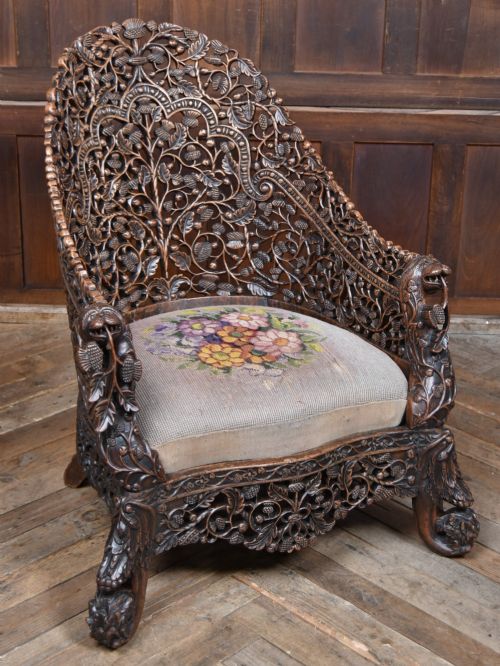
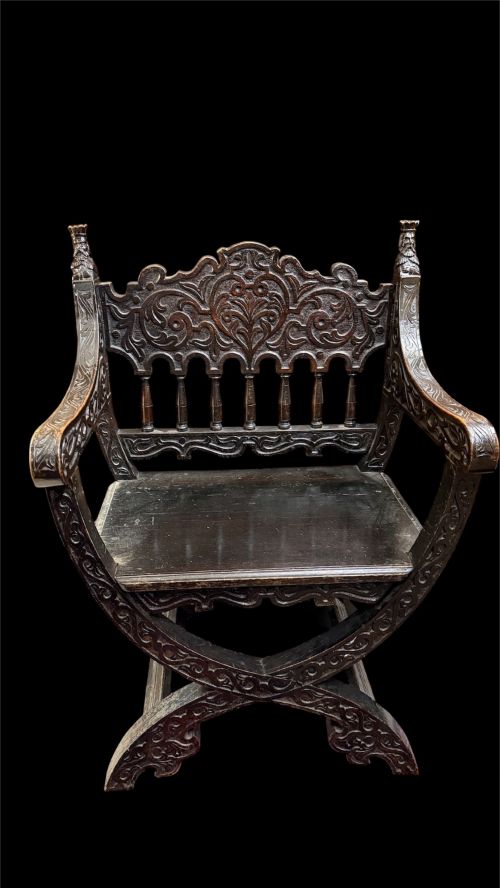
Joinery techniques combined traditional frame-and-panel construction with deeply carved surface ornamentation, utilising pegged mortise and tenon joints to support massive proportions. Surfaces frequently display hand-carved motifs such as linenfold panelling, tracery, figural green man masks, and hunting scenes, occasionally complemented by painted leather or applied decorative panel detailing.
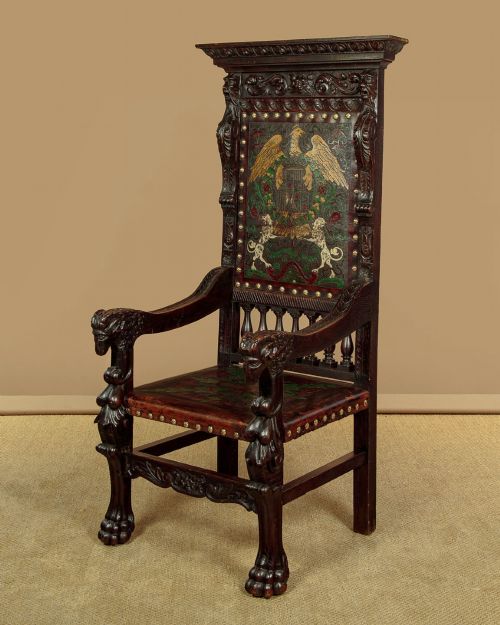
Several armchairs incorporate carved hounds and green man masks peeking out from the woodwork, keeping watch over the seated guest.
Judging quality and execution
The distinction between ordinary production and superior execution rests upon the depth, sharpness, and ambition of the hand carving. Pieces featuring crisply rendered figures, intricate tracery, and sculptural elements like hounds or green man masks demonstrate a higher standard of workshop craftsmanship than those with shallow or mechanical stamped ornamentation.
Structural integrity and timber selection equally govern worth, separating heavy, tight-grained golden oak frames from lesser secondary woods or poorly proportioned copies. Original upholstery materials, such as period embossed or buttoned leather secured with brass studs, preserve the integrity of the piece far better than later replacement coverings.
The Gothic Revival Throne Glossary
- Glastonbury chair
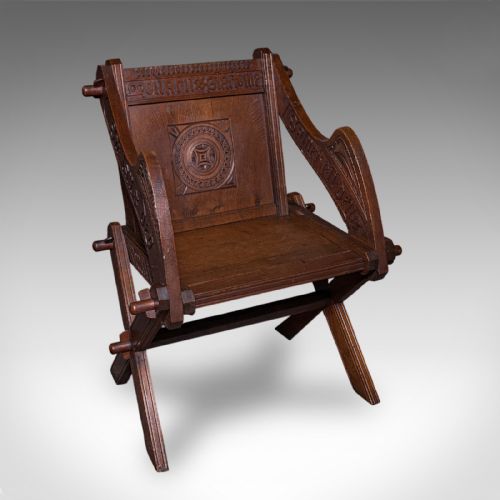
- A distinctive type of folding X-framed armchair with a sloping panel back and flat arms, popular in nineteenth-century interpretations of medieval church seating. These pieces utilise pegged joints and often feature carved inscriptions along the crest rail.
- Wainscot chair
- An early form of heavy wooden armchair constructed primarily from panelled oak rather than upholstered framing. They sit low with solid box bases and high panelled backs echoing domestic architecture.
- Caquetoire
- A light sixteenth-century style conversational armchair featuring a narrow triangular seat and a tall, slender back adapted in later revival periods. The design allowed ladies in wide skirts to converse more easily.
- Green man
- A sculptural architectural motif depicting a human face disgorging foliage, frequently carved into the woodwork of nineteenth-century seating. This pagan symbol of rebirth appears prominently on heavy ecclesiastical and library armchairs.
- Turner's chair
- A round-seated elbow chair constructed entirely from turned spindles and rails, sometimes known as an old saxon or roundabout chair. The rigid geometric framework relies on interlocking turned wooden components rather than flat panels.
Gothic Revival Throne: Frequently Asked Questions
How were these chairs used historically?
Historically, these grand seats functioned as focal points in reception rooms, studies, and ecclesiastical interiors rather than casual everyday lounging furniture. They signaled authority, status, and an appreciation for medieval heritage within Victorian homes.
In churches or chapels, similar forms accommodated clergy or dignitaries. In domestic contexts, they anchored a room's decorative scheme, often positioned near a fireplace or within a heavily panelled library.
How do I style a gothic revival throne?
Living with a gothic revival throne requires giving the piece adequate physical space to showcase its heavy proportions and deep carvings. Pairing the chair with neutral walls or simple modern interiors allows the dark oak timber and architectural lines to stand out.
Because of their visual weight, they work well as single statement pieces in a hallway, study, or living room. Avoid surrounding them with too much ornate furniture to keep the room balanced.
How do I date a gothic revival piece?
Dating these pieces relies on examining the timber grain, construction marks, and stylistic clues within the carving rather than relying solely on labels. Most examples date from the nineteenth-century gothic revival movement, even when mimicking earlier seventeenth-century wainscot styles.
Inspect the joinery for hand-cut pegs, the wear patterns on the seat, and the style of any leather upholstery or brass studding. Archival records and stylistic markers like green man carvings or Pugin-associated designs help narrow down the decade.