

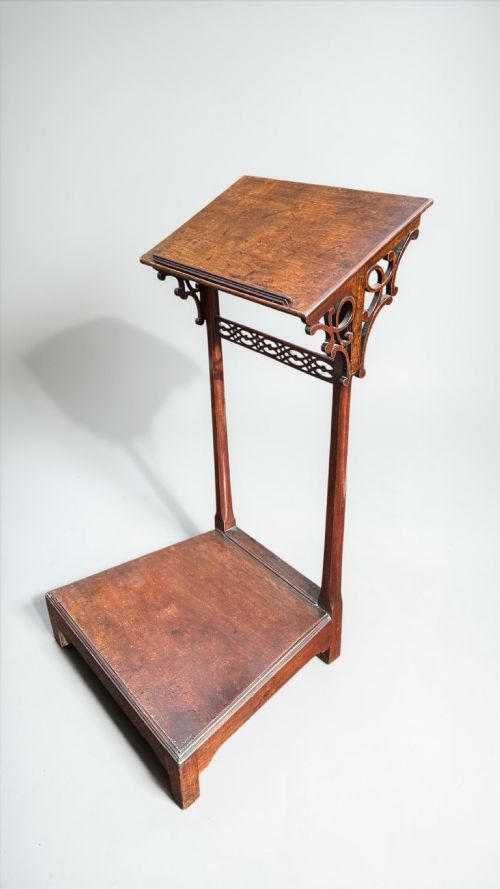


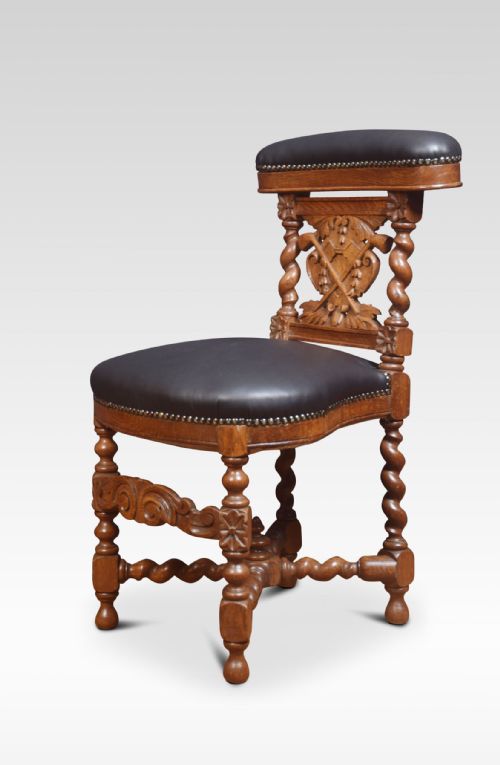


Gothic Revival Prie Dieu
A gothic revival prie dieu brings devotional seating into domestic spaces, offering upright posture and carved woodwork rooted in medieval design.
Identifying Gothic Revival Prie Dieu
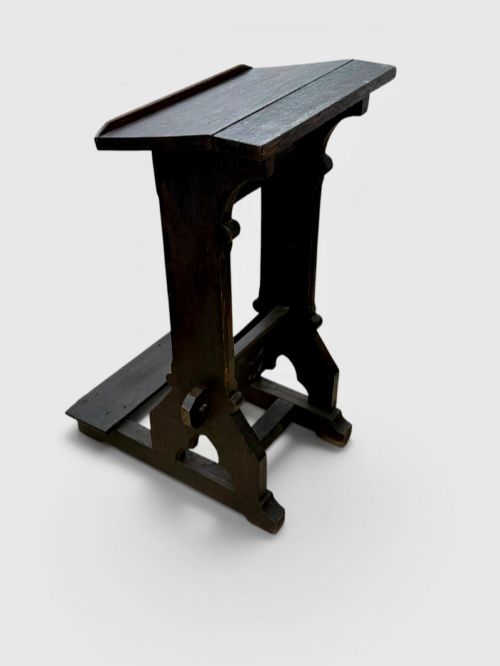
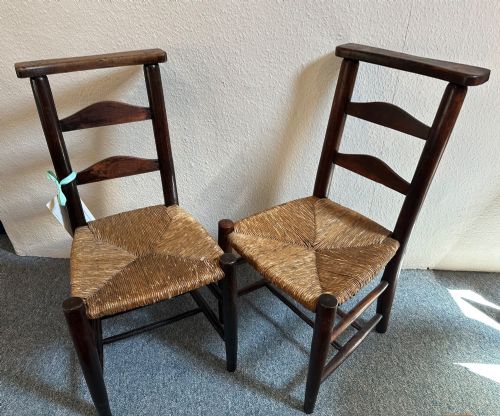
A gothic revival prie dieu functions primarily as a prayer chair, featuring a distinctive low seat and a high, cushioned top rail designed for kneeling and leaning. The pieces available here span the Victorian period, nineteenth century, and nineteen hundred, reflecting robust domestic production.
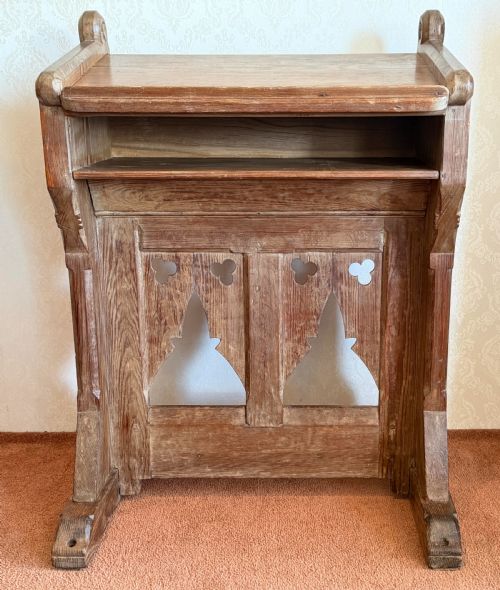
Most examples function as prayer chairs, side chairs, or accent chairs, occasionally crossing into reception furniture like an oak arts and crafts greeting station. Buyers encounter Victorian mahogany prie dieu chairs, ebonised wood variants, and carved oak structures that mirror ecclesiastical forms.
Origins cluster tightly around nineteenth-century British cabinet-making traditions, driven by the broader gothic revival movement. These chairs served both private devotional use and decorative seating within period interiors.
Materials and Construction
Carpenters utilised dense hardwoods, predominantly mahogany, walnut, oak, and ebonised wood, to build rigid frames capable of withstanding regular use. Timber surfaces frequently display intricate carving, structural turning, and barley twist elements along the uprights.
Upholstery formed an integral part of the manufacture, employing green velvet, tapestry fabric, and modern or period textiles secured with decorative braid and brass detailing. This combination of carved wood and padded upholstery delivered both devotional comfort and visual richness.
Retail Price Guide 2026
Typical UK retail prices for gothic revival prie dieu, calculated from the Sellingantiques database of over a million retail prices indexed since 2003. This retail price guide relies exclusively on Sellingantiques data; no external sources or auction records are used, so the figures do not describe the wider market.
Assessing Quality and Execution
Quality reveals itself in the crispness of the woodwork carving and the selection of timber grains, where solid mahogany and walnut command higher regard than ebonised alternatives. The depth of the turning and the integration of barley twist details show the hand of a skilled cabinet maker.
Upholstery treatments separate standard production from finer pieces, particularly where original velvet, tapestry fabric, and brass braid remain intact and well-scaled to the frame. The structural integrity of the high top rail and the stability of the low kneeling board dictate the overall standing of each chair.
The Gothic Revival Prie Dieu Glossary
- Prie dieu
- A French term translating to pray God, designating a specialised piece of devotional furniture intended for kneeling during prayer. These items feature a low seat and an upper shelf or arm rest.
- Barley twist
- A decorative woodworking technique where timber is turned into a helical screw shape resembling barley sugar. This profile appears frequently on nineteenth-century chair supports.
- Ebonised wood
- Timber treated with a dark stain or finish to imitate expensive ebony. Victorian makers utilised this process extensively for dramatic contrast.
- Tapestry fabric
- Heavy woven textile often featuring pictorial or floral designs used for upholstery. Such materials provide authentic texture to period seating.
Frequently Asked Questions
What is a prie dieu chair?
A prie dieu is a specialised prayer chair designed with a low seat and an elevated top rail for kneeling and leaning.
Originating for private devotion, these chairs became popular domestic furnishings during the nineteenth century.
How do you use a prie dieu?
Users kneel on the lower platform while resting their arms or devotional books on the upper padded rail.
In modern settings, they function effectively as unique accent chairs or hallway seating due to their compact footprint.
What woods were used?
Maker workshops utilised sturdy hardwoods including mahogany, walnut, oak, and ebonised wood to construct the frames.
These timbers provided the structural strength required for the upright stance and carved detailing.
How old are these chairs?
The available examples date primarily from the Victorian era and the nineteenth century, extending up to nineteen hundred.
They reflect the sustained popularity of the gothic revival style across British cabinet-making.