



Gothic Revival Oak Chest
These gothic revival oak chest pieces bring deep grain and pointed arches straight from the church and manor into your hall or bedroom.
Gothic Revival Oak Chest
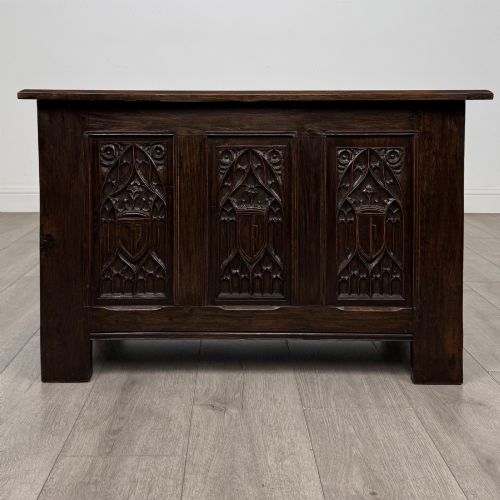
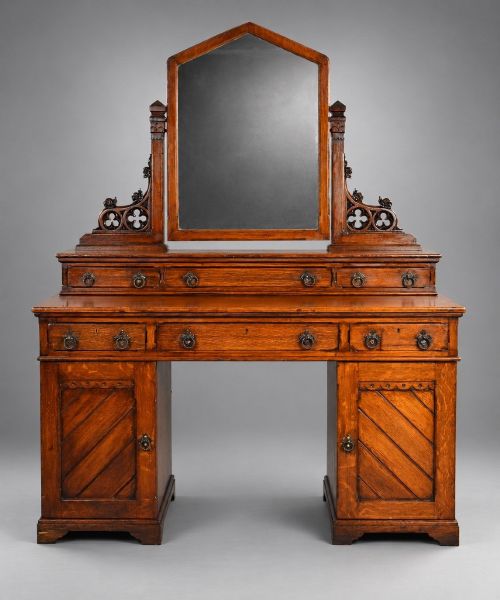
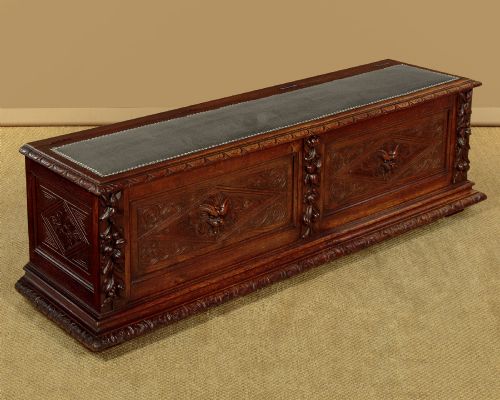
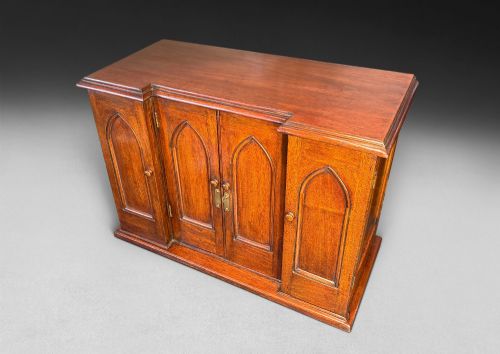
When you search for a gothic revival oak chest, you encounter solid timber furniture drawing directly on medieval ecclesiastical architecture and Tudor joinery. The examples on this page span the Victorian era, the nineteenth century, and the Edwardian period, incorporating forms such as coffers, blanket boxes, and carved chests of drawers.
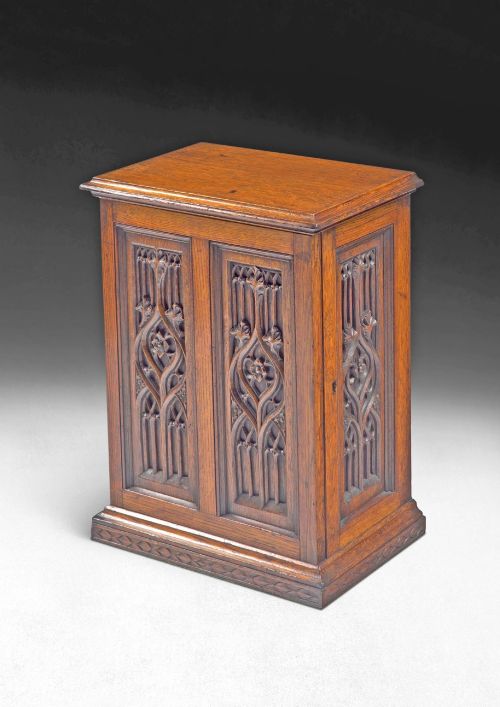
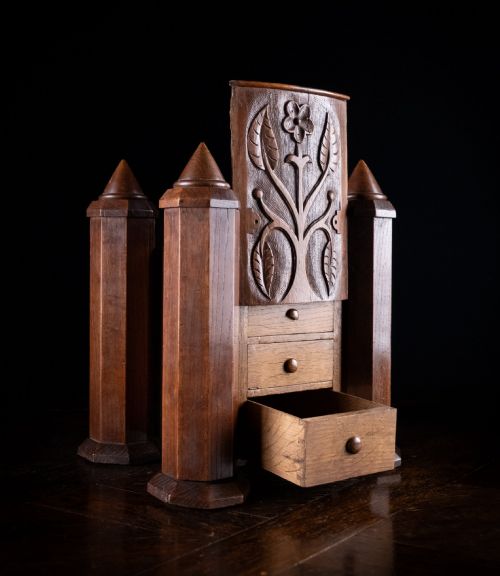
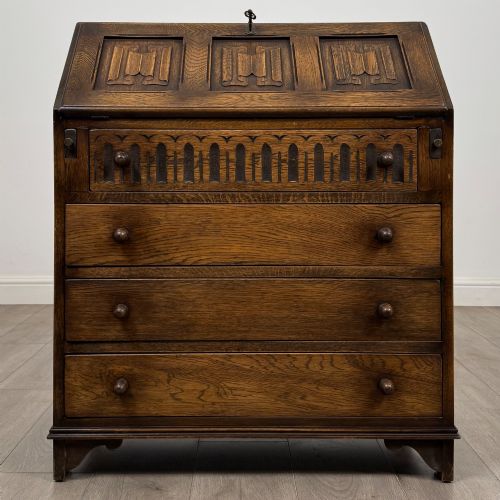
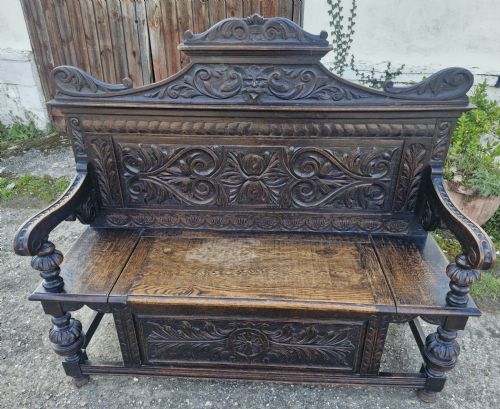
Most pieces you meet here date from the nineteenth century, reflecting the fervent revival of mediaeval design favoured by Victorian cabinetmakers and architects. They range from small table-top collectors cabinets and decanter boxes to heavy hall benches, monks benches, and linenfold bureaus.
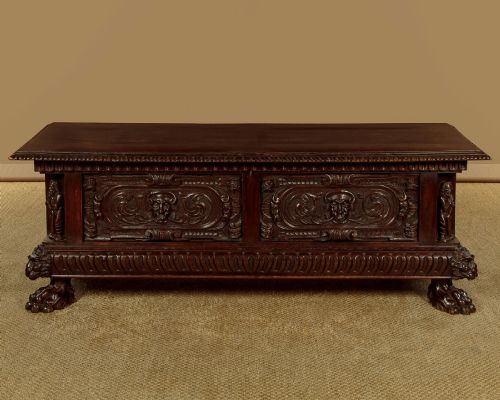
Makers utilised dark timber, robust panels, and surface carving to recreate the gravity of Gothic stone and timberwork in domestic spaces. Whether you select a simple coffer or a piece featuring Green Man grotesques, each item anchors a room with historic architectural detail.
Materials and construction
Carpenters built these pieces primarily using solid oak, alongside pollard oak for figured grain, and occasional hardwood or iron fittings. Panels were traditionally framed and panelled to allow the timber to move naturally with changes in humidity without splitting the structure.
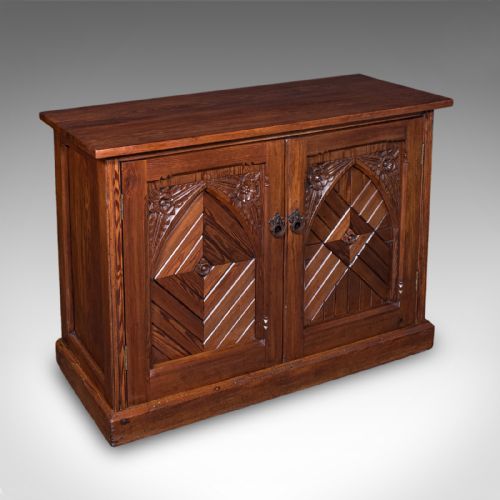
Decoration relied heavily on deep hand-carving rather than applied veneer, featuring linenfold panels, tracery, saints, and grotesque Green Man faces. Brass hinges, locks, and handles were frequently fitted to secure valuables and add metallic contrast to the dark wood.
Gothic Revival Oak Chest Retail Price Guide 2026
Typical asking prices for gothic revival oak chest among the pieces listed under this phrase on Sellingantiques today, from the lower quarter to the upper quarter. They describe what is for sale here now, not the wider market.
Stare long enough into the foliage on a Green Man chest and you will spot a pair of leafy eyes staring right back.
Judging quality in revival pieces
The distinction between ordinary and outstanding work lies in the depth and crispness of the carving, particularly around tracery and figurative details. Superior examples display thoughtful proportions and harmonious integration of Gothic motifs rather than rushed, shallow surface incisions.
Original hardware such as brass locks and hinges significantly elevates a piece, as does the choice of well-figured timber like pollard oak. Construction integrity - visible in the dovetailing of drawers and the thickness of the solid oak boards - separates everyday utility items from masterwork cabinets.
Jack Grimble·Pugin
The Gothic Revival Oak Chest Glossary
- Green Man
- A sculptural motif of a face surrounded by or emerging from foliage, symbolising rebirth. It appears frequently in Victorian carving on benches and chests.
- Linenfold
- A style of wood carving that mimics folded linen or parchment. Cabinetmakers used it to decorate panels on chests and bureaus during the revival periods.
- Coffer
- A heavy, lidded box used historically for storing valuables, linen, or documents. These form the direct functional ancestors of many antique oak chests.
- Tracery
- Openwork ornamentation in stone or wood, typical of Gothic architecture. Furniture makers translated window tracery patterns directly onto chest panels and cabinet doors.
- Monks Bench
- A multifunctional piece of furniture featuring a hinged back that flips down to form a table top above a box seat. They were popular in heavy carved oak during the nineteenth century.
Gothic Revival Oak Chest: Frequently Asked Questions
What is a gothic revival oak chest used for?
These pieces served historically for storing heavy textiles, household valuables, or documents in secure wooden boxes. Today, they function equally well as blanket storage at the foot of a bed or as statement coffee tables.
Their robust timber construction allows them to endure daily domestic use while providing concealed storage space in hallways or living rooms.
Where should I place a gothic revival chest?
A heavy oak coffer or hall bench looks best against a plain wall in an entrance hall or landing where its architectural carving can command attention. Avoid placing solid oak directly beside active heat sources to prevent the timber from drying out and splitting.
Pairing the dark wood with simple walls and good natural light lets the deep grain and linenfold panels stand out without overwhelming the room.
Are these chests made of solid oak?
Most pieces recorded here utilise solid oak throughout the primary frame, lid, and carved panels, sometimes complemented by pollard oak veneers for decorative effect. Secondary woods occasionally appear in hidden structural areas like drawer linings and baseboards.
Checking the interior boards and grain continuity helps confirm the use of solid timber rather than superficial surface finishes.