
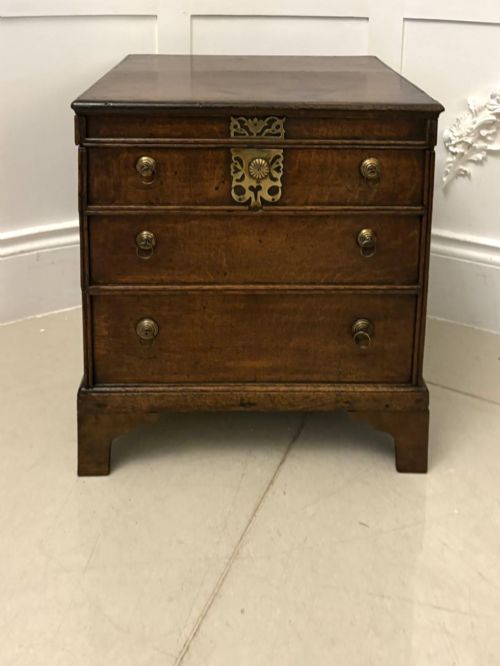
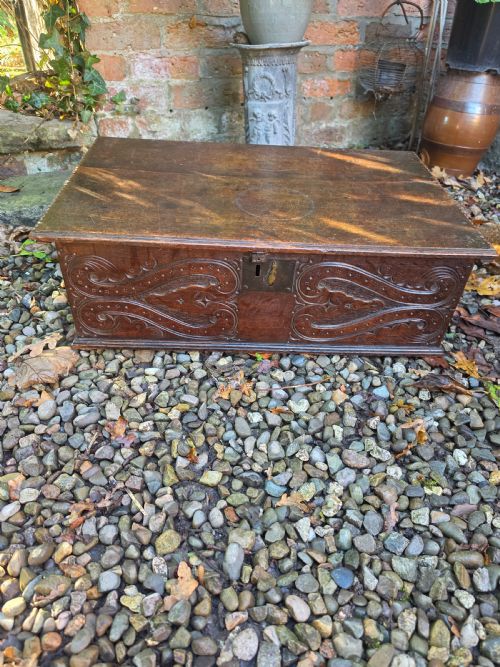
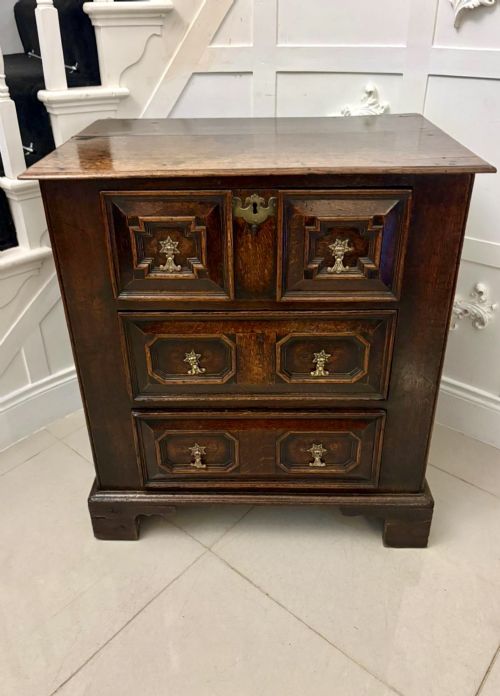
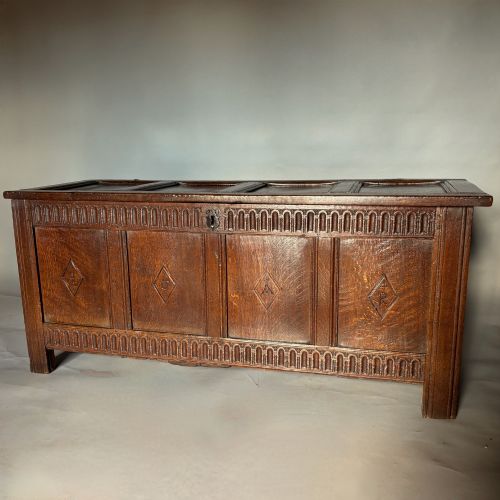
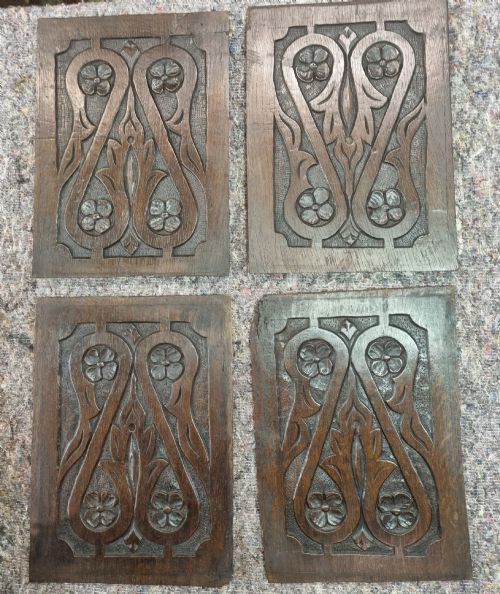
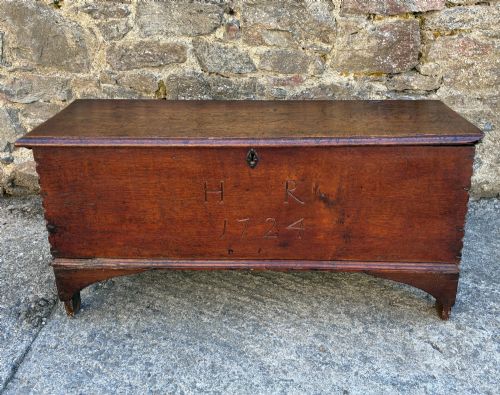
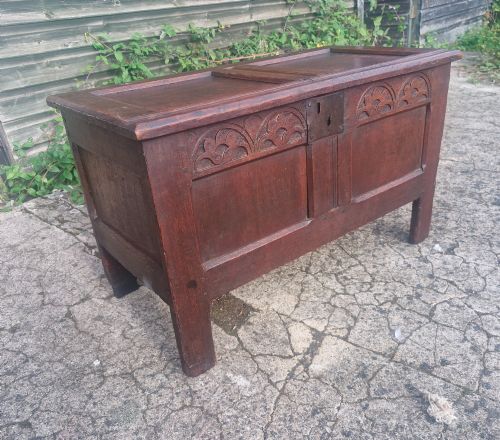
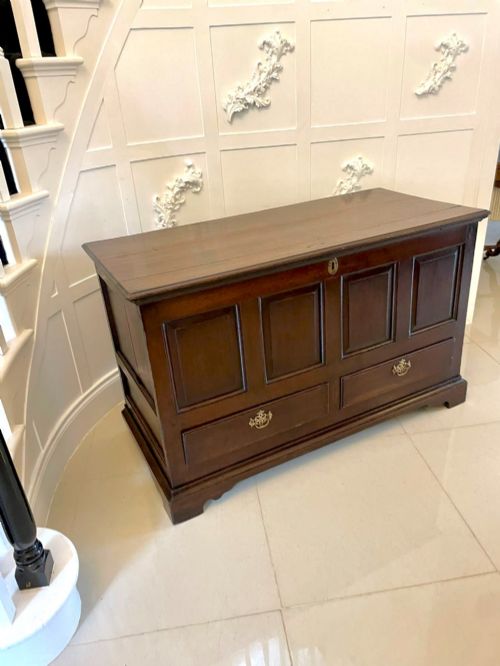
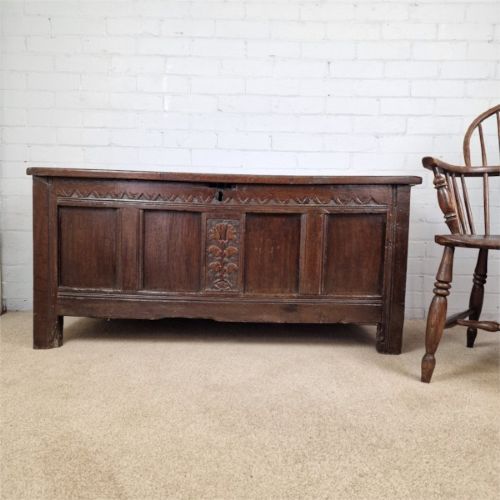
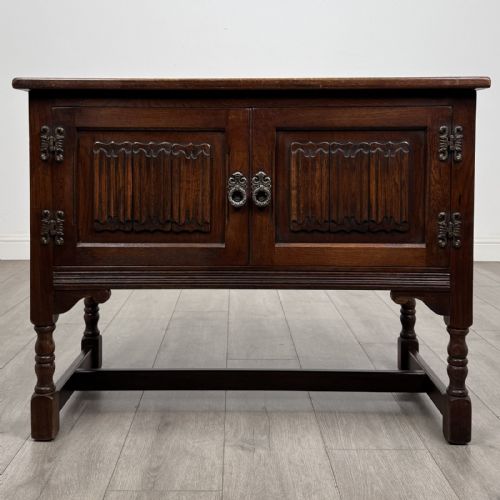
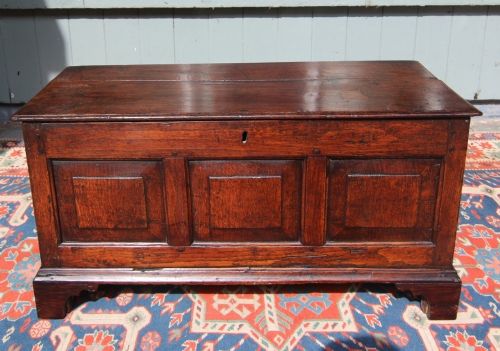
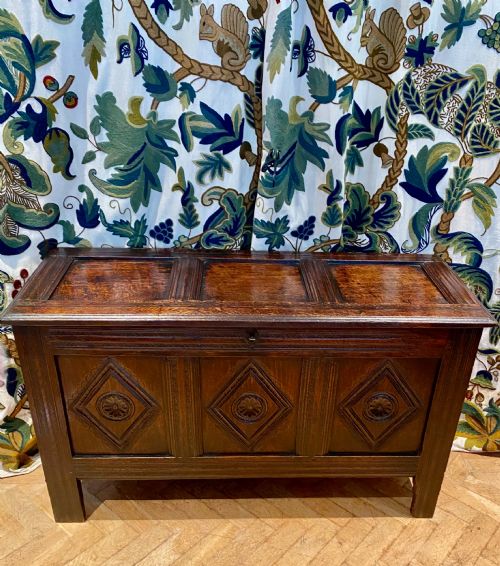
Dark Oak Coffer Chest
These dark oak coffer chests are heavy storage furniture built from sturdy timber, offering practical history for the home.
Dark Oak Coffer Chest
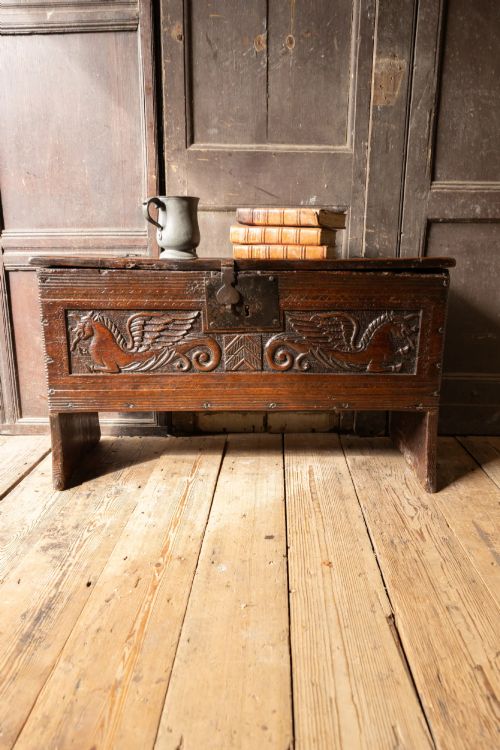
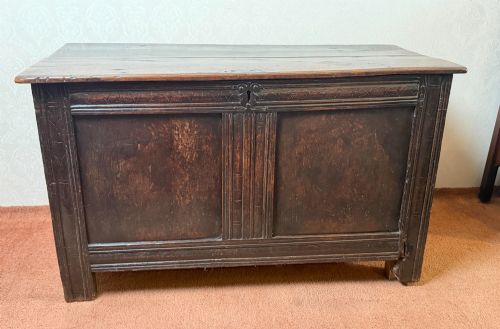
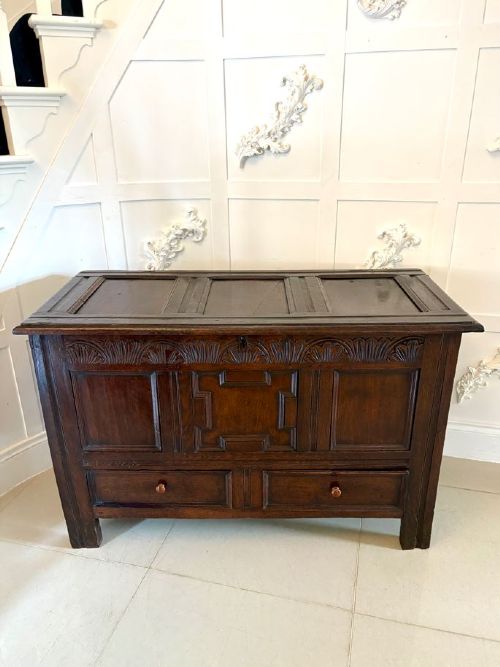
A dark oak coffer chest serves as a robust container for household goods, often taking the form of a blanket box, mule chest, or document box. You will frequently encounter examples originating from the seventeenth and eighteenth centuries, alongside later revival pieces.
The regional variations include Welsh Gower Peninsula coffers and smaller coffer bach designs, showing how local carpentry traditions shaped these utility boxes. Interiors often remain plain to maximise storage space for linen, woollens, or personal valuables.
Construction methods range from simple boarded timber to sophisticated panelled frames held together by wooden pegs. These storage pieces adapt well to modern living rooms and hallways as functional tables or blanket repositories.
How they were made
Makers utilised solid oak boards joined with mortise and tenon framing, securing the structure with handmade wooden pegs rather than modern fixings. Iron and brass hinges, locks, and brackets provide the functional ironmongery.
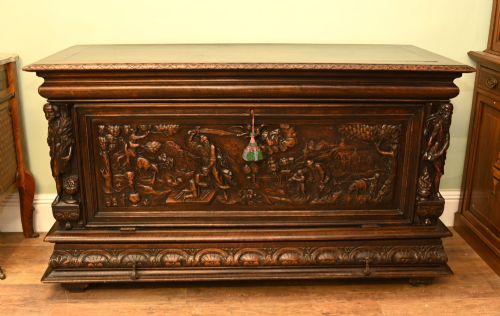
Surface decoration frequently involves chip carving, panel moulding, and occasional wood inlay or ebonised details. The natural timber develops a deep patination over centuries through regular handling and beeswax application.
The listings feature oak as the primary timber, complemented by iron, brass, leather, and mixed inlay woods across periods spanning from the sixteenth century to the Edwardian era.
What varies in quality
The integrity of the timber and the crispness of the original carving distinguish high-grade examples from later copies. Original ironwork and undisturbed pegged joints indicate a higher standard of regional cabinet making.
Proportions also dictate the desirability, with smaller panels and well-balanced mouldings commanding greater attention. Pieces retaining their early surface patination without excessive modern restoration hold more historic value.
The Dark Oak Coffer Chest Glossary
- Coffer
- A large wooden chest used historically for storing valuables, linens, or documents. They typically feature a hinged lid and robust boarded or panelled construction.
- Mule chest
- A storage chest that incorporates one or more drawers beneath the main compartment. This form bridges the gap between the traditional coffer and the chest of drawers.
- Coffer bach
- A Welsh term for a small coffer, often sitting on a short stand or drawer base. These diminutive chests were traditionally made as presentation pieces or dowry boxes.
- Panelling
- A method of framing where thin wood panels float within grooved stiles and rails to allow for timber movement. This technique prevents the wood from splitting as humidity changes.
- Patina
- The deep surface sheen and colour acquired by oak over centuries of light exposure and handling. It serves as a visual indicator of age and genuine use.
- Marquetry
- Decorative inlay work using various woods to create geometric or floral patterns on the surface. It appears on select refined storage boxes from the seventeenth century.
Dark Oak Coffer Chest: Frequently Asked Questions
What did people store in a dark oak coffer chest?
These chests originally held valuable domestic textiles, woollens, church plate, and important household documents. The sturdy oak construction protected contents from dampness and pests.
Today, they serve a similar purpose in modern homes, providing concealed storage for blankets, cushions, and shoes in hallways or bedrooms.
How do I date a seventeenth-century oak coffer?
Dating relies on examining the construction methods, tool marks left by hand axes, and the style of the carved decoration. Peg construction, hand-forged iron hinges, and vernacular moulding profiles offer strong clues.
Comparative analysis with dated examples helps narrow down the decade of manufacture, though many regional pieces maintained traditional designs for generations.
Are these chests heavy to move?
Solid oak is a dense hardwood, making these chests remarkably heavy and substantial to transport. Most require two people to lift safely, particularly larger seventeenth-century panelled examples.
Once positioned in a room, their weight keeps them stable and firmly planted against the floor.
Can I use a coffer as a coffee table?
The flat lids of many lower chests make them suitable for use as occasional tables or display surfaces. Placing a tray on top protects the historic timber from drink rings and scratches.
Ensure the height matches your seating before using one as a central table in a living space.