



Late Victorian Oak Chest
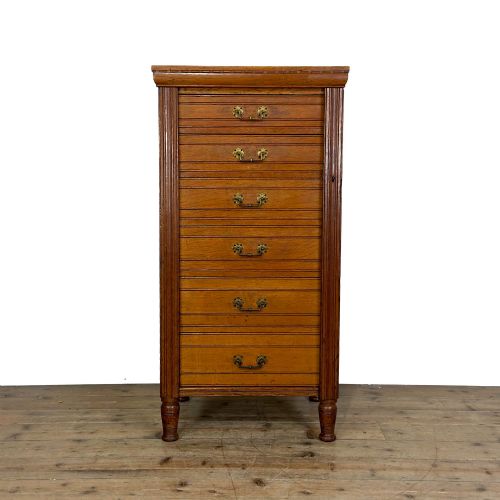
A late victorian oak chest brings honest timber and utilitarian resolve into a room, offering sturdy storage fashioned from quarter-sawn boards and seasoned heartwood.
Late Victorian Oak Chest
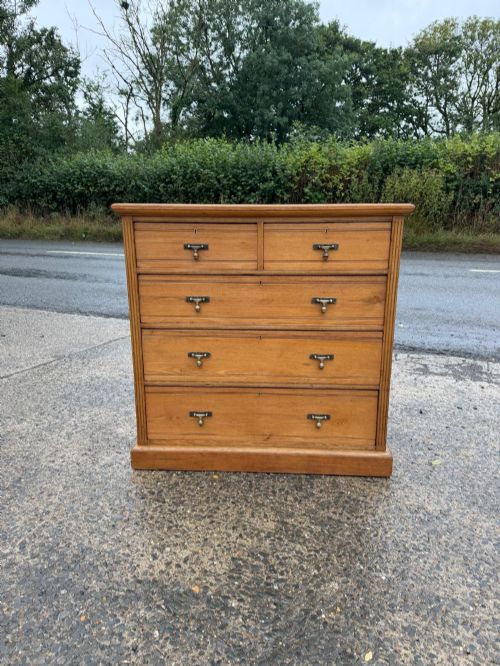
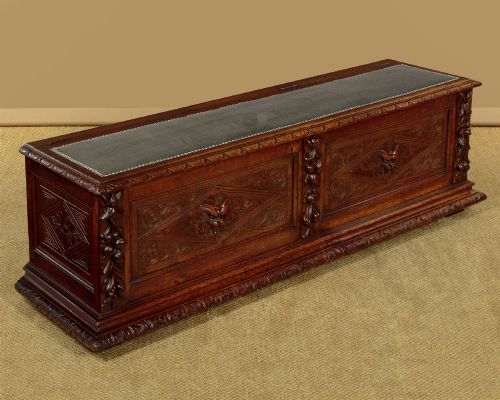
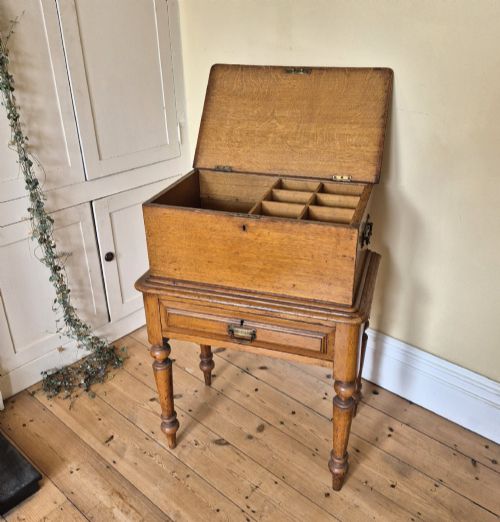
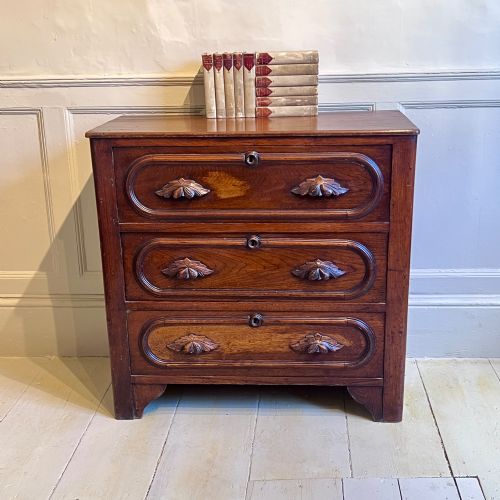
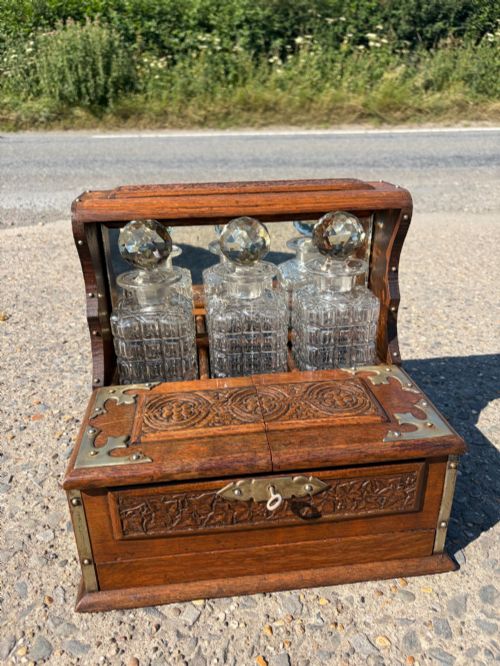
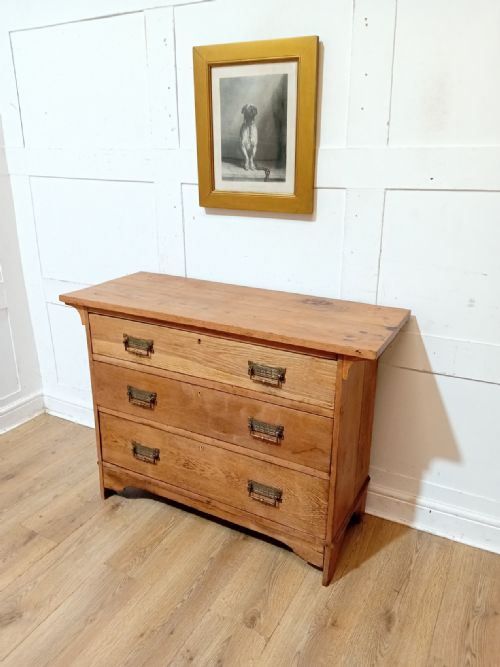
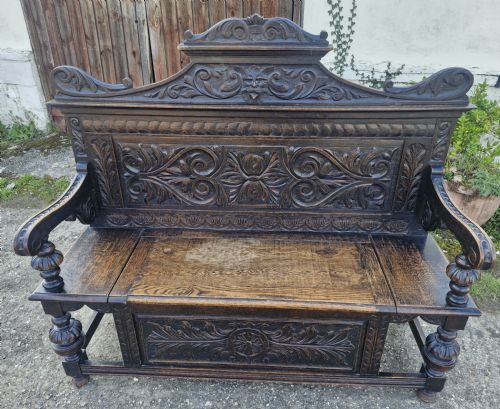
A late victorian oak chest encompasses a practical variety of forms, stretching from conventional three-drawer storage units and dressing chests to specialised coffers, ottomans, and ticket dispensing boxes. These domestic and utilitarian pieces emerged across the latter decades of the nineteenth century, shaped by traditional regional joinery as well as burgeoning Arts and Crafts ideals.
The versions most frequently met on this page combine robust oak timbers with functional hardware such as original brass acorn handles. Makers utilised the dense grain of the wood to create enduring pieces that served both high-status dressing rooms and busy railway offices alike.
Examples often display straightforward rectangular proportions, sometimes elevated on stands or fitted with hinged lids, mirrors, and leather accents. The stylistic vocabulary bridges standard Victorian utility with the simpler, hand-finished aesthetic of the Arts and Crafts movement.
Materials and construction
Construction relies heavily upon solid oak, selected for durability and finished with simple hand-carved details or left clean-lined to showcase the natural grain. Joinery techniques prioritize structural strength, utilising tight joints to support heavy lids and stacked drawer configurations.
Hardware and secondary materials play a defining role, incorporating brass handles, glass mirrors, and occasional boxwood or ebony stringing for subtle contrast. Leather and fabric elements appear on specific functional forms such as ottomans and steamer trunks, adding texture to the wooden framework.
Listings feature oak combined with brass, glass, leather, mirror, ebony, and boxwood across Victorian and Edwardian periods.
Judging quality and craftsmanship
Quality reveals itself in the selection of the timber and the integrity of the original hardware rather than superficial ornamentation. Pieces retaining their original brass fixtures, such as acorn handles, demonstrate higher integrity than those altered over time.
The crispness of carved decoration and the precision of the joinery distinguish standard utilitarian items from finer workshop pieces. Better examples exhibit thoughtful integration of decorative elements like boxwood and ebony inlay without compromising the underlying structural utility of the oak.
Wright & Hunter of Belfast·Harris Lebus of London
The Late Victorian Oak Chest Glossary
- Oak
- A hard, heavy timber prized for its prominent grain pattern and structural durability. It forms the primary structural and visual base for these items.
- Arts and Crafts
- A design movement emphasising handcraftsmanship, simple forms, and honest materials over mass production. Pieces in this style often feature minimal carving and exposed construction.
- Tantalus
- A locked wooden cabinet holding decanters, designed to display the bottles while preventing unauthorized access to the contents. They typically incorporate brass locking bars and glass.
- Dressing chest
- A low cabinet combining drawer storage with a fixed or pivoting mirror, used in bedrooms for grooming and personal storage. They frequently incorporate inlaid wood details.
Late Victorian Oak Chest: Frequently Asked Questions
How do I date a late victorian oak chest?
Dating relies upon examining construction methods, hardware styles, and timber preparation visible across the piece. Stylistic markers often point to the closing decades of the nineteenth century.
Compare the drawer linings and backboards with known manufacturing techniques of the period to establish an accurate timeframe.
Where were these pieces used originally?
These items served a multitude of utilitarian and domestic functions in Victorian settings. They appeared in bedrooms, hallways, offices, and even railway stations.
Their robust construction allowed them to withstand heavy daily use in both private homes and commercial environments.
What is an Arts and Crafts oak chest?
An Arts and Crafts oak chest reflects the late nineteenth-century shift toward honest construction and simplified ornamentation. These pieces prioritize visible timber grain and functional design over heavy factory-made carving.
They often display subtle inlaid details and unpretentious brass hardware that accentuate the natural character of the wood.
How do I care for antique oak furniture?
Maintaining antique oak involves keeping the timber away from direct heat sources and sudden humidity changes. Regular dusting with a dry cloth protects the finish without building up heavy wax layers.
Periodic application of appropriate furniture wax helps nourish the dry wood and preserves the original lustre of the grain.