

Gothic Revival Oak Carving
Gothic revival oak carving brings substantial 19th-century architecture indoors through heavily ornamented furniture and panels.
Gothic Revival Oak Carving
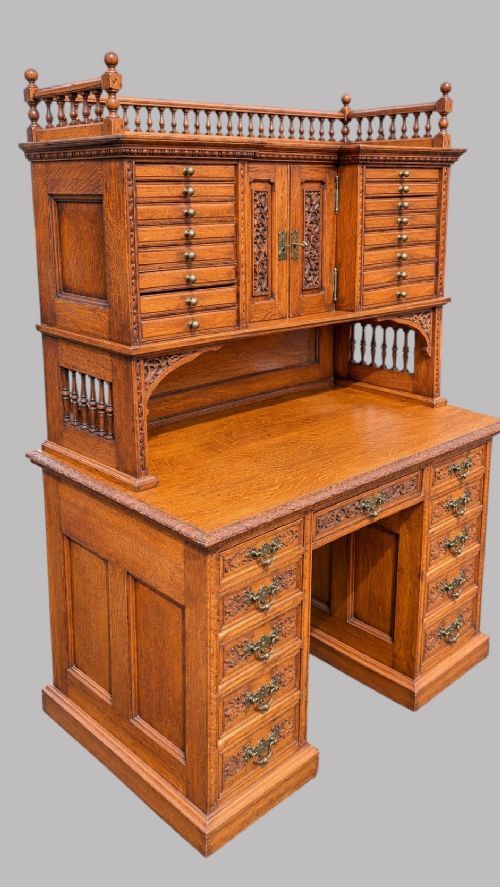
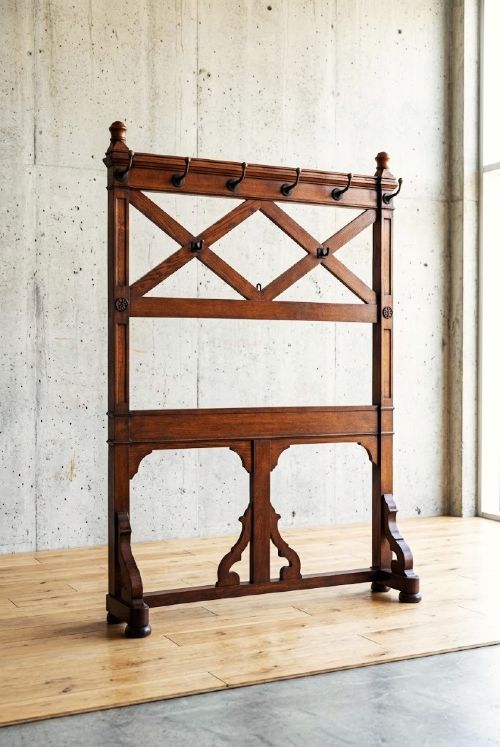
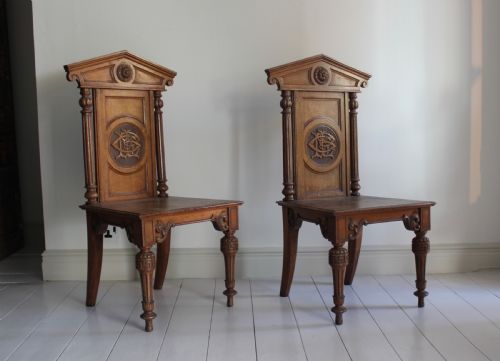
Gothic revival oak carving encompasses functional Victorian furniture and architectural fragments drawn from medieval design vocabulary. Pieces on this page stem primarily from the 19th century and Edwardian eras, spanning utilitarian church fittings and domestic seating.
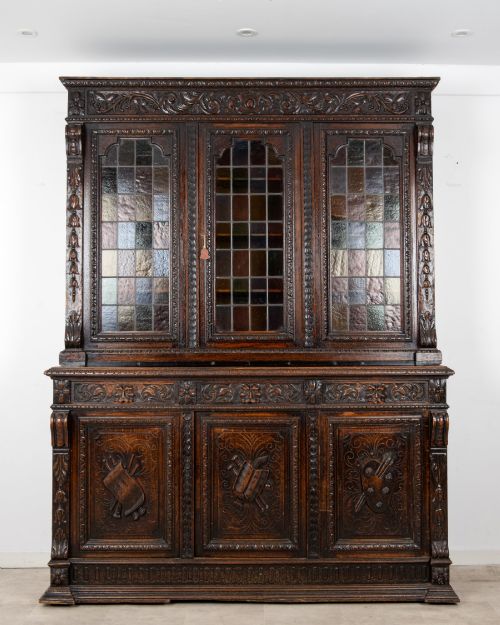
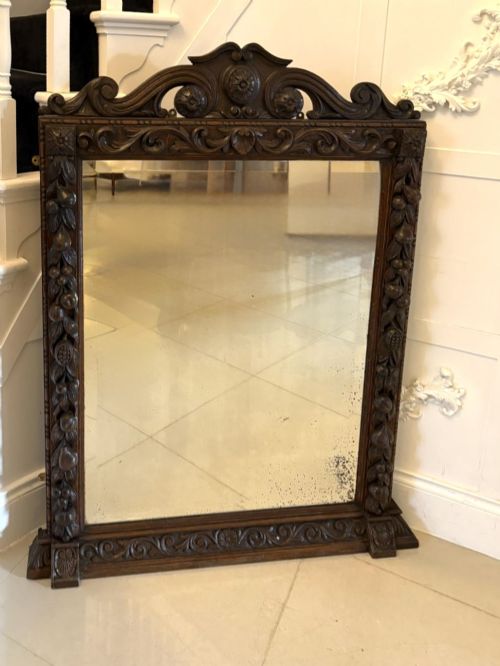
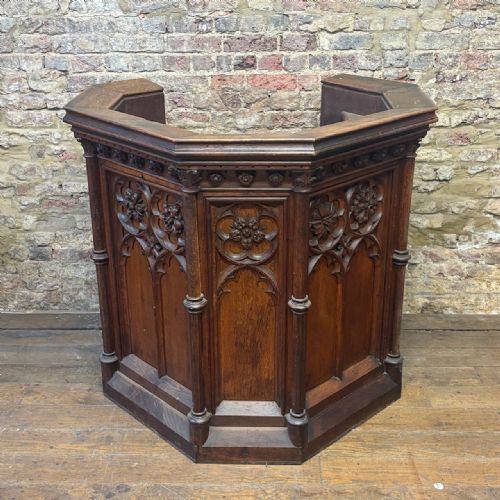
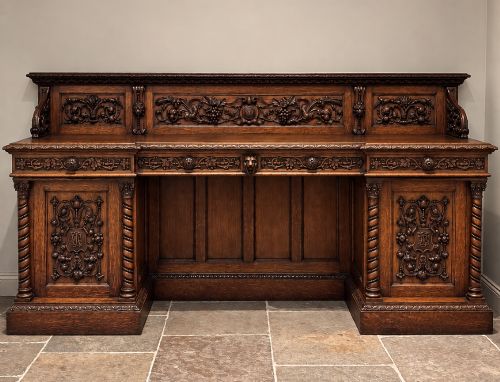
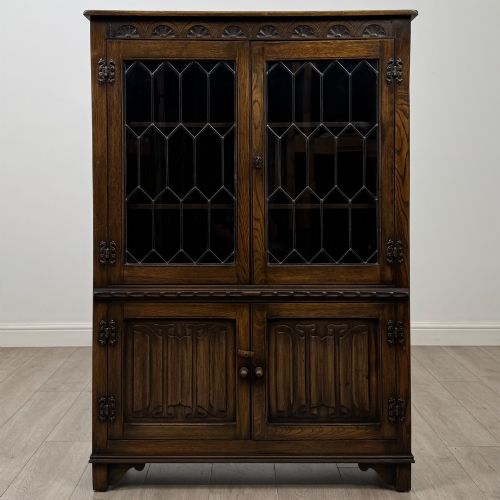
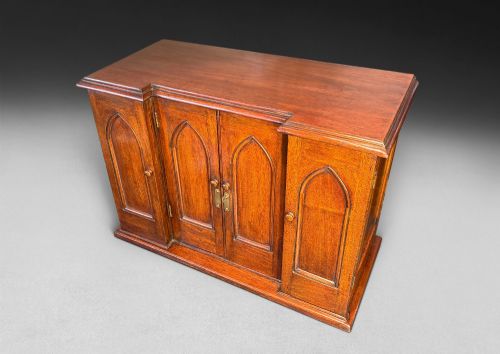
Buyers encounter items ranging from large sideboards and bookcases to smaller wall mirrors, church pulpits, and hymn boards. Oak serves as the primary structural and sculptural medium across these varied forms.
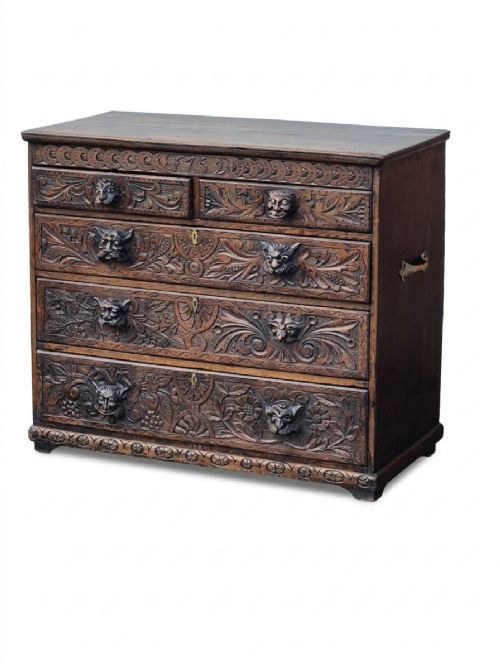
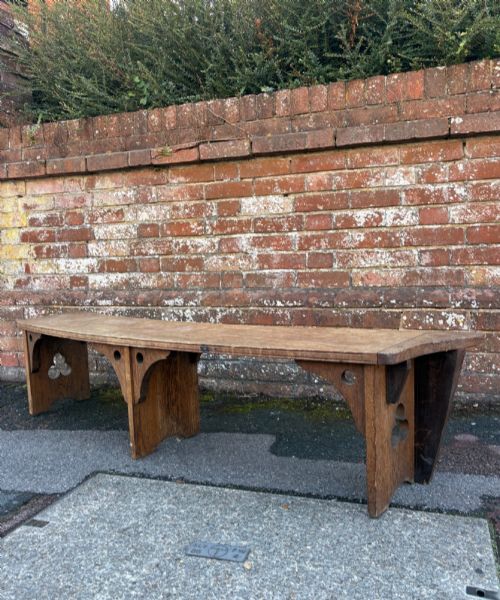
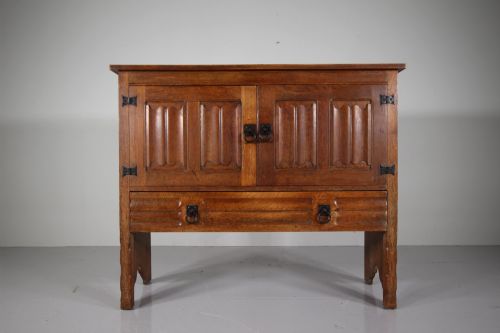
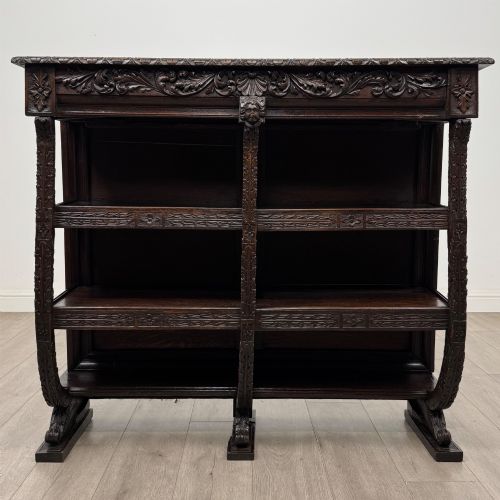
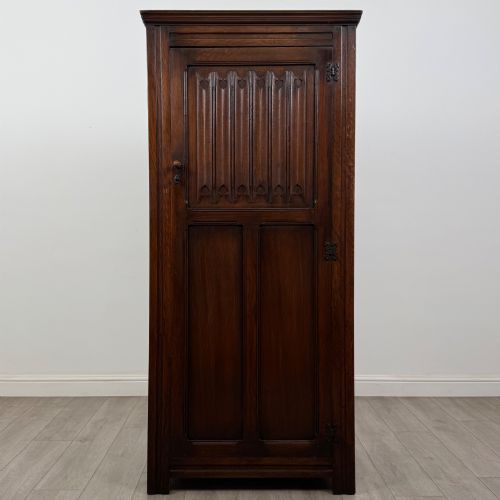
The decorative language borrows heavily from ecclesiastical architecture, featuring pointed arches, trefoil supports, and linenfold panelling. Grotesque green man motifs and heavy geometric mouldings frequently punctuate the surfaces.
Materials and construction methods
Solid oak forms the structural core of these pieces, selected for its density and suitability for deep chisel work. Subsidiary materials such as brass, iron, glass, and embossed leather appear on hardware, hinges, and specific seating elements.
Joinery relies on traditional methods appropriate for heavy domestic and ecclesiastical use, complemented by hand-chiselled surface ornament. Surfaces are often finished to highlight the natural grain of the timber alongside carved details.
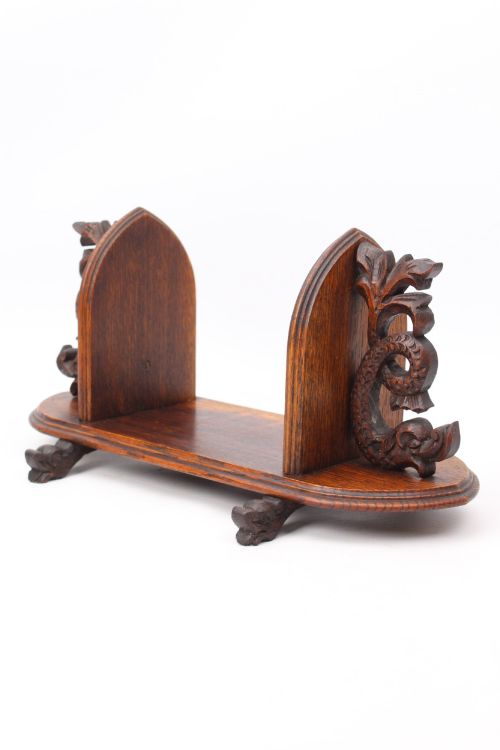
A stern wooden green man peers out from behind nineteenth-century book collections, guarding the shelves with leafy eyebrows.
Assessing quality in carved oak
The depth and crispness of the hand-carved details dictate the visual success of the piece. Crisp lines in foliage, green men, and tracery distinguish superior craftsmanship from mechanical or hurried production.
Proportion and timber selection play a critical role in overall balance. Pieces utilising well-figured oak with robust joinery stand apart from simpler utilitarian boxes or later derivations.
Christopher Dresser·George Wadham·Norwich Maker
The Gothic Revival Oak Carving Glossary
- Green man
- A sculptural architectural ornament depicting a human face disgorged from foliage. It appears frequently in medieval and revival ecclesiastical woodwork.
- Linenfold
- A style of wood carving that imitates vertical folds of linen cloth. This panel decoration is common on cupboards, desks, and cabinets.
- Trefoil
- A graphic ornament composed of three overlapping rings or lobes. It forms a recurring motif in Gothic tracery and chair supports.
Gothic Revival Oak Carving: Frequently Asked Questions
What defines gothic revival oak carving?
Gothic revival oak carving represents 19th-century interpretations of medieval design implemented in solid timber. These items integrate architectural elements such as pointed arches and heavy mouldings into domestic and ecclesiastical furniture.
The style looks back to mediaeval cathedral aesthetics, adapting them for Victorian homes, churches, and public buildings through skilled carpentry and deep relief ornamentation.
How were these carved oak pieces used?
Original functions varied widely from domestic seating and storage to church furnishings. Sideboards, bookcases, and wardrobes served practical household needs, while pulpits and hymn boards fulfilled religious roles.
Many items bridged domestic and institutional spaces, bringing ecclesiastical woodworking techniques into Victorian dining rooms, libraries, and studies.
How do I live with carved oak furniture?
Solid oak requires stable indoor humidity to prevent movement in heavy panels and joints. Placing pieces away from direct heat sources protects the timber and applied finishes.
These substantial items anchor a room visually, pairing well with plain walls and simple textiles that let the deep relief carving stand out.
How can I tell the periods apart?
Mid-19th-century pieces often display strict Pugin-inspired architectural rigour and deep ecclesiastical carving. Later Victorian and Edwardian examples frequently incorporate lighter proportions or decorative arts influences.
Hardware, joinery methods, and secondary woods help date items, alongside stylistic shifts from severe Gothic revival toward Arts and Crafts or Tudor revival forms.