

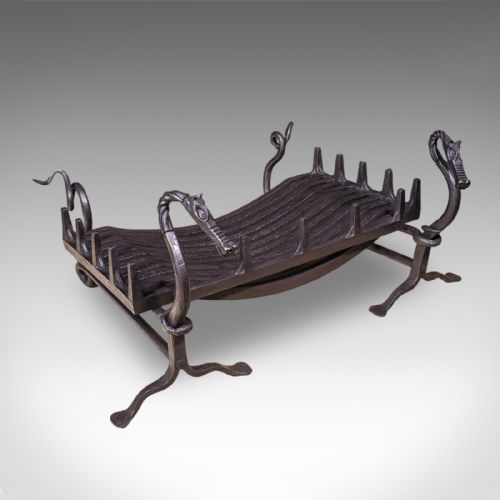


Gothic Revival Fire Irons
Gothic Revival fire irons bring heavy medieval lines and rich nineteenth-century forge work straight to the hearth.
Gothic Revival Fire Irons
Gothic revival fire irons encompass heavy iron tools, companion sets, and companion pieces designed to tend open hearths with pointed architectural motifs. You will encounter nineteenth-century pieces alongside later Edwardian interpretations built for domestic hearths.
The selection ranges from simple poker and tong sets to complete fireplace ensembles featuring fire baskets, andirons, and spark guards. These utilitarian objects served both a practical purpose in managing coal or wood fires and a decorative role in Victorian reception rooms.
How they were made
Blacksmiths utilised wrought iron and cast iron to forge durable pokers, tongs, and fire grates capable of withstanding intense hearth temperatures. Metalworking techniques allowed makers to shape heavy bars into pointed arches and robust structural frames.
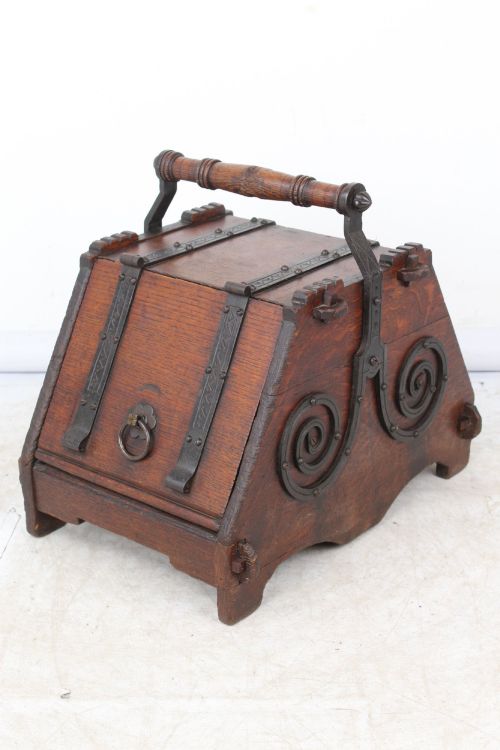
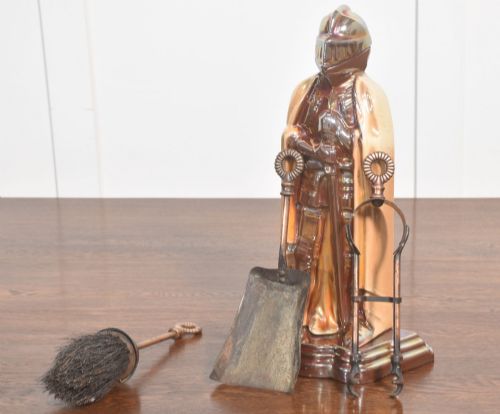
Some examples incorporate brass elements, copper panels, or oak components to contrast against the dark ironwork. Applied finishes like a copper finish or painted details appear on later companion sets and screens.
Periods represented on this page range from the eighteenth-century style up through Victorian, Edwardian, and the early twentieth century.
What varies in quality
The calibre of a set rests upon the weight of the metal and the precision of the forge work in forming the Gothic motifs. Heavier cast and wrought iron pieces demonstrate greater substance and durability than lighter twentieth-century adaptations.
Design sophistication distinguishes standard companion sets from those influenced by notable designers or distinct Arts and Crafts principles. The integration of hand-finished brass details and sturdy mounting hardware elevates the overall standard.
Christopher Dresser
The Gothic Revival Fire Irons Glossary
- Andirons
- Iron supports used to raise logs off the hearth floor to improve air circulation. They often feature decorative vertical pillars facing the room.
- Fire Basket
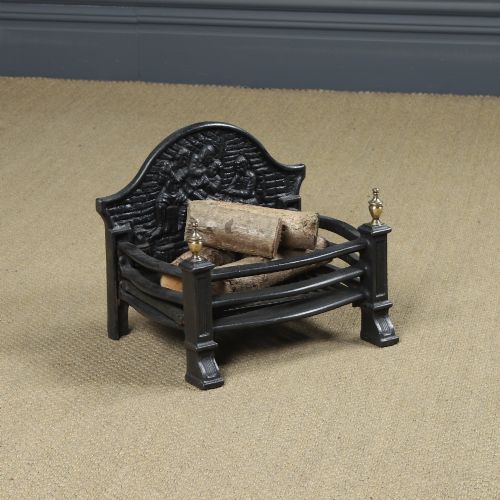
- A metal container designed to hold coal or wood within an open fireplace. These baskets sit upon legs or directly on andirons.
- Companion Set
- A collection of fireplace tools, including pokers, tongs, and shovels, usually housed on a matching stand. They provide the necessary implements for maintaining an active fire.
- Spark Guard
- A protective screen placed before an open hearth to catch stray embers. They are constructed from iron mesh or feature solid metal panels with decorative motifs.
Gothic Revival Fire Irons: Frequently Asked Questions
What is included in a set?
These fireplace groupings typically comprise iron fire irons, pokers, and tongs alongside structural elements like andirons and fire baskets. Companion sets gather the necessary tools onto a single stand for hearth maintenance.
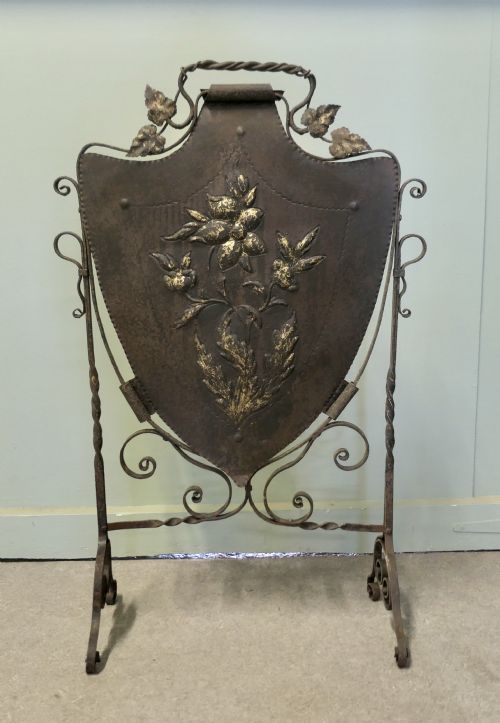
Larger configurations may also incorporate spark guards or fire screens to manage embers while displaying characteristic architectural ironwork.
How do I date these pieces?
Nineteenth-century examples display heavier hand-forged ironwork and authentic period patination consistent with Victorian and Edwardian domestic use. Later interpretations from the early twentieth century often adopt cleaner Arts and Crafts lines or simplified cast metal components.
Examining the construction methods, such as the joining of wrought iron bars versus modern welding, helps clarify the age of the item.
Are these irons functional?
Most pieces were built from robust wrought or cast iron intended for daily use in open hearths and coal grates. Their weight and sturdy construction make them practical for tending real wood and coal fires today.
Care should be taken with decorative brass components or painted finishes when using the tools in an active fireplace.
Where were they used?
These fireplace accessories belonged in the principal reception rooms and parlours of Victorian and Edwardian homes where open coal or wood fires provided heat. Inglenook fire baskets specifically suited large hearths in substantial country houses.
They formed a prominent decorative feature of the interior scheme even when the fire was unlit during warmer months.