






Gothic Revival Desk Stand
These gothic revival desk stand pieces bring ecclesiastical timber and heavy brass mounts straight from the church and library into the study.

Gothic Revival Desk Stand
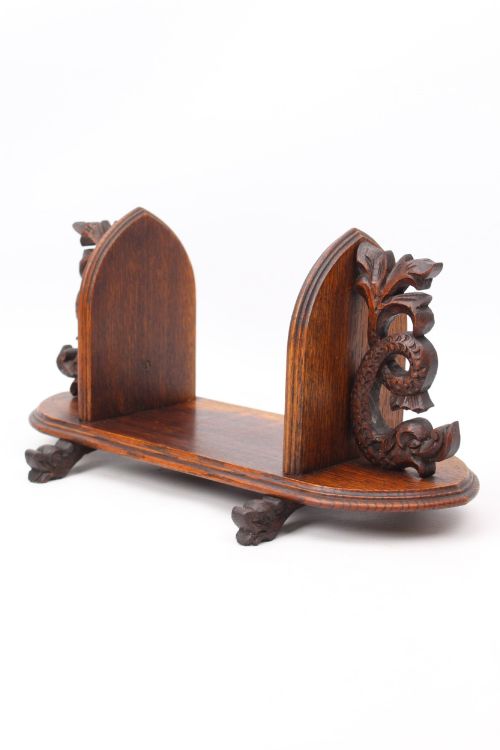
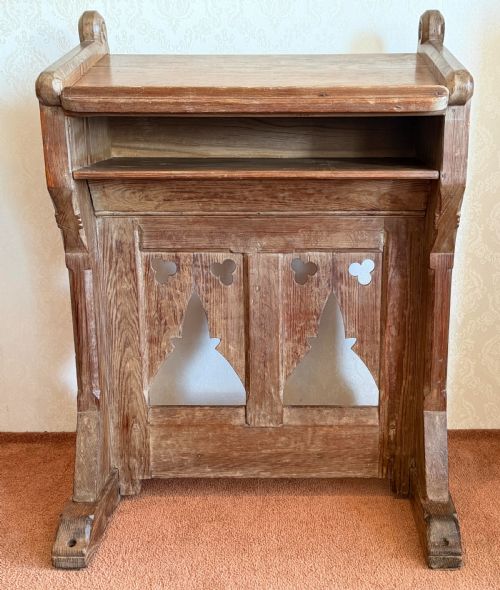
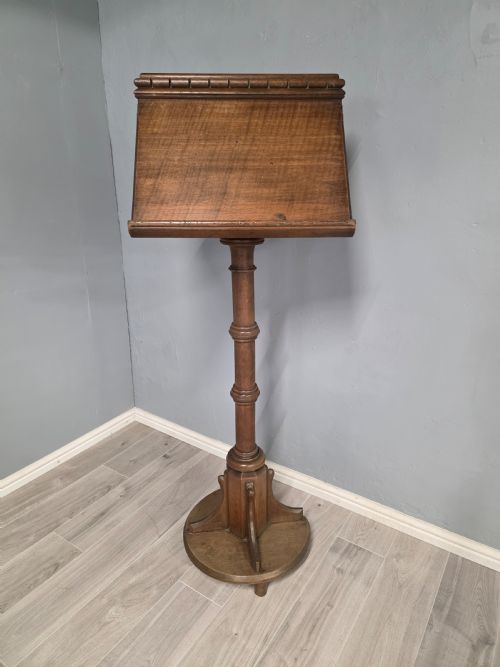
A gothic revival desk stand brings heavy ecclesiastical presence and architectural forms to a writing surface, drawing heavily from church furnishings and nineteenth century design. When searching for this phrase, collectors encounter oak and walnut book stands, prayer desks, and brass-mounted inkstands dating from the Victorian and Edwardian eras. These items merge practical storage for letters and books with pointed arches, tracery, and dark carved woods.
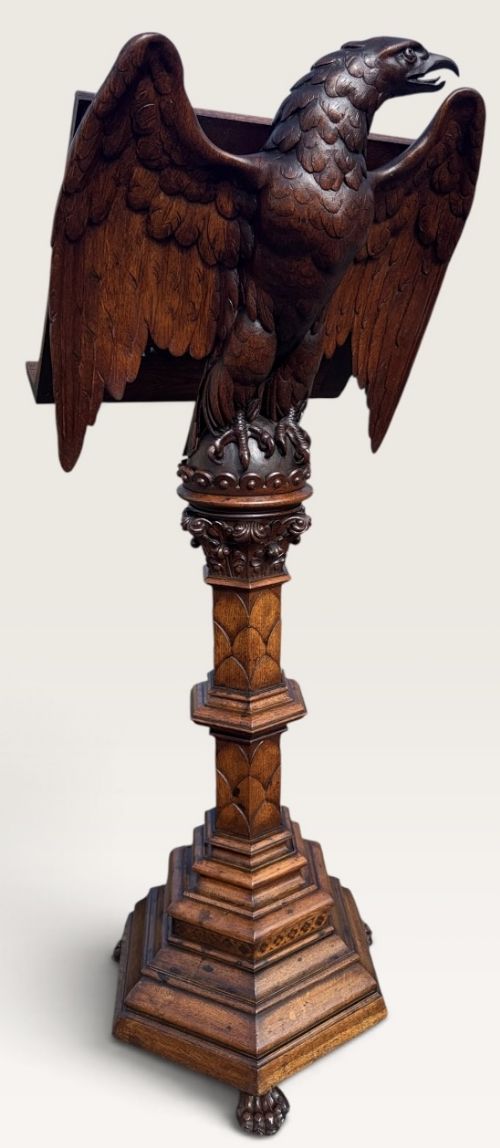
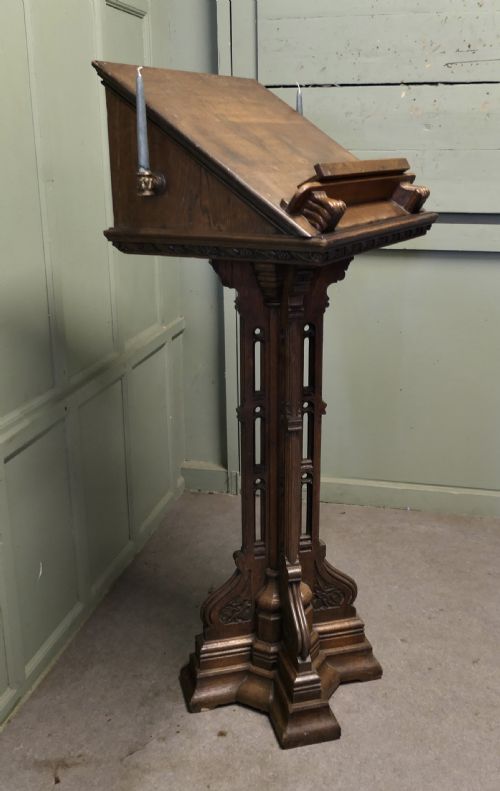
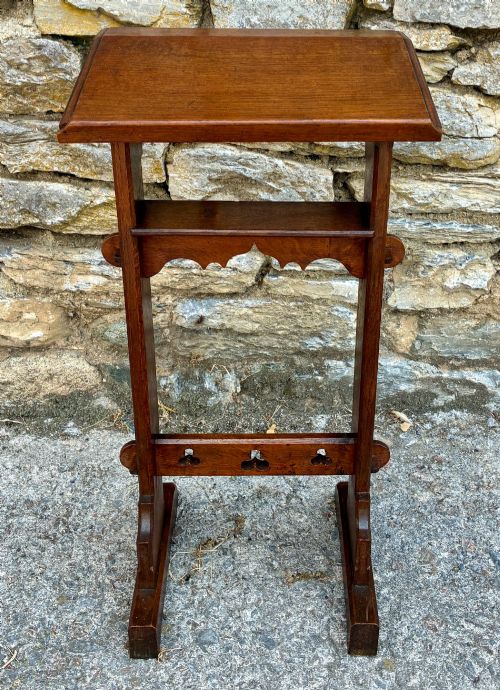
The pieces on this page span several functional categories, from sliding book rests and stationery boxes to reading podiums and church lecterns. Oak and coromandel predominate among the materials, often augmented by brass fittings and glass inkwells. Most examples date from the nineteenth century, reflecting a period deeply enamoured with medieval Gothic forms applied to domestic and ecclesiastical life.
How they were made
Cabinetmakers utilised dense timbers such as oak, walnut, and coromandel, shaping them with deep relief carving, tracery, and moulded edges. The joinery relies on solid construction methods suited to heavy daily use in libraries and churches.
Metal components, particularly brass mounts, hinges, and candle shields, were cast and fixed to the wooden carcasses. Glass inkwells and sliding mechanisms were integrated into desks and book slides to create functional accessories for writing and reading.
Gothic Revival Desk Stand Retail Price Guide 2026
Typical asking prices for gothic revival desk stand among the pieces listed under this phrase on Sellingantiques today, from the lower quarter to the upper quarter. They describe what is for sale here now, not the wider market.
Several stands double as greeting stations and reading pods, ready to receive both heavy missals and polite callers.
What varies in quality
The distinction between standard items and superior examples lies in the crispness of the wood carving and the choice of timber. Highly figured coromandel, substantial brass mounts, and intricate architectural tracery elevate a piece far above plain pine or simple turned work.
Patination and the integrity of the original fittings also define the standing of an object. Pieces retaining their matching glass inkwells, working patent sliding mechanisms, and untouched polished surfaces demonstrate the care taken by nineteenth century makers.
Betjemanns
The Gothic Revival Desk Stand Glossary
- Gothic Revival
- An architectural and decorative style drawing inspiration from medieval design, featuring pointed arches, trefoils, and heavy timber construction. This movement dominated nineteenth century ecclesiastical and domestic furnishings.
- Coromandel
- A dense, heavily figured exotic hardwood with dark brown and black striations, frequently utilised for luxury Victorian desk accessories and stationery boxes.
- Prie Dieu
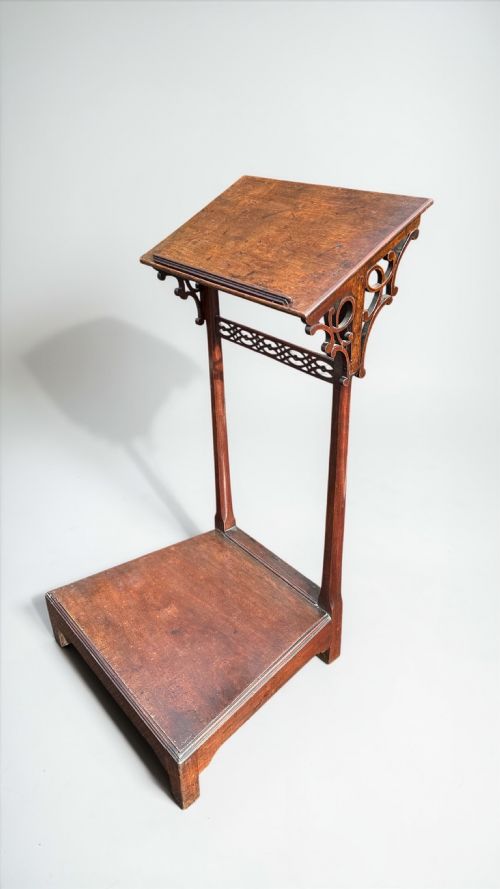
- A devotional desk or kneeling chair designed for private prayer, incorporating a sloping shelf for books and a padded ledge for the knees.
- Book Slide
- An extending desktop accessory fitted with hinged or sliding ends to hold a row of volumes upright. Many Victorian examples incorporate brass mounts and patent mechanisms.
Gothic Revival Desk Stand: Frequently Asked Questions
How were these stands used originally?
Victorians used them to hold stationery, support heavy ledgers, or house inkwells and pens on writing tables.
Ecclesiastical variants such as prayer desks and lecterns served in churches for holding service books and aiding private devotion.
What woods are most common?
Oak is the predominant timber found in these pieces, particularly in items with a strong ecclesiastical character.
Walnut and exotic coromandel also appear frequently in luxury desk stands and extending book slides from the Victorian era.
How do I date a piece?
Dating relies on stylistic clues, timber choice, and mechanical patents typical of the nineteenth century.
Victorian and Edwardian examples often feature registration marks, brass hardware styles, or specific construction techniques unique to the period.